Seafood Boils: The Rise of Messy, Communal Dining in India
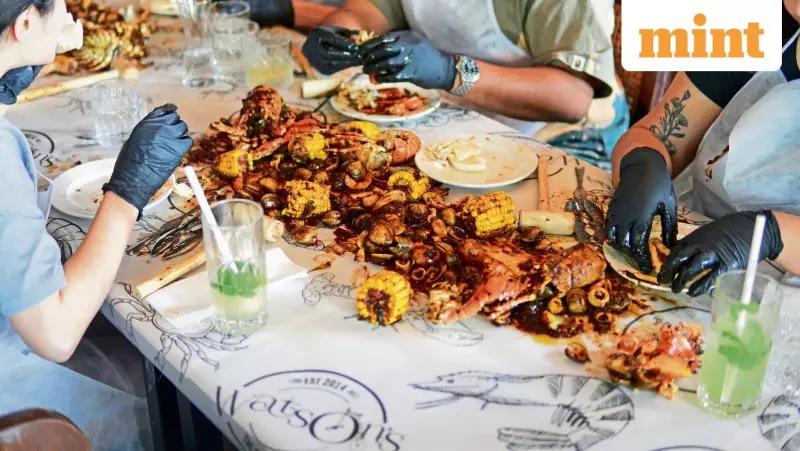
Messy dining has arrived in a vibrant new avatar across India, served in buckets piled high with crab, prawn, and mussels. The seafood boil, a concept born in the fishing communities of the American South, is all about raucous communal feasting. In India, this dining format reflects a significant shift towards experiential menus and pop-up events, favouring indulgence without stiffness. It strips away cutlery and elaborate plating, urging guests to roll up their sleeves and eat directly from a shared pile, creating an atmosphere of camaraderie and fun.
Historical Roots and Global Evolution
Historically, seafood boils in the American South originated within fishing communities that cooked large catches in a single pot as a practical way to feed many people. Over time, this practical solution slowly evolved into a cherished social ritual. The concept developed with regional iterations, blending native American flavours with influences from French-Acadian settlers. In Louisiana, it became a staple, with crawfish simmered in heavily spiced stock alongside corn and potatoes, then drained and dumped straight onto newspaper-lined tables. Other regions put their unique stamp on it—Old Bay seasoning enlivened with celery salt and paprika in Maryland, and Vietnamese-Cajun mash-ups featuring lemongrass, chilli, and garlic in Texas.
Indian Adaptations and Innovations
In India, the dining experience is being creatively reimagined, with mud crabs often replacing crawfish, and Pan-Asian flavour twists incorporating coastal ingredients. Instagram reels frequently showcase buckets of seafood placed directly in front of diners, who don gloves and aprons to crack open crabs and shrimps, highlighting the interactive and photogenic nature of the meal.

One of the earliest champions of this format in India is chef Aashish Seth, who launched the gourmet delivery service Soul Food and hosted its first seafood boil in North Goa in 2023. The spread featured crab, prawns, lobster, mussels, corn on the cob, and potatoes. "It isn’t just seafood, it’s the moment the bucket hits the table. The shells cracking, the laughter, and that’s the joy," he says. Soon after, he began hosting more boils across India’s major metros, with prices varying depending on scale and seafood selection.
Seth experimented with flavours familiar to the local palate, with Singapore pepper sauce becoming a favourite, followed by Thai-herbed butter. He admits that sourcing is the hardest part, as seafood is procured directly from local fishermen, particularly mud crabs, and the meat content fluctuates according to molting cycles and lunar phases. Over time, he has learned to identify crabs with consistently high meat yield, an operational detail crucial when the entire meal revolves around one communal bucket. Seth has hosted a series of pop-ups in Mumbai at venues like Kona Kona, Cafe Calma, and HyLo, reflecting how the concept has travelled across various dining formats.
Restaurateurs Embrace the Trend
For restaurateurs, seafood boils offer a way to build community around food. Bengaluru’s Watson’s bar joined the trend with a one-off pop-up in June last year. "We promote ourselves as a community bar, and what’s better than a communal dining experience?" says founder Amit Roy. Priced from ₹2,000 upwards, the spread featured crabs, prawns, lobster, mussels, corn, and potatoes bathed in chilli pepper sauces. Reactions ranged from curiosity to hesitation, but midway through the meal, even cautious diners warmed up. "Some people made new friends literally over the meal," Roy notes.
Delhi, often seen as slower to adopt seafood-forward experiences, has its own interpretation. At the Naga restaurant Yong’s Kitchen in Safdarjung Enclave, boils are a highlight of the menu. Nearby, the South-East Asian restaurant Rude Chef also features a boil-inspired seafood platter, which has been on the menu since the restaurant opened in 2022, driven by the lack of coastal food options in the city. Priced at ₹1,820 for a medium platter (serving two) and ₹2,860 for a large platter (serving four), it is one of their best-sellers. "The theatre begins the moment the boil hits the table," says co-owner Wunganing Raikhan.

Permanent Additions to Menus
In contrast to pop-ups and limited runs, some establishments have taken a permanent approach. In Pune, the seafood restaurant and bar Coast & Co. introduced seafood boils in November. Although initially planned for a select time, it was extended after sustained demand. "People kept telling us they would come back with friends and family," say co-owners Chetan and Pooja Chorge. Priced at ₹2,899 for two and around ₹11,000 for parties up to eight people, the restaurant offers a fixed seafood mix that includes prawns, squid, clams, and crab, paired with sauces such as Goan recheado, Kerala pepper, butter garlic, and kokum. Served with rice and amboli (fermented rice and lentil crepes) alongside sweet potato and corn, it is designed to feel familiar. "We’ve kept the roots intact, but adjusted the flavours for the city’s palate," they explain.
The casual Indian restaurant Via Bombay in Mumbai launched the seafood boil last year as a regular menu offering. Founder Ashesh L. Sajnani believes it works because it doesn’t feel imported. "Eating with your hands, sharing food, bonding over a spread, that’s what we’ve always done," he says. Priced at ₹2,500 for two, and designed for sharing within a table rather than with strangers, the portion size is scaled down for smaller groups while retaining the core principles of the concept. Diners can choose between a Kolhapuri masala or butter-garlic version. Many diners, he notes, describe the experience as liberating.
The Core Appeal of Communal Feasting
At its core, the seafood boil works because it taps into something instinctive and deeply human. It prioritises sharing over sequencing and communal over curated, making a strong case for a dining experience that values participation over performance. This trend underscores a broader shift in Indian dining culture towards more interactive, social, and relaxed formats, where the joy of eating together takes centre stage.