The Unforgettable First Bite: A Journey to Pahala
My first encounter with the legendary Pahala rasgulla happened during my school days. My sister, then serving as the Collector of Khurda district, would often take me on drives to what is popularly known as Orissa's "Rasgulla District." Located on the modest stretch of road connecting Bhubaneshwar and Cuttack, Pahala is famously lined with shops dedicated to this syrupy delight. Our stop was never planned; it was one of those essential pauses that long journeys naturally demand.
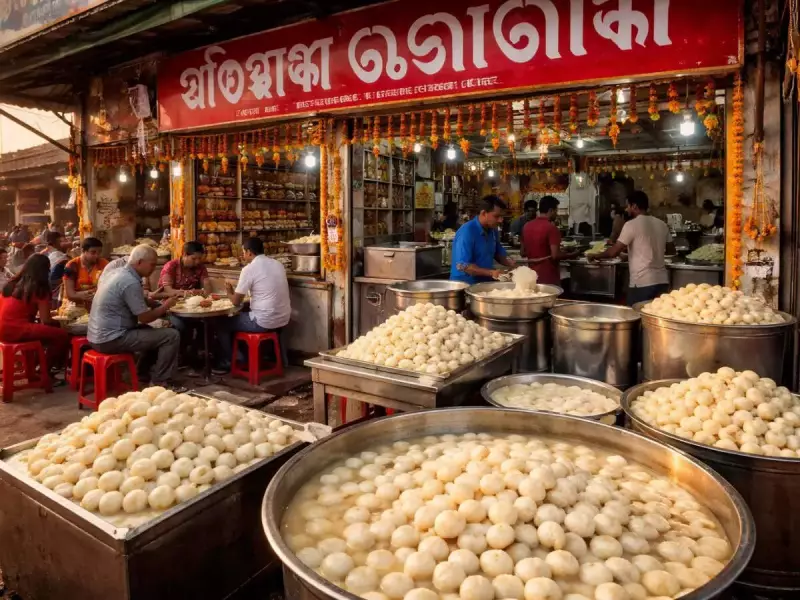
As dusk settled, the scene was magical. Rows of yellow bulbs illuminated numerous small shops, each featuring large cauldrons where countless rasgullas soaked in shimmering syrup. We settled on a shop that was relatively more famous than its neighbours. The setup was simple: wooden benches, plain counters, and absolutely no theatrics. The experience, however, was profound.
Anatomy of a Perfect Sweet: What Makes Pahala Rasgulla Unique?
The rasgullas arrived warm, served straight from the chashni or syrup, freshly prepared. Their texture was a marvel – soft yet not fragile, with a light browning on the exterior that gave way to a gentle firmness within. The sweetness was not sharp or overwhelming; it was mellow, almost earthy. That first taste induced a quiet food coma, a state of still contentment that borders on the emotional. The memory of that flavour has remained an indelible part of my culinary journey.

This Odisha version is distinctly different from its more widely known Bengali cousin. The Pahala rasgulla uses chhena (cottage cheese) kneaded to a slightly coarser texture. It is then slow-cooked until it develops a faint caramelised hue. The syrup is thinner and less perfumed, which allows the inherent depth and flavour of the milk to shine through. The result is a dessert that feels rooted rather than refined – honest, warm, and deeply local.
The GI Tag Controversy and a Legacy Acknowledged
The story of rasgulla cannot be told without mentioning the high-profile Geographical Indication (GI) tag war between Odisha and West Bengal. Both states fiercely claimed the sweet's origin. The controversy, while noisy, had a silver lining: it prompted a deeper, necessary examination of regional food histories instead of flattening them into a single, monolithic narrative.
In the end, West Bengal received the GI for “Banglar Rosogolla” in 2017. Subsequently, Odisha was granted the GI for “Odisha Rasagola” in 2019, officially acknowledging its own historical and cultural lineage. Odisha's claim is strongly tied to its association with the Jagannath Temple in Puri and the Niladri Bije ritual, where the sweet is offered to the deities.
Having lived in states like Bihar, Bengal, and Odisha, each renowned for their exquisite chhena-based sweets like Chamcham, Chanar Jilipi, and Chenna Poda, I believe a good sweet transcends borders. It deserves every accolade it rightfully earns.
Yet, no certification or tag can fully explain why that specific Pahala rasgulla tasted the way it did. The local milk, the water, the traditional method, and the very pace of life in that corner of Odisha – these elements do not travel. You can attempt to recreate the recipe, but you cannot replicate the setting. The warmth, the immediacy, the humble bench by the roadside – they belong uniquely to Pahala.
Some flavours resist replication. They exist to create a moment, a memory that lingers for a lifetime, asking only to be remembered.