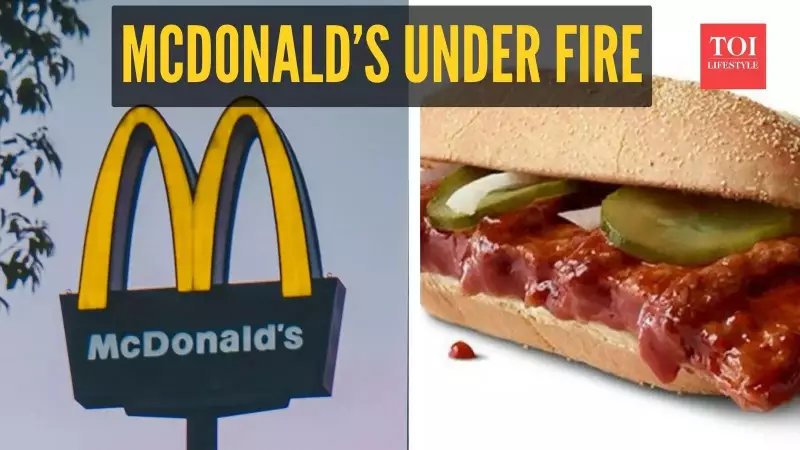
The iconic McRib sandwich from McDonald's has found itself in a legal pickle, shifting from a fast-food favourite to the centre of a courtroom debate. A fresh lawsuit filed in the United States has ignited serious questions about the sandwich's marketing and labelling, sparking conversations among consumers and legal experts alike about transparency in the food industry.
What Does the McRib Lawsuit Claim?
On December 23, four individuals initiated legal action against the fast-food giant in the Northern District of Illinois. The core of their complaint is that McDonald's "knowingly markets the sandwich in a way that deceives reasonable customers." The plaintiffs argue that the very name 'McRib' is a clever trick, creating an expectation that the product contains rib meat.
The lawsuit takes issue with the company's official description, which calls the McRib "seasoned boneless pork dipped in a tangy BBQ sauce, topped with slivered onions and tangy pickles, all served on a toasted homestyle bun." The filing contends this is insufficient, stating that the company omitted "various material facts regarding the quality and character" of the item. A critical point raised is that despite its rib-like shape and suggestive name, the patty contains no actual pork rib meat. The suit also highlights that the McRib is often one of the most expensive single items on the menu, with prices reaching up to $7.89 at some locations.

McDonald's Strong Defence Against Allegations
McDonald's has responded firmly to the accusations. In an official statement, the company labelled the lawsuit as one that "distorts the facts and many of the claims are inaccurate." The global chain reiterated its commitment to quality, stating, "Food quality and safety are at the heart of everything we do."
The company emphasized its use of real ingredients, specifically noting that the McRib is "made with 100% pork sourced from farmers and suppliers across the U.S." McDonald's also stressed its policy of transparency regarding ingredients, asserting it allows customers to make informed choices for themselves.
Broader Implications for Consumer Trust and Labelling
This legal battle extends far beyond a single sandwich. It touches on vital issues of food labelling, consumer expectations, and corporate responsibility. The case forces a discussion on what customers genuinely believe they are purchasing when they see a popular, descriptively named product on a menu. In an era where consumers are increasingly conscious about what they eat, the outcome of this lawsuit could influence how all food companies, potentially including those operating in India, market and describe their products. It underscores the growing demand for clarity and honesty in advertising, where the line between creative branding and potential misrepresentation is carefully scrutinized.