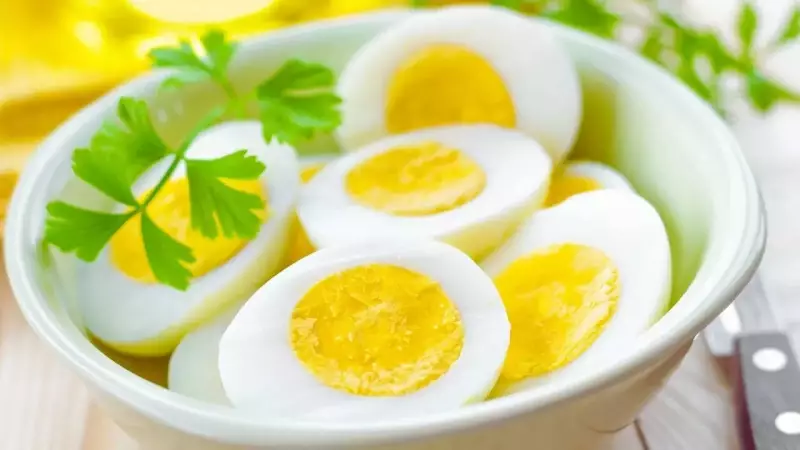
It's a universal kitchen paradox: everyone claims to know how to boil an egg, yet consistently achieving perfection remains an elusive skill for many home cooks. The results are often disappointing—eggs with runny whites, chalky yolks, cracked shells, or that unappealing grey-green ring. What seems like the simplest culinary task is, in fact, a delicate balance of science and timing that can elevate your meals.
The Foundation: Choosing and Preparing Your Eggs
Success begins before the water even boils. Chef Gautam Kumar, a chefpreneur and hospitality experience designer, advises using eggs that are 5–10 days old for easier peeling, as the white clings less tightly to the shell in slightly older eggs. Always check the carton's date. For optimal cooking, take eggs from the fridge and let them sit for 10–15 minutes to approach room temperature. This reduces cracking risks and promotes even cooking. If you're in a hurry, cooking straight from the fridge is possible, but requires extra precision with timing to avoid temperature shock.
Two Foolproof Methods for Flawless Eggs
Forget guesswork. Professional chefs rely on two consistent techniques: the Cold-Start Boil and the Hot Water Drop-In.

Method 1: The Cold-Start Boil is excellent for beginners and batch cooking. Place eggs in a single layer in a saucepan and cover with cold water by 2–3 cm. Bring to a full rolling boil. Then, you have two options: either turn off the heat, cover the pot, and let the eggs sit, or maintain a gentle simmer. For the "turn off and cover" technique, aim for 6 minutes for soft-boiled, 8–9 minutes for jammy, and 10–11 minutes for hard-boiled eggs. If keeping a simmer, reduce these times by 30–45 seconds.
Method 2: The Hot Water Drop-In offers highly predictable results. First, bring a pot of water to a rolling boil. Gently lower room-temperature or fridge-cold eggs into the water using a slotted spoon and start your timer immediately. Maintain a gentle boil. For this method, 6 minutes yields a runny yolk, 7–8 minutes gives a jammy center, 9–10 minutes creates a firm but creamy yolk, and 11–12 minutes results in a very firm hard-boiled egg.
Pro Tip from a Restaurant Chef
Chef Vishal Nigam, Senior Sous Chef at Radisson Blu Kaushambi, shares a restaurant secret: "For restaurant-style hard-boiled eggs, add salt and lemon wedges to the water and boil for at least 12-14 minutes. Timing and water temperature significantly impact the outcome."
The Art of Peeling and Storing
Regardless of your chosen method, immediately transfer the cooked eggs to an ice water bath for 5–10 minutes. This stops the cooking process, prevents the grey-green ring, and makes peeling infinitely easier. To peel without frustration, tap the egg all over to crackle the shell, then start from the wider end where an air pocket helps. Peel under gently running water or submerged in a bowl; the water helps separate the membrane from the white. For stubborn shells, slide a teaspoon between the shell and egg to glide it off neatly.
For storage, keep unpeeled boiled eggs in the fridge for up to a week. Peeled eggs are best consumed within 2–3 days; store them in an airtight container, optionally covered with water (changed daily) to maintain moisture. Always refrigerate and avoid leaving boiled eggs at room temperature, especially in India's warm climate.
Mastering the boiled egg is less about a secret trick and more about understanding the variables—time, temperature, and egg age. By following this detailed guide, you can consistently produce your version of perfection, whether it's a soft yolk for ramen, a jammy center for a salad, or a firm egg for your lunchbox.