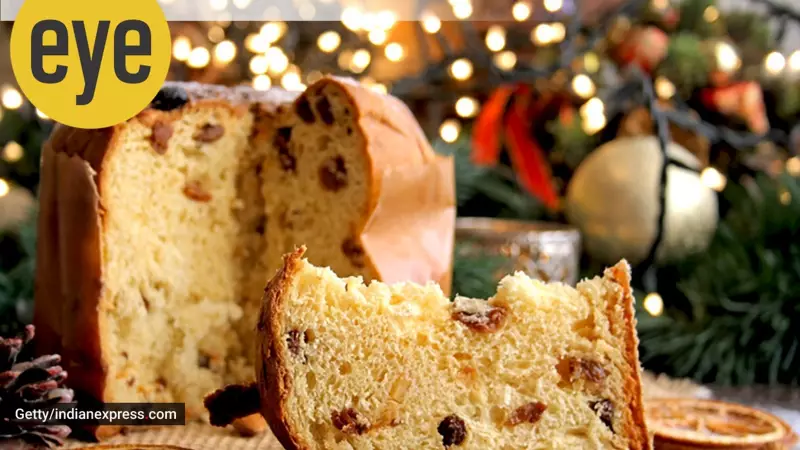
The golden, dome-shaped loaf, swaddled in parchment and tied with a ribbon, is far more than a seasonal treat. Panettone, Italy's iconic Christmas bread, has woven itself into the festive fabric of the world, a journey that began in the heart of Milan and now reaches kitchens from Lima to Melbourne.
A Bread Wrapped in Legend and Lore
The origins of panettone are deliciously shrouded in myth. One popular tale dates back to the late 15th century in the court of Ludovico il Moro, the Duke of Milan. According to this story, a young kitchen helper named Toni accidentally burned the Christmas cake. In a moment of desperation, he fashioned a new loaf from leftover ingredients: flour, eggs, butter, and candied fruit. The Duke was so delighted with the result that he named it "pan de ton" or "Toni's bread."
Another version speaks of a romantic gesture by a poor baker's son, Ughetto, who used his precious yeast to create a magnificent loaf to impress his beloved, the daughter of a wealthy baker. This loaf, too, is claimed as the first panettone. These stories, baked into the bread's identity over centuries, lend it an air of humble, serendipitous beginnings that contrast with its current ceremonial status.

The Industrial Leap and Transatlantic Journey
For much of its history, panettone remained a regional specialty. Its path to global fame was paved by two key developments. First, the Industrial Revolution made key ingredients like fine wheat flour more accessible. Then, in the early 20th century, Milanese bakers Angelo Motta and Gioacchino Alemagna revolutionized its production. They pioneered industrial methods that gave panettone its now-characteristic tall shape and airy texture, transforming it from a rare artisan loaf into a mass-produced holiday classic.
This innovation coincided with the great waves of Italian emigration. From the late 19th through the early 20th century, Italian families carried their traditions—and their panettone—across the Atlantic. In the bustling "migrant marketplaces" of North and South America, historian Elizabeth Zanoni notes, the bread became a cherished edible symbol of home and Christmas, a taste of Italy in a new land.
A Modern Global Phenomenon with Local Twists
Today, the panettone's allure is truly universal. Its basic recipe—a rich, yeasted dough studded with candied citrus and raisins—has proven to be a perfect canvas for local interpretation. In Peru, bakers might add the native lucuma fruit. Australian versions could feature mango and macadamia nuts, while in Dubai, one might find loaves with black sesame and dates.
Despite these creative global riffs, the essence of panettone remains. It is a testament to the old Italian culinary philosophy: taking a handful of quality ingredients, each performing its role, and coaxing them into something that transforms simplicity into splendour. The first bite reveals a cloud-like, delicate texture, punctuated by the sweet-tart burst of fruit, a flavour that for millions unmistakably means Christmas.
From its folkloric start in a Milanese kitchen to its place on holiday tables worldwide, panettone's story is one of migration, adaptation, and enduring tradition. It stands as a edible reminder that some of the most powerful cultural connections are forged from flour, butter, eggs, and shared stories.