Eggs are a culinary chameleon, a food that transcends borders while adapting brilliantly to local tastes. While their purpose as a source of nourishment remains constant, the way cultures treat them varies wildly. Climate, available spices, cooking fats, and deep-rooted habits transform the humble egg into a reflection of a nation's palate. From bold, spice-infused curries to minimalist, technique-driven preparations, here is a journey through ten distinct global egg dishes that reveal how people eat and organize their meals.
Eggs as a Shared Centerpiece
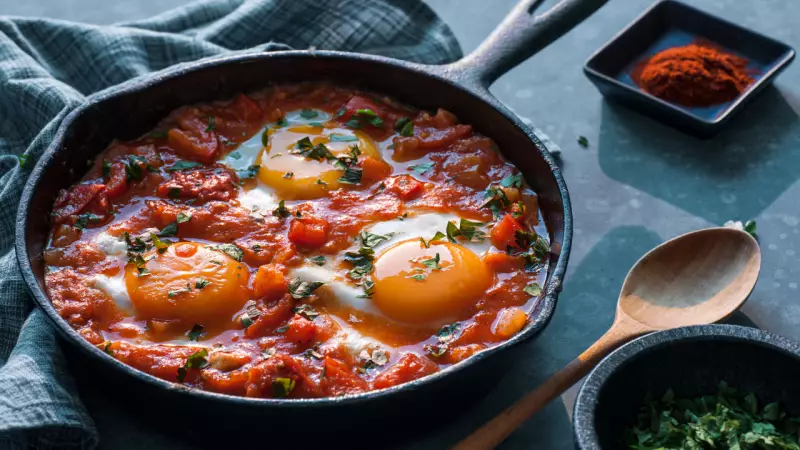
In several cultures, eggs are not a solitary breakfast item but the heart of a communal dish. Israel's Shakshuka perfectly exemplifies this. Eggs are poached directly in a simmering, thick sauce of tomatoes and peppers, allowing the yolks to soak up the rich acidity and spice. The dish is designed to be shared straight from the pan, with bread acting as an essential scoop, encouraging slow, social eating.
Similarly, Turkey's Menemen offers a more fluid take. Here, eggs are gently scrambled with tomatoes, green peppers, and olive oil, creating a texture somewhere between a sauce and a scramble. It's another dish meant for sharing, where bread is used to scoop up every last bite, highlighting a preference for meals that are guided by texture and togetherness rather than rigid structure.

The Art of Simplicity and Precision
On the other end of the spectrum, some cuisines celebrate the egg's inherent qualities through restraint. Japan's Tamago Kake Gohan is an exercise in minimalist perfection. A raw, high-quality egg is mixed into a bowl of hot rice with a dash of soy sauce. The residual heat cooks the egg just enough to create a glossy, creamy coating, a dish entirely dependent on timing and ingredient quality.
France's classic Omelette also champions technique over extravagance. The goal is a pale, softly folded, and barely set interior with no browning. Fillings are kept minimal, if used at all, ensuring the delicate texture and pure flavour of the egg remains the undisputed star on the plate.
Eggs as a Robust, Flavourful Anchor
In many countries, eggs are the sturdy foundation for a hearty, flavour-packed meal. Mexico's Huevos Rancheros sees fried eggs resting on crisp tortillas, layered with beans, salsa, and sometimes meat. The egg acts as a rich anchor, balancing the plate's spice and acidity to create a fulfilling meal designed for sustained energy.
India's approach, particularly with Egg Curry, is to let the egg absorb external flavours. Hard-boiled or fried eggs are simmered in regional gravies bursting with spices, becoming vessels for the sauce rather than asserting their own mild taste. Commonly served with rice, chapati, or paratha, egg curry is a flexible, comforting staple that fits easily into daily lunches and dinners across the country.
Innovative and Practical Preparations
Eggs also showcase culinary innovation and practicality. The United Kingdom's Scotch Egg is a feat of portable food engineering. A boiled egg is encased in seasoned sausage meat, breaded, and fried, creating a self-contained, filling snack ideal for picnics and pubs.
Spain's Tortilla Española uses eggs as a binder for potatoes, cooked slowly in oil to create a thick, hearty cake that can be served hot or cold. Its versatility makes it suitable for any time of day, built for sharing and casual eating. Thailand's Khai Jiao is a street-food marvel—a vigorously beaten egg fried until puffy and crisp, then served over rice with a flavourful sauce, prioritizing fast, satisfying texture.
Perhaps the most striking example of innovation is China's Century Egg. This dish challenges the notion that eggs must be fresh. Preserved through traditional curing methods, the egg transforms, developing jelly-like whites and a deep, complexly flavoured yolk, showcasing a food culture deeply comfortable with time, fermentation, and acquired tastes.

From the shared pans of the Middle East to the precise bowls of Japan and the spicy pots of India, the global journey of the egg is a testament to its incredible versatility. It adapts, absorbs, and anchors, proving that one of the world's simplest foods can tell the most diverse culinary stories.