For many, food memories form a deeply personal archive of survival, migration, and the intricate process of growing up in a world profoundly shaped by the aftershocks of Partition. In this context, every meal holds a story, and every scent evokes a memory, weaving a tapestry of cultural heritage and familial bonds.
Childhood Steeped in Warmth and Tradition
My childhood was immersed in an atmosphere of warmth that extended beyond familial love to include the bubbling pots, sun-dried petals, and spice-laden kitchens that defined our home. The air was perpetually fragrant with the aromas of cumin and rose, ginger and gur, creating a sensory backdrop that marked the passage of days through what was cooked and preserved.
Food was not merely sustenance; it was a source of joy, a ritual, and a powerful form of expression—a language that transcended spoken words and connected generations.

Edible Flowers and Medicinal Sweets
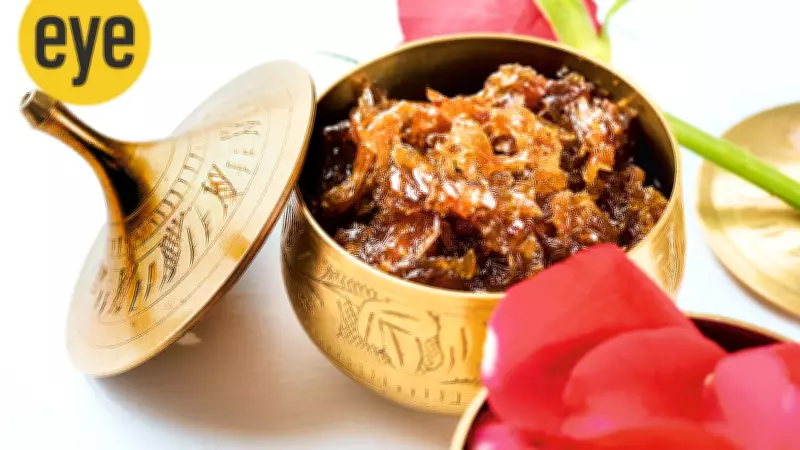
In the years following Partition, my family carried with them seed packets and cherished memories of flowers that were once central to their kitchens. Among these, the rose stood out, used to make Gulkand—a sweet preserve of rose petals that encapsulated the essence of another era.
The process of making Gulkand was a multi-sensory experience. In early March, the heady, slightly fermented, and sticky sweet scent wafted through our verandah, attracting bees and captivating my siblings and me as we took turns peeking under the muslin cloth covering the curing bowl.
The roses themselves released a rich, intoxicating aroma, floral with a hint of green spice, making Gulkand more than just a sweet—it was a cherished tradition.
The Art of Aging Gulkand
Interestingly, the more you age gulkand, the better the taste becomes. This aging process enhances its flavors, turning it into a preserve that not only delights the palate but also serves as a tangible link to the past.
Date Bombs: A Winter Staple
Another staple in our household were the Date Bombs, which made frequent appearances in the winter pantry. The sticky sweetness of dates combined with the satisfying crunch of nuts, all accompanied by the crackling sound of ghee heating in an iron kadhai.
These snacks can be viewed as vernacular responses to nutritional needs, offering valuable insights into non-institutionalised dietary science and the resourcefulness of post-Partition communities.
Recipe for Gulkand
For those inspired to recreate this traditional preserve, here is a detailed recipe:
- Ingredients:
- 5 kg of desi gulab (rose petals)
- 4 kg of sugar
- 5 cinnamon sticks
- 25 cardamom pods
- 10 star anise
- 10 cloves
- Method:
- Remove the petals from the stem, wash them thoroughly, pat dry, and let them dry overnight.
- Sun dry the petals very briefly the next day for disinfection purposes.
- Grind the petals or cut them finely.
- In a bowl, mix the crushed rose petals along with the spices and sugar.
- Keep the mixture in an airtight glass jar in the sun, bringing it indoors at night for a month.
- Turn the mixture weekly to ensure even curing and flavor development.
This recipe not only preserves the taste of gulkand but also honors the culinary traditions passed down through generations, serving as a delicious reminder of resilience and heritage.