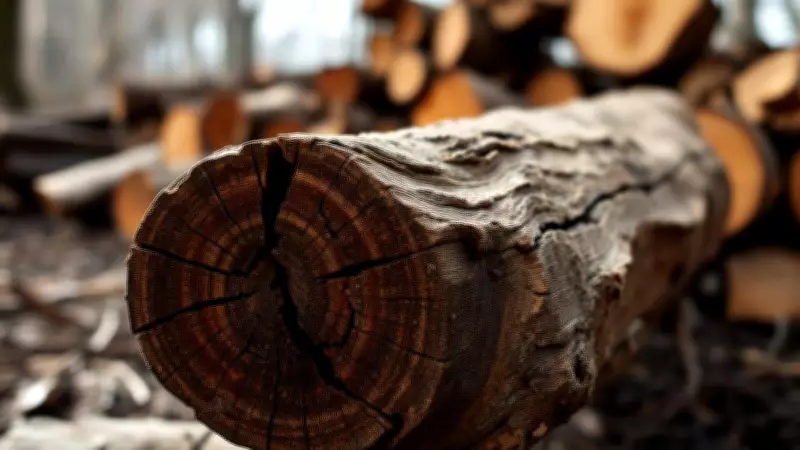
The Silent Failure of Firewood Seasoning
For many homeowners, the arduous task of chopping and stacking firewood creates a false sense of security. A neatly organized pile beneath the porch or a tightly wrapped bundle under a tarp often gives the impression that a warm, crackling fire is guaranteed when winter arrives. However, this confidence can be shattered by the first cold snap, when a lit matchstick produces only hissing and crackling instead of a robust blaze. This frustrating outcome typically stems from a fundamental misunderstanding of how wood loses moisture during the seasoning process.
The Critical Role of Ventilation in Wood Drying
Simply protecting firewood from rain and snow is insufficient for proper seasoning. The key factor that many overlook is adequate air circulation throughout the woodpile. When people wrap their firewood too early or too tightly in an attempt to shield it from weather elements, they inadvertently trap moisture inside. Without proper ventilation, this moisture has nowhere to escape, creating a damp environment that prevents effective drying.
Research published in the study "Energy and moisture losses during poplar and black locust logwood storage" provides compelling evidence about this phenomenon. The researchers discovered that wood stored under a roof dried at nearly the same rate as uncovered wood over a six-month period. This finding underscores that the physical structure of the stack and the airflow it permits are far more crucial than mere overhead protection. When air cannot circulate around individual logs, internal moisture remains trapped regardless of external weather conditions.

Practical Solutions for Proper Firewood Storage
To ensure your firewood seasons correctly, implement these essential practices:
- Elevate your woodpile: Never leave firewood directly on the ground. Use pallets or create a raised structure to protect the bottom layer from ground moisture.
- Create strategic stacking: Arrange logs in an open, organized manner rather than random piling. This creates a "chimney effect" that allows breezes to pass through and carry away moisture.
- Use partial covering: If you must cover your woodpile, place the covering only over the top third of the stack. This protects against rain while maintaining ventilation around the remaining logs.
The Hidden Costs of Green Wood
While unseasoned "green" wood may appear cost-effective initially, it ultimately creates multiple problems. Wood with high moisture content requires significant energy to evaporate water before it can produce substantial heat. This results in inefficient burning that wastes both fuel and money.
Research in the journal Renewable Energy examining fine particulate emissions from firewood stoves reveals that burning moist wood significantly increases smoke production. Beyond creating air pollution, this practice poses serious safety risks. Green wood burns inefficiently, generating excessive smoke that can lead to chimney fires and other hazards. Properly seasoned wood with moisture content below 20 percent burns hotter, cleaner, and safer.
The financial implications extend beyond wasted energy. Homeowners who save money on inexpensive green wood often face substantial expenses for chimney cleaning and potential fire damage repairs. You can identify properly seasoned wood by checking for cracks at the log ends and listening for a crisp ringing sound when two pieces are struck together, rather than a dull thud.
Wood Type Considerations for Optimal Seasoning
Different wood species require varying drying approaches:

- Dense hardwoods like oak or black locust provide longer burning times but need at least two years to season properly.
- Softwood species such as poplar or pine burn more quickly but season much faster than hardwoods.
The most effective strategy involves planning your wood acquisition at least six months to a full year in advance. If you cut trees in autumn, the wood likely won't dry sufficiently before the following winter since cold conditions inhibit rapid moisture loss. By creating an airy, elevated woodpile with adequate spacing, you transform ordinary logs into an excellent fuel source that will reliably warm your home throughout the winter months.