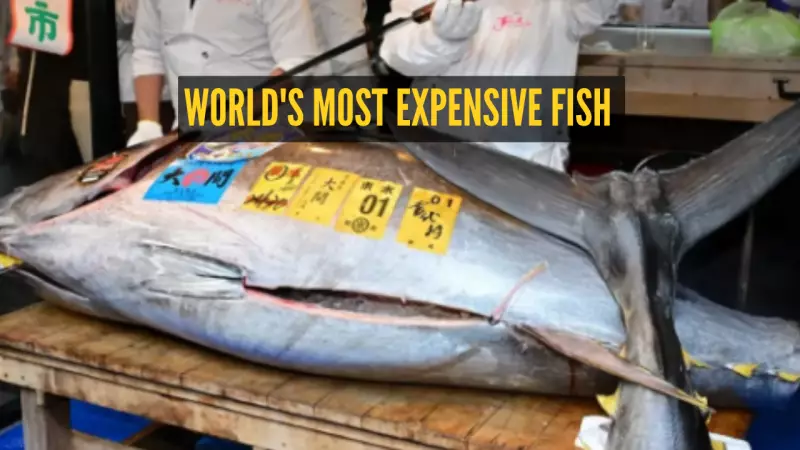
In a stunning start to the new year, a single bluefin tuna has shattered records, fetching an eye-watering 510 million yen (approximately ₹29 crore) at Japan's first major fish auction of 2025. The colossal 243-kilogram fish, hailed from the premium fishing waters near Oma in northern Japan, has been declared the world's most expensive fish, reigniting global fascination with the luxury seafood market and the traditions that drive it.
The Tuna King's Record Bid
The monumental purchase was made by none other than Kiyoshi Kimura, the president of the Kiyomura Corporation, famously known across Japan as the 'Tuna King'. Kimura operates the popular Sushi Zanmai restaurant chain and is a regular headline-maker for his aggressive bids at the annual New Year auction. In an official statement, Kimura revealed that while he had hoped for a lower price, the frenzied bidding escalated quickly. Upon seeing the exceptional quality of the tuna, he simply could not hold back. This tradition of placing a high bid at the year's first auction is deeply rooted in Japanese business culture, where it is believed to ensure prosperity and good fortune for the entire year, prompting fierce competition among major companies.
Why is Bluefin Tuna So Valuable?
The astronomical price tag of the bluefin tuna is not arbitrary. Experts cite a confluence of factors that elevate it to the status of one of the world's most premium edible fish. Its flesh is prized for being exceptionally soft, juicy, and rich in fat, particularly the belly portion known as otoro, which has a buttery, melt-in-the-mouth texture.

Scarcity and Regulation: Bluefin tuna are migratory giants, traversing thousands of miles across open oceans, making them notoriously difficult to locate and catch. Compounding this natural challenge, governments have imposed strict international quotas and rules on their catch to prevent overfishing, rendering them a rare commodity.
Size and Age: This breed can grow to immense sizes, sometimes weighing up to 450 kg. The rule of thumb is simple: the bigger and older the fish, the higher its market value.
Specialised Fishing Technique: Due to their size and value, bluefin tuna cannot be caught in standard nets. Fishermen employ a traditional Japanese method called Hainkara, a single-hook, line-fishing technique. This meticulous process prevents injury and stress to the fish, preserving its quality but significantly adding to the labour and cost.
Global Demand: The insatiable global appetite for high-quality sushi and sashimi, particularly the coveted otoro, continuously drives up demand and, consequently, the final price.
India's Own 'Sea Gold': The Ghol Fish
While Japan celebrates its bluefin, India has its own contender in the luxury seafood arena. The title of the most expensive fish sold in India belongs to the ghol fish, often referred to as 'sea gold'. On September 1, 2021, a catch of 157 ghol fish was sold for ₹1.33 crore in Palghar, Maharashtra. The fish's immense value lies not in its meat for consumption but in its medicinal properties, particularly from its swim bladder, which is used in cosmetics and traditional medicines. It is in high demand in markets like Hong Kong and Japan. More recently, in October 2025, a haul of 88 Telia Bhola fish was sold for approximately ₹60 lakh in Purba Medinipur, West Bengal, underscoring the valuable niche fishery resources found in Indian waters.
The record-breaking sale in Tokyo is more than a transaction; it is a spectacle that blends commerce, culture, and gastronomy. It highlights the extreme lengths to which the culinary world will go for unparalleled quality, while also drawing a fascinating parallel to the high-value, resource-driven fishing industries present in India.