

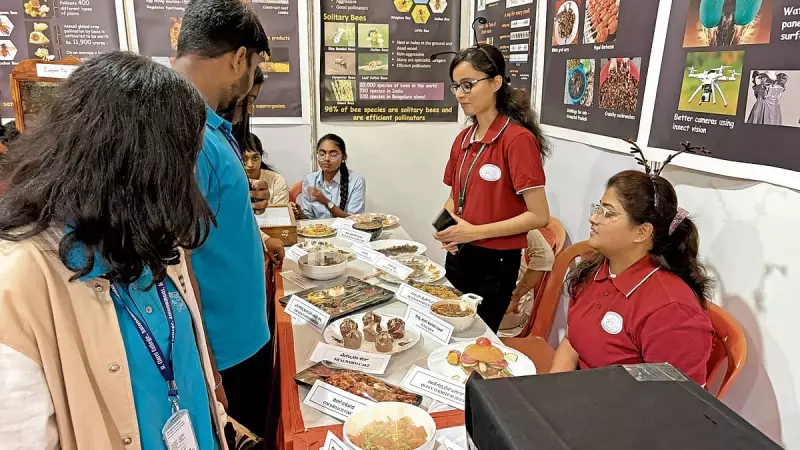
In a bold move that could transform Indian dining habits, Bengaluru's prestigious Krishi Mela has introduced an unexpected menu item that's creating quite a buzz - edible insects. The annual agricultural fair, organized by the University of Agricultural Sciences, is challenging deep-seated food taboos by serving up insect-based delicacies to curious visitors.
Insect Gastronomy Takes Center Stage
The four-day event, running from November 15 to November 18, has dedicated significant space to promoting insects as a viable and sustainable food source. Organizers have set up special stalls where adventurous foodies can sample cricket pakoras, silkworm chutney, and various other insect-based preparations. Dr. Prabhu Ganiger, the principal scientist of the Entomology Department, has been leading this groundbreaking initiative, educating visitors about the nutritional and environmental benefits of incorporating insects into daily diets.
According to the university's research, insects offer remarkable nutritional value that often surpasses traditional protein sources. Crickets contain approximately 60-70% protein by dry weight, along with essential amino acids, healthy fats, vitamins, and minerals. The environmental advantages are equally compelling - insect farming requires significantly less land, water, and feed compared to conventional livestock, while producing minimal greenhouse gas emissions.

Overcoming Cultural Barriers
The initiative faces substantial cultural challenges in a country where dietary preferences are deeply rooted in tradition. Indian food habits have historically excluded insects, unlike many Southeast Asian, African, and Latin American cultures where insects have been dietary staples for centuries. The Krishi Mela team is employing creative culinary approaches to make insects more palatable to the Indian consumer.
Chef Aruna Vijay, who has been developing insect-based recipes for the event, explains their strategy: "We're incorporating insects into familiar dishes to reduce the psychological barrier. Cricket flour in pakoras or silkworms in chutney makes the transition easier for first-time consumers." The response has been surprisingly positive, with many visitors returning for second helpings after overcoming initial hesitation.
The Future of Food Security
With global population projected to reach 9.7 billion by 2050, food security becomes an increasingly pressing concern. The United Nations Food and Agriculture Organization has been actively promoting edible insects as a sustainable solution to world hunger. The Krishi Mela's insect food festival represents India's first major step toward embracing this alternative protein source.
The university has been conducting extensive research on over 15 insect species with potential for human consumption and animal feed. Their studies focus not only on nutritional content but also on developing efficient farming techniques that could provide additional income sources for rural communities. Dr. Ganiger emphasizes that widespread adoption will require coordinated efforts across multiple sectors, including changes to food safety regulations and public education campaigns.
As climate change and resource scarcity threaten traditional agriculture, innovations like insect farming could play a crucial role in ensuring food security. The Krishi Mela's initiative represents more than just a culinary experiment - it's a vision for a more sustainable and nutrition-secure future for India and the world.






