Delhi's street food is not just about eating well. It is about moving through a city that never seems to sit still, one lane heavy with smoke and spice, another with sweet syrup, and another with the kind of snack that has survived decades because it simply works. Some places are old, some are loud, some are slightly chaotic, and some feel like a newer chapter in the same long food story. Together, they capture why Delhi remains one of India's most irresistible food cities. Scroll down to explore these eight unforgettable spots.
Chandni Chowk
If you are starting anywhere, start here. Chandni Chowk is the beating heart of Delhi street food, where parathas, chaat, lassi, and winter sweets all seem to compete for attention at once. The area has long been known for its dense concentration of iconic food stops, and it remains one of the city's most essential culinary addresses. The experience is as much about the atmosphere as the food: narrow lanes, heavy foot traffic, and the sense that every corner holds another famous bite.
Paranthe Wali Gali
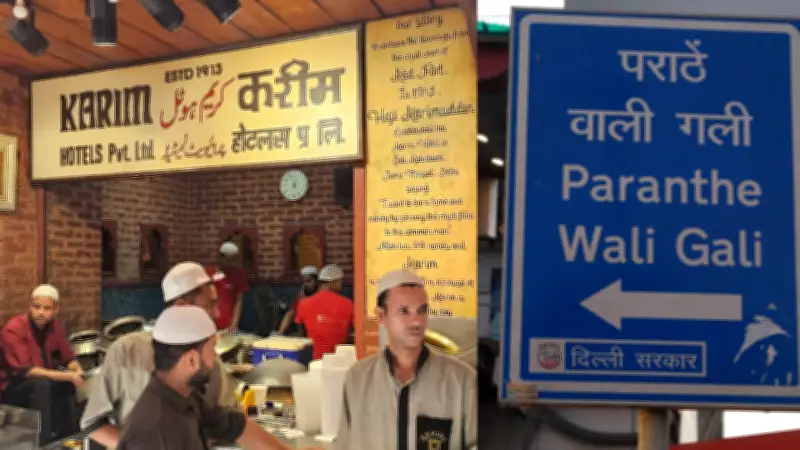
Paranthe Wali Gali is one of those places that feels almost mythic before you even arrive. The lane is famous for its stuffed parathas, crisped in ghee and served with the kind of accompaniments that turn breakfast into a full event. A stop here is less about novelty and more about continuity. The recipes, the setting, and the ritual of sitting down for a hot plate of parathas all make it one of Delhi's most enduring food experiences.

Hira Lal Chat Corner, Chawri Bazaar
For chaat that feels sharply specific to Old Delhi, Hira Lal Chat Corner is a name worth knowing. The place is especially associated with kulle ki chaat, a playful and intensely local preparation where fruit or vegetables become little edible bowls filled with spiced ingredients. It is the kind of snack that shows how Delhi street food often balances richness with acidity, sweetness with heat, and tradition with surprise.
Jung Bahadur Kachori Wala
Some places are famous because they are glamorous. This one is famous because it gets breakfast right. Jung Bahadur Kachori Wala is known for kachori served with aloo sabzi, the sort of dish that is crisp, spicy, and deeply satisfying without trying to impress anyone. In a city full of elaborate eating, this remains one of the most straightforward pleasures: hot, filling, and impossible to fake.
Karim's, Jama Masjid
Karim's is one of Delhi's most recognized names for Mughlai food, and it has earned that reputation through years of consistency. Near Jama Masjid, it remains a destination for kebabs, korma, and meat dishes that carry the weight of culinary memory. The appeal here is not only the food itself but the setting around it, old Delhi's historic texture adds a layer of drama that makes every plate feel part of a longer story.
Kuremal Mohan Lal Kulfi Wale
No proper Delhi food crawl is complete without something cold and sweet at the end. Kuremal Mohan Lal Kulfi Wale is one of the city's most beloved dessert stops, famous for kulfi in inventive stuffed and fruit-based forms. It has long been associated with Old Delhi's dessert culture, where sweets are not an afterthought but a destination in themselves. After the spice, heat, and oil of the market lanes, this is the kind of stop that feels almost necessary.
Majnu Ka Tila
Delhi's food map is not frozen in time, and Majnu Ka Tila proves it. Known as a Tibetan colony, it has become one of the city's most distinctive food pockets, where momos, thukpa, laphing, and tingmo draw regular crowds. It offers a completely different rhythm from Old Delhi, less ornate and more casual, but every bit as beloved. For anyone wanting to understand how Delhi absorbs and remakes food cultures, this is an essential stop.
Amar Colony Market
If Old Delhi represents the city's food memory, Amar Colony shows its appetite today. The market has built a strong reputation with students and regulars for tandoori momos, rolls, gol gappa, shakes, and casual late-evening snacking. It is lively, crowded, and very much in the present tense. That makes it a useful reminder that Delhi street food is not only about legacy spots; it is also about what the city keeps choosing to eat now.