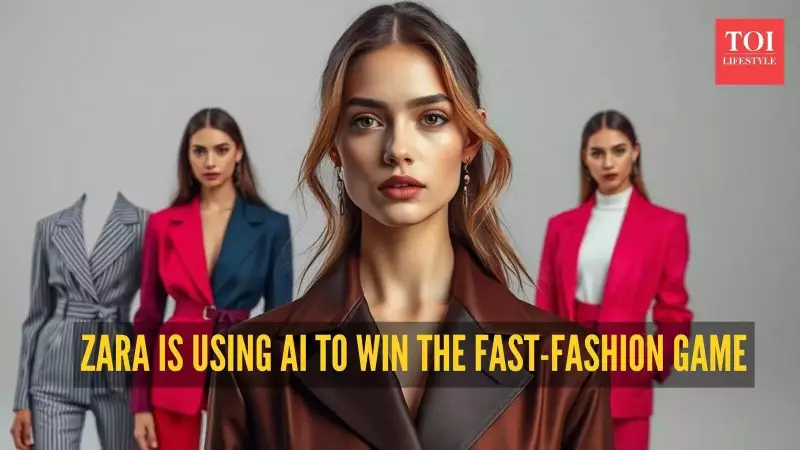
In a significant shift for the fast-fashion world, retail giant Zara has officially entered the arena of artificial intelligence. The brand is now leveraging AI technology to digitally alter images of real models, showcasing them in various outfits without the need for multiple photoshoots.
The AI Strategy: Speed, Efficiency, and Ethical Pledges
The primary goal behind this technological adoption is clear: to generate marketing visuals more rapidly, reduce the number of physical photoshoots, and accelerate the rollout of new campaigns. This move by Zara signals a broader transformation in the creation of fashion imagery, a trend gaining momentum across the sector.
Zara is not pioneering this path alone. Earlier this year, H&M revealed its use of AI-generated model versions for marketing. Similarly, e-commerce platform Zalando has employed comparable tools to speed up its campaign production. Collectively, these actions highlight how fashion brands are increasingly turning to technology to match the industry's relentless demand for new content.

Addressing potential concerns, Zara's parent company, Inditex, was quick to clarify the role of AI. A company spokesperson stated, "We are using artificial intelligence only to complement our existing processes." The company emphasized that human models remain central to the process. Their consent is obtained prior to any AI edits, and they are compensated according to standard industry rates, including payments equivalent to what they would earn for an additional physical shoot.
Balancing Tech Innovation with Artistic Heritage
This pivot towards AI presents an interesting paradox for Zara, given the personal interests of its leadership. Inditex chair Marta Ortega, daughter of founder Amancio Ortega, is a renowned champion of traditional fashion photography. Her MOP Foundation gallery in A Coruña, Spain—Zara's birthplace—has hosted exhibitions celebrating legends like Steven Meisel, Helmut Newton, and currently, Annie Leibovitz.
Simultaneously, Ortega has been steering Zara towards a more premium identity, shuttering smaller stores and investing in larger flagship locations. The integration of AI into its visual process appears to be part of this modernizing, efficiency-driven strategy, even as the brand celebrates photography's artistic legacy.
Industry Concerns and the Future of Creative Jobs
Despite assurances from brands, the wider use of AI in fashion imagery has sparked apprehension within the creative community. Isabelle Doran, CEO of the Association of Photographers in London, has voiced warnings that increased reliance on AI could lead to fewer opportunities for photographers, models, makeup artists, and entire production crews. Her concern extends beyond established professionals to young creatives seeking their first break in a potentially shrinking field.
Brands like H&M and Zalando have echoed Inditex's stance, asserting that AI is intended to support creative teams, not replace them. They maintain that photographers, stylists, and other professionals remain integral to the process, even as technology streamlines operations and cuts costs behind the scenes.
As reported by London-based outlet CityAM, the details of Zara's approach emerged through a model's account, confirming the brand's request for approval before implementing AI edits. This careful approach indicates the industry is currently navigating this new terrain with caution.
The conversation around AI in fashion is now louder than ever, centering on critical issues of creativity, fair compensation, and the very future of visual content creation. While brands race to harness technology for efficiency, the industry as a whole is still grappling with where to draw the ethical and practical line.