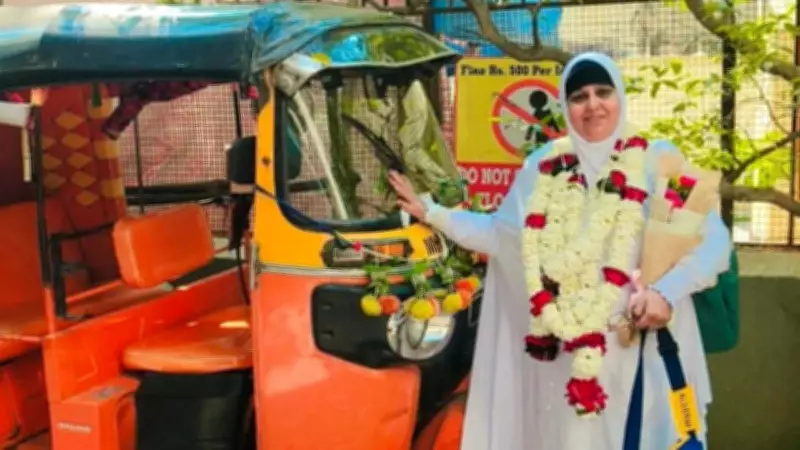
Women Take the Wheel: Transforming India's Auto-Rickshaw Landscape
Imagine a typical rainy afternoon in Mumbai. As you rush to escape the persistent drizzle, you hail an auto-rickshaw. When you glance toward the driver's seat, expecting to see the familiar figure of an "auto bhaiya," you are met instead with a smiling woman in a hijab who announces, "This auto wale is not a bhaiya, it's a didi." This scenario, once rare, is becoming an increasingly common reality across Indian cities as women reclaim public spaces traditionally dominated by men.
The Pioneers Driving Change
At the forefront of this movement is Shirin Ansari, affectionately known as the 'Dabangg Lady' of Mumbai. For eight years, she has navigated not only the city's congested streets but also societal prejudices. Her journey began when she purchased an auto-rickshaw with a Rs 4.5 lakh loan, initially intended for her injured son. However, financial pressures and encouragement from friends led her to take the driver's seat herself, transforming the vehicle into her lifeline.
Shirin's story is part of a broader national shift. She follows in the footsteps of pioneers like Shila Dawre from Pune, recognized as India's first female auto driver and a Limca World Record holder. Starting with just Rs 12, Dawre later founded her own travel company and was honored by the President of India as one of the country's "First Ladies."

From Struggle to Stardom
Shirin's path has been anything but easy. A divorced single mother of three, she previously worked as a hospital attendant and ran a biryani stall that failed during BMC raids. Her initial hesitation gave way to determination when she became the first woman in her region to receive a commercial auto-rickshaw license, met with cheers from licensing officers.
Today, she works 12-14 hour days without breaks, adhering strictly to traffic rules and earning respect from police and passengers alike. Her fame has even reached Bollywood, with director Leena Yadav casting her in a film alongside Jacqueline Fernandez after spotting her distinctive orange rickshaw.
Her 'Dabangg Lady' nickname emerged from her fearless confrontations with eve-teasers. "They tried fun; I beat back," she laughs, describing how she grabbed offenders by the collar. This assertiveness has made her auto a symbol of resilience in a male-dominated field.
The Larger Movement: Statistics and Challenges
Shirin represents a growing but still small segment of India's transport workforce. As of 2020, women held only about 12% of all driving licenses nationwide, with states like Karnataka reporting just 6% female professional drivers according to "The Rise of Feminine Leadership Edition-II" by Ms Chhavi Mathur.
Research indicates that family crises—such as divorce, widowhood, or loss of male income—often push women into this profession. However, the financial risks are substantial. A study of Chennai drivers found 93% of women carried vehicle loans averaging over Rs 1.41 lakh, leaving them vulnerable during economic downturns like COVID-19 lockdowns.
Beyond economic challenges, social stigma remains a significant barrier. An unnamed Delhi auto driver revealed she keeps her identity hidden, fearing it would damage her marriage prospects. Her brother even intervened to prevent her from speaking to media, highlighting the "character tax" many women pay for working in public spaces.
Creating Safer Urban Networks
Despite these hurdles, women auto drivers are catalyzing social transformation. Female passengers report feeling safer, especially during night commutes, when they see a woman behind the wheel. This fosters a "sisterhood" among drivers and contributes to more secure urban transportation networks.
In cities like Pune, some women adopt more assertive behaviors to counter harassment, demonstrating the grit required to survive in this field. As Shirin notes, "When I used to drive a rickshaw, many people used to look at me in a bad way... Then I grabbed their collar and beat them."
Institutional Support and Future Directions
Government and organizational programs are beginning to support this movement. Uttar Pradesh's Mission Shakti has trained over 75,000 women to drive electric auto-rickshaws across two phases. Tamil Nadu recently distributed subsidized autos to 148 women and two transgender persons.

Initiatives like Jaipur and Ranchi's "Pink Auto" program provide training that extends beyond driving to include soft skills, vehicle maintenance, and digital navigation. Organizations such as Sakha Consulting Wings and Kudumbashree emphasize the need for comprehensive support systems.
For sustained progress, experts recommend investing in dedicated "Pink Auto Stands" with proper lighting, CCTV surveillance, and public toilets to ensure driver safety. These measures, combined with continued societal acceptance, will help more women like Shirin Ansari drive not just autos, but meaningful change in India's gender landscape.
As International Women's Day celebrations highlight achievements, these drivers remind us that true equality requires both individual courage and systemic support. They are not merely ferrying passengers—they are dismantling gender fortresses, one kilometer at a time, and redefining what it means to celebrate womanhood in modern India.