European Commission President's Sartorial Diplomacy Highlights Indian Craftsmanship
The Republic Day parade appearance of European Commission President Ursula von der Leyen has generated significant attention, not just for the historic diplomatic occasion, but for her thoughtfully curated wardrobe choices throughout her India visit. Her ensembles have served as a powerful showcase of India's rich textile heritage on the global stage.
Republic Day Parade: A Benarasi Statement
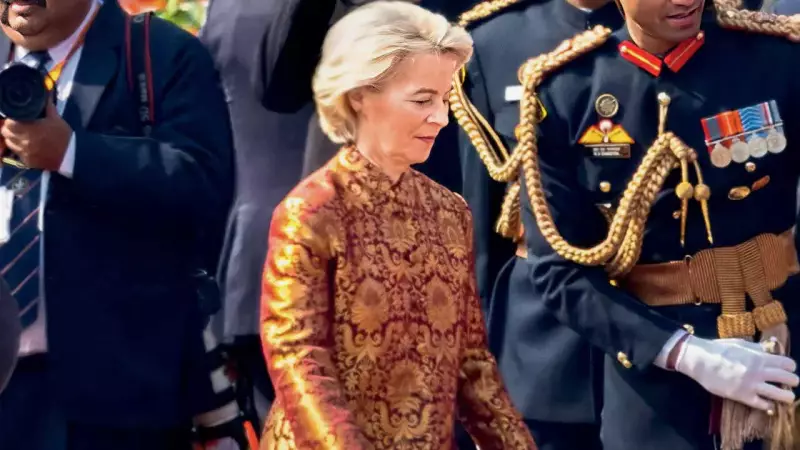
For the prestigious Republic Day parade, von der Leyen selected a striking Benarasi hand-loomed, handwoven silk-brocade structured jacket designed by Rajesh Pratap Singh. The piece featured rich burgundy and gold tones that perfectly complemented the ceremonial atmosphere. Rajesh Pratap Singh expressed his honor at having the European leader wear his creation during her state visit, noting the significance of her choice.
Sunil Sethi highlighted the cultural resonance of this selection, explaining: "Benarasi textiles have long been associated with special occasions in India, making the choice particularly fitting for an event of such national and global importance. Her decision to wear Benarasi handloom on this powerful international platform is being seen as a meaningful gesture – bringing renewed global attention to the legacy of Benaras craftsmanship and the artisans behind it."

Continuing the Indian Fashion Journey
Following the Republic Day celebrations, von der Leyen maintained her commitment to Indian designers during the President's 'At Home' ceremony. She wore another Rajesh Pratap Singh creation – a long jacket featuring dull gold and silver metallic zari in a satin weave, woven in alternating stripes with the designer's signature red selvedge detail at the centre back.
Complementing this ensemble was a vibrant turmeric yellow silk scarf crafted using the ancient bandhani tie-and-dye technique, traditionally practiced in Gujarat and Rajasthan. The scarf was designed by FDCI designers Abraham & Thakore. Interestingly, von der Leyen later changed to a Gamusa scarf to honor the North East theme of the occasion.
Rajesh Pratap Singh reflected on the broader impact: "For Indian textiles to receive recognition from a person of her stature is a tribute to our craft and craftspeople."
Summit Attire: Euro Blue Bandhgala
On Tuesday, ahead of the crucial India–EU Summit, von der Leyen visited Rajghat to pay respects to Mahatma Gandhi wearing a sophisticated Euro blue silk satin bandhgala by acclaimed designer Anamika Khanna. The ensemble featured delicate resham hand embroidery, handmade lace cut-outs, and intricate 3D detailing. She wore the same elegant outfit for the Summit itself, demonstrating continuity in her fashion diplomacy.
Sethi observed that von der Leyen was particularly keen to appear in Indian ensembles throughout her visit, consciously selecting creations by Indian designers. "Over the course of her stay, we saw her choosing Indian handloom and craftsmanship as she attended several key events in the capital. We, at FDCI, feel proud of our designers," he noted.
The European leader's wardrobe choices have transcended mere fashion statements, becoming symbolic gestures that highlight India's textile heritage while strengthening cultural connections between India and Europe through the universal language of craftsmanship.