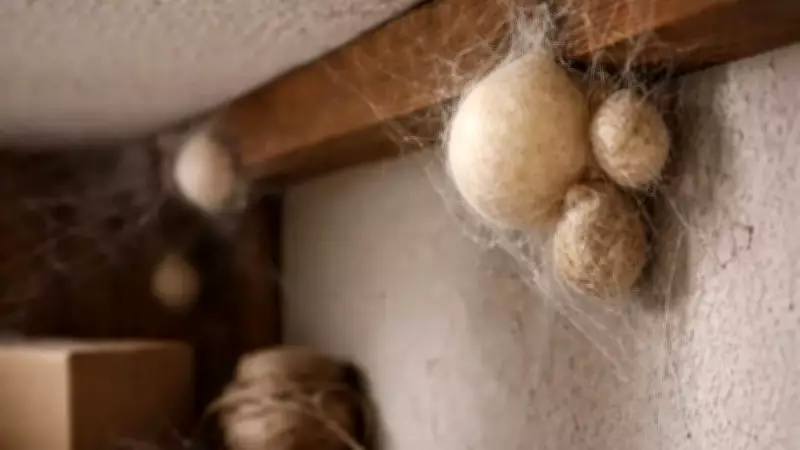
Spider eggs typically escape notice until they become a significant problem, which often happens when they hatch. Contrary to widespread belief, spiders do not leave their eggs exposed to the elements. Instead, they meticulously protect their offspring by enveloping them in silk to form durable egg sacs.
The Protective Nature of Spider Egg Sacs
These egg sacs serve as a robust shield against various threats, including physical damage, predators, and harsh environmental conditions. Unlike loose clusters of eggs, spider egg sacs are well-organized structures that house the developing spiderlings securely. To avoid an unexpected surge of spiders indoors, it is crucial to recognize the appearance and typical locations of these sacs. They are commonly found inside residences, particularly in areas where spiders have established their nests.
What Spider Egg Sacs Look Like
Spider eggs are seldom visible outside their protective coverings, as they reside within silk sacs. Research published in the Journal of Natural Fibres reveals that these sacs are multilayered constructions made from spider silk produced by different glands. These intricate structures are designed to safeguard the eggs from environmental hazards and biological attacks.

In terms of appearance, spider egg sacs vary significantly across species. Most are small, spherical, and light-colored, with hues ranging from white and cream to light brown. Their surfaces can be smooth and compact or have a fuzzy, cottony texture. Sizes also differ, from as small as a pea to larger dimensions, depending on the number of eggs contained within.
Due to their light colors and textures, these sacs are often mistaken for dust, lint, or minor debris. However, unlike random particles, spider egg sacs are firmly attached to surfaces via spider silk, giving them a slightly more organized appearance upon close inspection.
Where Spider Eggs Are Found in Your Home
Spiders prefer to lay their eggs in quiet, undisturbed locations. Inside homes, egg sacs are frequently discovered in ceiling corners, behind furniture, or within storage boxes. The placement is not arbitrary; studies indicate that spiders utilize specialized glands to create these sacs, ensuring their eggs remain secure in controlled environments.
Dark and infrequently cleaned areas are favored by spiders due to lower chances of disturbance. Common hotspots include closets, basements, attics, and garages. If spider webs are present in a specific area, it is highly likely that egg sacs are nearby, as spiders tend to nest in the same vicinity.
How Spider Eggs Develop
After being laid, the eggs begin to hatch inside the sac, where the silk sheath plays a vital role. This sheath regulates moisture, temperature, and air circulation, creating an optimal environment for development. Scientific investigations have shown that the membranes within egg sacs are permeable, allowing air exchange while still protecting the eggs.
The hatching process can span several weeks or even months. Once the eggs hatch, numerous spiderlings emerge, which explains why multiple spiders might suddenly appear in a household.
Why Spider Eggs Often Go Unnoticed
One primary reason spider egg sacs remain undetected is their small size and concealed locations. They are strategically placed in hidden spots, making them difficult to spot. Additionally, these areas are rarely cleaned or inspected, allowing the sacs to persist unnoticed until hatching occurs.
Timing also contributes to their invisibility. Since the egg sacs are indoors and stationary, there are no visible signs of movement or activity until the spiderlings emerge.
Should You Remove Spider Eggs?
The decision to remove spider egg sacs depends largely on their location. Indoors, it is generally advisable to remove them to prevent a potential infestation. Outdoors, however, these sacs can be beneficial as they help control insect populations, so removal might not be necessary.
If removal is deemed appropriate, it should be done carefully to avoid dispersing the eggs or causing harm. Understanding the appearance and behavior of spider egg sacs facilitates early identification and informed decision-making. While they may seem insignificant, each sac harbors the potential for a substantial spider presence if left unchecked.