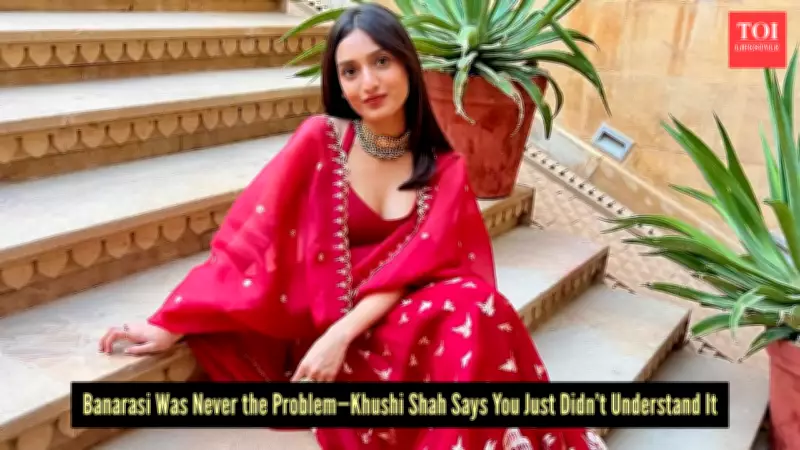
The fashion industry is currently obsessed with speed, spectacle, and seasonal amnesia, whereas heritage Indian brands like Shanti Banaras are working on something that feels less conventional and far more powerful. It starts with the continuity of the Banarasi silhouette, where the label isn't repackaging heritage for relevance but quietly reframing the textile's value.
Continuing the 70-year brand legacy, Shanti Banaras' co-founder Khushi Shah's approach feels resistant to the noise of trendy style cycles. The brand believes in leaning towards craft, relationships, and, of course, heritage. In this exclusive conversation with The Times of India, Khushi cuts through the romanticism of handloom sustainability, Banarasi going beyond the bridal wardrobe, and why this textile doesn't need reinvention but a sharper audience.
Question: Your family's association with Banaras weavers spans over 70 years - how has this deep-rooted legacy shaped the identity of Shanti Banaras today?
Khushi Shah: I've been around this my whole life, so it's not like it's away from me. The weavers we work with are not just vendors but also people my family has known for years. And that naturally shapes how I think about the brand. It's not about creating something from scratch every season; it's more about building on something that already exists and doing it with a certain sensibility.

Question: Do you think today's consumers truly understand the value of heritage weaves like Banarasi and Kanjeevaram, or is there still a gap in awareness?
Khushi Shah: I think people appreciate it, but I'm not sure they get it entirely. A Banarasi may look stunning at first sight, but what goes into it is not always visible: the time, the material, and the detailing. That part needs more conversation. It's not a lack of interest, just a lack of exposure.
Question: In an era dominated by fast fashion, how do you approach sustainability, both environmentally and culturally?
Khushi Shah: For us, it's not something we've added on later. That is the way these textiles have always been made. It's slow, it takes time, and it involves real materials. But I think sustainability for us is also about creating a craft that doesn't feel outdated. If it doesn't evolve, people stop engaging with it.
Question: As you take Banarasi textiles to a wider international audience, what has been the response, and how do global consumers perceive Indian heritage crafts?
Khushi Shah: It's been very interesting. There's a lot of curiosity. Even if they don't know the whole story right away, people are drawn to the texture and richness. I think people around the world are open to things that feel more considered and not mass-produced, so it naturally resonates.
Question: Banarasi textiles have long been associated with bridal wear - how do you see this space evolving with younger consumers?
Khushi Shah: It's already starting to change. People don't want to wear something only once anymore. They're looking for clothes that they can wear in different ways and styles. So Banarasi is slowly moving beyond weddings and into clothes that can be worn every day or on special occasions, but in a more personal way.
Question: As the new generation leading the brand, what is your long-term vision for Shanti Banaras, and what legacy do you hope to build upon?
Khushi Shah: I want it to keep feeling relevant without losing what makes it unique. That balance means a lot to me. And more than anything, I want to keep building on the relationships we have because that's really the foundation of everything we do.