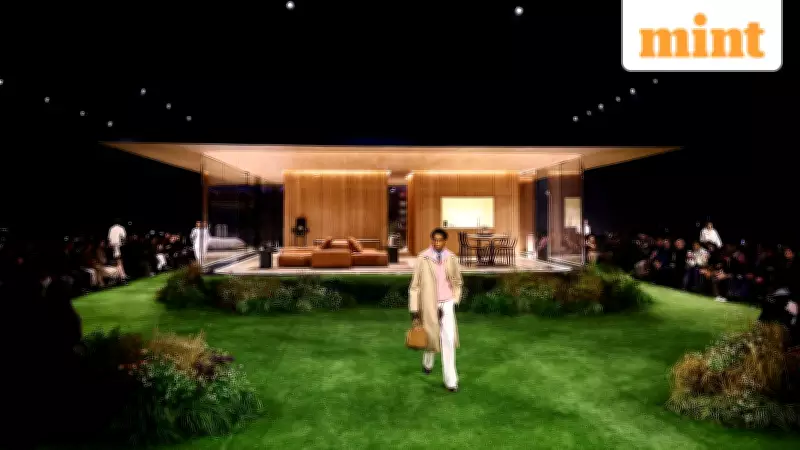
Milan and Paris Menswear Fashion Weeks: A Journey Through Memory and Innovation
The recently concluded Milan and Paris menswear fashion weeks presented a captivating narrative where designers delved deep into their childhood memories and early influences, shaping collections that blend nostalgia with forward-thinking aesthetics. This season was marked by a profound exploration of personal histories, resulting in garments that resonate with timeless elegance and disruptive creativity.
Louis Vuitton: Retro-Futuristic Dandyism
At Louis Vuitton, artistic director Pharrell Williams reimagined the future dandy by revisiting enduring menswear codes and the decade that molded his teenage visions. He proposed a timeless wardrobe defined by a faintly retro-futuristic elegance, where classic sharpness was offset with nonchalant volume. Softly tailored, sport-leaning suits appeared in reversible nylon or silk, paired with vintage-feel cotton-poly parkas featuring contrast linings. The colours of heritage menswear were amplified by bursts of reds, oranges, and blues, all infused with a retro-futuristic flair that echoed 1980s charm.
Dior: Punk-Inspired Aristocracy
At Dior, Jonathan Anderson drew inspiration from the iconic French couturier Paul Poiret, aligning with his youthquake vision. The collection presented an array of characters and personalities, blurring lines between aristo-punks and dorkish dandies. Sequinned tops were thrown over skinny jeans, bar jackets rendered in shrunken proportions, and playful tailcoats were offset with spiky yellow hair and embroidered epaulettes. This season, Anderson transitioned from preppy and polished to unapologetically punk while respecting the hallowed codes of the house.

Paul Smith: Nostalgic Deconstruction
On the Paul Smith runway, nostalgia permeated the air as Sam Cotton, the recently appointed head of men’s design, revisited Paul’s most recognisable fashion shows and campaigns from the late 1980s and early 1990s. The collection emphasized deconstructed and inside-out details, reflecting Paul’s signature methodology of disrupting classics. Overall, the season embraced traditional elements but infused them with disruptive innovations.
Key Trends Emerging from the Fashion Weeks
Craft-Led Innovation
Louis Vuitton’s atelier showcased material innovation with garments and accessories presented with a playful wink. Technically-innovative overdyed double-face vicuña masqueraded in everyday mid-blue work trousers, a burgundy coat and hoodie, and little scarves. A pure silk windbreaker, car coat, and tuxedo posed as casual nylon twill, while a crocodile blouson mimicked VVN natural cowhide leather. Trompe l'oeil lumberjack shirts were laser-cut from flannel printed on a mesh base. Droplets served as metaphors for small-scale impact creating ripple effects. The collection debuted LV silk-nylon, a timeless textile used in bags and garments, woven with 51 percent silk and 49 percent recycled nylon for water-repellent, anti-wrinkle shine resembling leather from afar. At Dior, fringe-edged, double-breasted houndstooth jackets with full shoulders and bar hips recalled the 1940s, and tailcoats surprisingly transformed into cable knits.
Sartorial Finesse
Tod’s focused on the Winter Gommino, with proportions and soles marking a return to origins, proving its transcendence beyond fashion trends. Suede versions enhanced with cashmere or shearling linings made it ideal for cold winter days. Canali took residence in a private club, distilling its elegance recipe with craftsmanship and detail culture. The result was a natural synergy between worlds, with suits and jackets as versatile wardrobe pivots, highlighted by cashmere and vicuña jackets, pure cashmere coats, and generous-volume trench coats.
Clothing with a Lived-In Feel
Inspired by artists like Jean Cocteau, the Paul Smith collection felt lived-in, showcasing layered cuffs, sheer fabrics, and button covers for magpie dressing. At Prada, brown leather jackets appeared crumpled and folded, suggesting a prior life. MSGM softened pajamas, coats, and tailoring with a lived-in ease that felt reassuring rather than resigned.

Vintage Core
Zegna evoked the 1970s with heavy checks and deep russet and brown tones in cardigan coats and sweaters. DSquared2 reignited vintage ski aesthetics from the ’70s with intarsia jumpers, zipped cardigans, maxi fur coats, and shearlings, exploring après-ski vibes glamorously. Pharrell offered a new take on Louis Vuitton’s historical patent leather finish with Monogram Vintage Vernis, replacing leather with supple suede coated in high-gloss lacquer, giving holographic depth and flexibility in retro-futuristic high-shine automobile colours.
Personal Moments and Memories
Designer Umit Benan recalled a photo of his father in St. Moritz in 1988, mixing cashmere with mountain flou to bring back the aesthetic. Zegna’s Alessandro Sartori inherited suits from his father, Giuseppe, a designer of technical machinery for textiles production. Sartori suggested a timeless wardrobe of wearable heirlooms meant to be cherished, worn, and reworn over time.