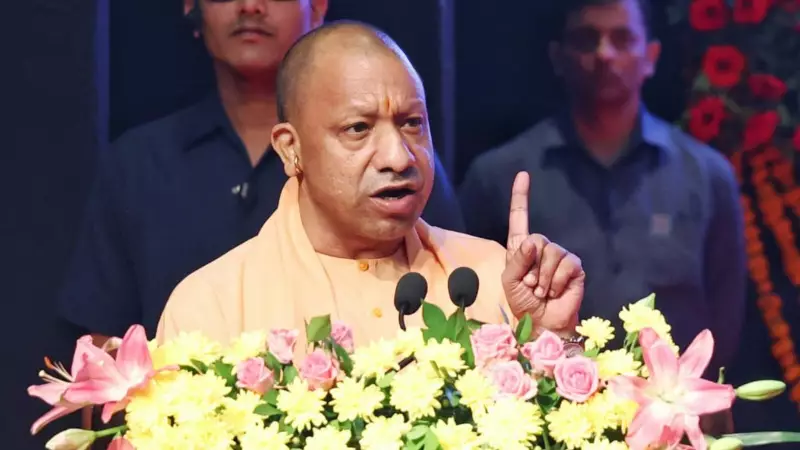
Uttar Pradesh Chief Minister Yogi Adityanath declared that India's ancient coinage provides irrefutable proof of its deep-rooted democratic traditions and civilizational unity, directly challenging long-standing Western historical narratives. He made these remarks while launching a significant new book, 'Early North India and Its Coinage', published by the Hinduja Foundation, at his official residence in Lucknow on Thursday, January 9, 2026.
Coins as Testimony to India's Democratic Legacy
At the event, Yogi Adityanath examined a rare collection of ancient coins preserved by the Hinduja Foundation. He emphasized that these artifacts, unearthed from historic regions like Ayodhya, Mathura, Kaushambi, Kashi, and Panchal, are made of copper, silver, and various alloys. According to the Chief Minister, they serve as concrete evidence of the sophisticated political, economic, and trade systems that existed in ancient India.
"Anyone who wishes to understand democracy should learn it from India," stated Yogi Adityanath. He asserted that India is perhaps the sole civilization that has consistently offered refuge, dignity, and equal opportunities to people of all castes, creeds, and communities. He credited the nation's Sanatan culture for being preserved through such authentic evidence, with coins acting as a direct testament to India's unity and advanced democratic heritage.

Countering Colonial Conspiracies and False Narratives
The Chief Minister was forthright in his critique of certain Western academic perspectives. He accused Western powers of propagating false claims about the origins of democracy and attempting to distort India's historical narrative. "The book effectively counters the long-standing Western narrative that has attempted to distort India's historical and democratic traditions," he said.
Yogi Adityanath specifically targeted the notion that India was never a unified entity, calling it a falsehood. He argued that the Partition of 1947 was a result of colonial conspiracy. Quoting an ancient verse defining Bharatvarsha, he stressed that India historically encompassed the territories of present-day Pakistan and Bangladesh. "Questioning India's unity reflects a failure to understand its ancient heritage," he concluded.
Scientific Systems and India's Golden Economic Age
Highlighting India's ancient scientific prowess, the CM pointed out that the country pioneered precise systems of weights and measures. Traditional units like 'masha' and 'tola' are still in use today, particularly in precious metal trade. He noted that ancient coinage adhered to these rigorous scientific standards, reflecting a highly developed intellectual and economic framework.
Reflecting on India's economic history, Yogi Adityanath described the Mauryan era as India's golden age, when the nation contributed a staggering 46% to the global economy. This share, he noted, dwindled to 24% by the 15th century and plummeted to a mere 1.5–2% at the time of Independence, a decline he attributed to prolonged foreign exploitation.
Author Professor Devendra Handa shared fascinating insights from the book. He revealed that a coin in the British Museum bears the inscription "Savitri Putra Janapadas," suggesting the story of Savitri and Satyavan may be based on historical events rather than mythology. He also mentioned coins from the Madra kingdom and the lineage of King Porus that challenge established historical assumptions.
Ashok Hinduja, Chairman of the Hinduja Group, stated that the time is ripe for India to present its ancient culture to the world through rigorous scientific research. He described the book as a meaningful step in that direction and expressed confidence in expanding the group's investments in Uttar Pradesh. The event also featured a short film on the Hinduja Foundation's initiatives and was attended by trustee PP Hinduja and other senior family members and officials.