Thousands Gather in Motihari for Historic Shivling Installation
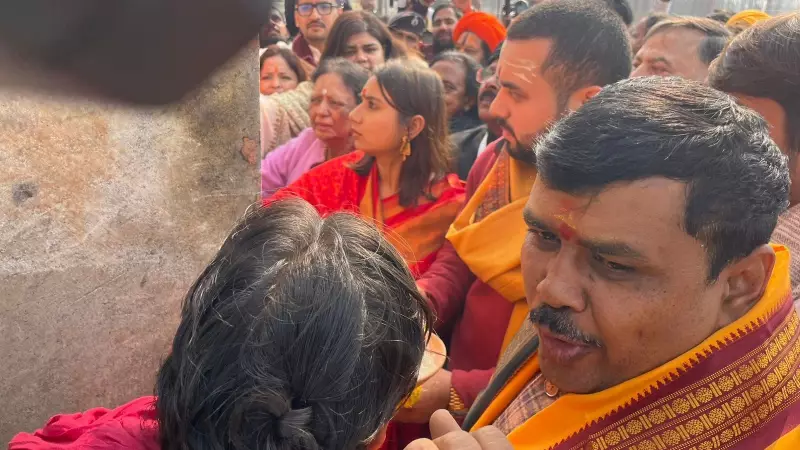
Devotees from across Bihar flocked to Motihari on Saturday as the world's largest Shivling found its home at the Virat Ramayan Mandir. The installation ceremony created a spiritual spectacle that captivated thousands.
Engineering Marvel Meets Divine Ritual
As dawn broke over East Champaran district, workers prepared for the monumental task ahead. Two powerful cranes, each capable of lifting 750 tonnes, carefully hoisted the massive black granite structure. The 210-metric-tonne monolith slowly moved toward its waiting pedestal.
Engineers guided the 33-foot structure with precision. They lowered it inch by inch onto a base nearly twice its height. When the Shivling finally settled into position, the grounds erupted with devotional chants of "Har Har Mahadev."

A helicopter soon appeared overhead, showering flower petals on the newly installed symbol of Lord Shiva. The floral rain drew cheers and applause from the massive crowd gathered below.
Decade-Long Creation Journey
This remarkable Sahasralingam represents nearly ten years of meticulous craftsmanship. Artisans in Pattikadu village near Mahabalipuram, Tamil Nadu, carved the structure from a single piece of black granite. Vinayak Venkatraman and his mother Hemlata Devi supervised the entire process.
The finished Shivling features extraordinary details. Its surface bears 1,008 smaller lingams, creating a unique spiritual design. With a circumference of 33 feet, the structure cost approximately Rs 3 crore to produce. Engineers designed it for structural stability that should last for centuries.
Spiritual Significance and Personal Connections
For many devotees, the installation transcended mere ceremony. Ramesh Verma traveled from Patna with his family specifically for this event. "We rescheduled all our plans to be here," he shared. "Witnessing the Shivling being lifted amid the chanting felt spiritually profound beyond words."
Kamla Devi walked nearly five kilometers from her nearby village with her family. "When the cranes lifted the Shivling and we started chanting, I felt both awe and peace," she recalled. "This moment will stay with me forever."
Elderly pilgrim Jai Singh called the installation "a moment of blessing." He expressed surprise at seeing such a massive Shivling installed in his own village. "I prayed for peace and strength for everyone present," he said.
Elaborate Rituals and Distinguished Presence
Priests and Vedic scholars from sacred centers including Varanasi, Ayodhya, and Haridwar conducted rituals that lasted several hours. They used sacred water from multiple holy sites including Gangotri, Yamunotri, Prayagraj, Ganga Sagar, and Sonpur for the abhishek ceremony.
The floral arrangements came from both within India and abroad, including special flowers from Cambodia. Workers prepared an impressive 18-foot garland featuring marigolds, roses, belpatra, and dhatura.
Samastipur MP Shambhavi Choudhary and her husband Sayan Kunal served as yajmans for the installation rituals. Sayan Kunal, secretary of the Mahavir Mandir Trust, is the son of late Acharya Kishor Kunal, the visionary behind this project.
Bihar Chief Minister Nitish Kumar visited the ceremony before heading to Motihari for engagements under the state government's Samridhi Yatra. Deputy Chief Ministers Samrat Choudhary and Vijay Kumar Sinha accompanied him.
Remarkable Transportation Journey
The Sahasralingam's journey to Bihar was itself extraordinary. After nearly a decade of carving, the monolith began its overland trip from Tamil Nadu on November 21, 2025. It traveled over 2,500 kilometers through Andhra Pradesh, Maharashtra, Madhya Pradesh, and Uttar Pradesh before finally entering Bihar.
Arun, the truck driver who transported the massive structure, expressed pride in his role. "The journey took nearly 50 days," he said. "I feel honored to have been part of this historic undertaking."
Future Vision and Economic Impact
Temple authorities laid the foundation stone for the Virat Ramayan Mandir on June 20, 2023. They expect to complete the entire complex by 2030. Once finished, the 125-acre temple complex will become the world's largest temple.

The planned location near Kesariya, home to the world's largest Buddhist stupa, adds to the site's significance. The completed complex will feature 22 temples and 18 spires, with the main structure rising to a projected height of 270 feet.
Temple officials believe the site will attract devotees from across India and around the world. This influx of visitors should boost local tourism significantly. The increased activity should benefit hospitality, transport, and various allied services in the region.
Community Participation and Arrangements
By early morning, the temple precincts were already crowded with people from across Bihar. Many from nearby villages walked several kilometers through fields and bylanes, undeterred by traffic queues.
Police personnel deployed across the area maintained order and security. Members and volunteers of the Mahavir Mandir Trust coordinated crowd movement and assisted visitors throughout the day.
Temporary LED screens placed across the grounds allowed everyone to follow the proceedings clearly. The screens ensured that even those standing at a distance could participate in the ceremony visually.
Younger visitors expressed awe at the scale of the event. Priya Sharma attended with friends and noted, "The energy here is incredible. This feels more than just a religious event—it feels like being part of something that will be remembered for generations."
The installation took place on Magh Krishna Chaturdashi, an auspicious date in the Hindu calendar. The timing added spiritual significance to an already momentous occasion for devotees and local residents alike.