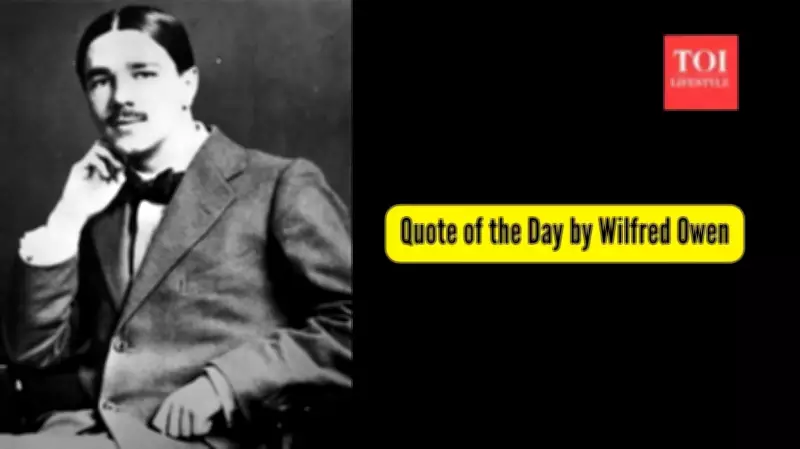
Wilfred Owen: A Defining Voice in War Poetry
Wilfred Owen stands as one of the most significant English poets of the early 20th century, renowned for his powerful and realistic depictions of the horrors of war. Born on March 18, 1893, in Oswestry, England, his life was tragically short, yet his contributions to English literature, particularly in the realm of war poetry, have left an indelible mark. His emotionally charged writing vividly captures the pain, loss, and suffering endured by soldiers during World War I, offering a stark contrast to the patriotic narratives of his time.
Early Life and Influences
Owen came from a modest background; his father worked on the railroads, and his mother was deeply religious, both factors shaping his formative years. From a young age, he displayed a keen interest in poetry and literature, drawing inspiration from renowned poets like John Keats and Percy Bysshe Shelley. Financial constraints prevented him from attending university, leading him to work as a teacher and tutor instead. During a stint as a language tutor in France before the war, he began to take poetry more seriously, initially producing romantic works in traditional styles.
The Transformative Impact of World War I
The outbreak of World War I in 1914 marked a pivotal shift in Owen's life and work. He enlisted in the British Army in 1915, driven by a sense of national duty. His experiences on the front lines in France exposed him to the brutal realities of trench warfare, profoundly affecting his mental and emotional well-being. He developed shell shock, now known as post-traumatic stress disorder, and was hospitalized for treatment. It was during his recovery that he met fellow war poet Siegfried Sassoon, who greatly influenced his writing style, encouraging him to portray his experiences with raw honesty.

Literary Style and Major Works
Owen's poetry is characterized by its use of simple yet potent language, often incorporating real-life battlefield details to enhance realism and relatability. His works explore themes of loss, fear, pity, and the futility of war, challenging the glorification of conflict. One of his most famous poems, Dulce et Decorum Est, vividly describes a gas attack and critiques the notion that dying for one's country is honorable and sweet. Through such pieces, Owen gave voice to the silent suffering of soldiers and questioned the patriotic propaganda prevalent during the era.
Legacy and Posthumous Recognition
Wilfred Owen's life was cut short when he was killed in action on November 4, 1918, just one week before the end of World War I, at the age of 25. His death represented a significant loss to literature, as he had much more to offer. During his lifetime, his poetry received limited recognition, but after his death, friends and supporters like Siegfried Sassoon worked tirelessly to publish his works. Over time, his contributions gained widespread appreciation, and he is now regarded as one of the greatest war poets in history. Owen's legacy lies in his ability to transform war poetry by focusing on the hardships of soldiers rather than glorifying heroism, inspiring countless poets and writers with his honesty and realism. Today, his poems are studied in schools and universities worldwide, continuing to move and inspire readers of all ages.
Reflection on a Quote by Wilfred Owen
The quote, "Children are not meant to be studied, but enjoyed. Only by studying to be pleased do we understand them," reflects Owen's thoughtful and caring perspective on understanding children. It suggests that children should not be treated as objects for strict observation or control but as individuals who bring joy, curiosity, and innocence into our lives. Adults often approach children with judgment or high expectations, but this quote advocates for interaction based on enjoyment, patience, and openness. By valuing children's uniqueness and engaging with them through love and fun, we gain deeper insights into their emotions and behaviors, enriching both their childhood experiences and our own lives.