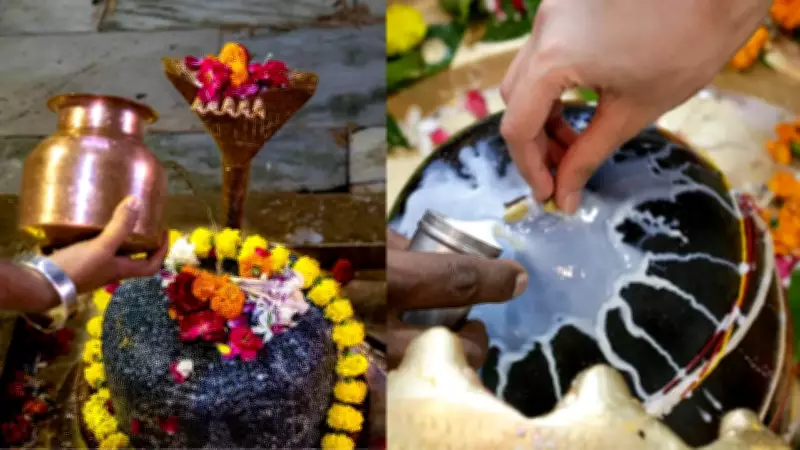
The Spiritual Significance of Milk and Water in Shiva Abhishekam
In countless Hindu households across India, the Monday ritual of performing Abhishekam for Lord Shiva forms an essential component of devotional practice. This sacred ceremony involves bathing the Shiva Lingam with various offerings, yet among all ingredients, milk and water consistently emerge as the most fundamental elements. What profound spiritual truths and ancient wisdom underlie this widespread tradition of combining these two liquids in worship?
Ancient Vedic Foundations of the Ritual
According to Vedic scriptures and ancient Puranic texts, the Abhishekam ceremony represents a direct pathway to divine connection and seeking blessings from Lord Shiva. The ritual transcends mere physical action, serving as a symbolic act that balances cosmic dualities through specific material offerings.
The Shiva Lingam itself symbolizes the infinite, fiery force of cosmic consciousness - a representation of immense transformative energy. In this context, milk and water function as Soma, the cooling lunar nectar that gently moderates Shiva's intense fiery nature. This balancing act between fire and cooling elements forms the philosophical core of the Monday Abhishekam tradition.

Symbolic Meanings of Milk and Water
Milk as Purity and Nourishment: Within Hindu culture and Vedic belief systems, milk holds profound symbolic value representing:
- Absolute purity and piousness
- Spiritual nourishment and divine love
- Inner virtues and soul enrichment
- Peaceful devotion and tranquility
Water as Life and Cleansing: Simultaneously, water carries its own rich symbolism including:
- The continuous flow of life and existence
- Cleansing of ego and worldly attachments
- Washing away karmic "dust" from the soul
- Representation of surrender to divine will
The Transformative Power of Combined Offering
When devotees pour milk and water together as a steady, unified stream (known as Dhara) upon the Shiva Lingam, they engage in a multidimensional spiritual practice. This combined offering creates a powerful symbolic act where the cooling properties of these liquids help moderate Shiva's association with fire and destruction - elements representing necessary change and immense cosmic energy in life's journey.
According to Vedic understanding, this ritual practice serves multiple transformative purposes for devotees:
Cultivating Mental Calmness and Focus
The sacred act of offering milk functions as a deeply meditative practice that trains the mind to maintain steadiness and cool composure. Just as the liquid stream flows consistently without interruption, devotees learn to maintain mental equilibrium even when confronting life's most challenging circumstances. This ritual becomes a practical exercise in developing resilience and inner peace through focused devotional action.
Facilitating Karmic Cleansing and Energetic Balance
Ancient spiritual teachings reveal that the water component washes away accumulated karmic residues and attachments to material existence, while the milk simultaneously replenishes the spirit with peace and devotional energy. On a subtle energetic level, the combination of these liquids is believed to absorb and harmonize with the high-frequency vibrations emitted by the consecrated Lingam.
When devotees either touch the resulting mixture or simply sit in its sacred presence, this interaction helps stabilize their bio-magnetic fields, leading to enhanced inner stillness and mental clarity. The ritual thus serves as both symbolic purification and practical energetic alignment.
Modern Relevance of Ancient Wisdom
In contemporary times, the Monday Shiva Abhishekam with milk and water continues to offer devotees a tangible method for spiritual growth and emotional balance. By consciously participating in this ancient ritual, practitioners engage with timeless wisdom that addresses fundamental human needs for peace, purification, and connection to the divine.

The practice reminds us that spiritual traditions often contain layered meanings - where simple physical actions like pouring liquids can represent profound philosophical concepts about balancing energies, cultivating virtues, and progressing on the path toward self-realization.