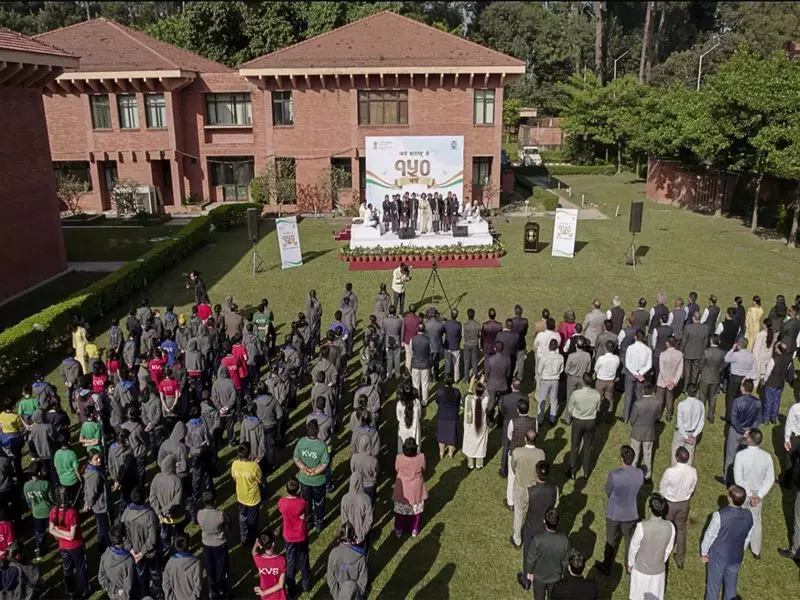
The Indian Embassy in Nepal organized a special cultural event to commemorate the 150th anniversary of India's national song Vande Mataram, celebrating its timeless message of devotion and patriotism.
Historic Celebration in Kathmandu
The Indian Embassy in Kathmandu marked this significant milestone with an evening dedicated to the iconic song written by Bankim Chandra Chattopadhyay in the 1870s. The event brought together dignitaries, cultural enthusiasts, and members of the Indian community living in Nepal to honor the song's enduring legacy.
Indian Ambassador to Nepal Naveen Srivastava addressed the gathering, emphasizing how Vande Mataram has transcended its literary origins to become a powerful symbol of national identity and cultural pride. The celebration highlighted the deep cultural connections between India and Nepal, showcasing how shared artistic heritage continues to strengthen bilateral relations.

The Legacy of Vande Mataram
Originally appearing in Bankim Chandra Chattopadhyay's Bengali novel Anandamath published in 1882, Vande Mataram quickly captured the imagination of the Indian freedom movement. The song's first two verses were officially adopted as India's national song on January 24, 1950, establishing its permanent place in the nation's consciousness.
The embassy event featured musical performances that traced the song's evolution from its literary beginnings to its current status as a national symbol. Artists presented various interpretations of Vande Mataram, demonstrating its adaptability across different musical genres while maintaining its core message of reverence for the motherland.
Strengthening India-Nepal Cultural Bonds
The celebration served as an important platform for cultural diplomacy, reinforcing the special relationship between India and Nepal. Ambassador Srivastava noted that such shared cultural heritage provides a strong foundation for the continuing partnership between the two neighboring nations.
The event included participation from both Indian and Nepali cultural figures, creating a dialogue about the song's universal themes of devotion, sacrifice, and love for one's homeland. This cross-cultural exchange underscored how Vande Mataram's message resonates beyond national boundaries while maintaining its distinct Indian identity.
As the evening concluded, participants reflected on how Vande Mataram has maintained its relevance across three centuries, continuing to inspire new generations with its powerful invocation of patriotic spirit and cultural pride.