Bihar's Ancient Democratic Legacy Takes Center Stage on Republic Day
As India commemorates its 77th Republic Day this Monday, the historical spotlight turns toward Bihar's remarkable legacy as the birthplace of democratic governance. Historians are emphasizing the extraordinary significance of the ancient Lichchavi republic of Vaishali, established in the 6th century BCE, which stands as a monumental milestone in the evolution of democratic systems worldwide.
The World's First Republic: Lichchavi's Ganasangha System
Historical experts reveal that the Lichchavi state operated under an innovative Ganasangha system, an oligarchic republican model where political authority resided with an elected assembly rather than a hereditary monarch. This sophisticated governance structure featured regular assemblies comprising approximately 7,000 to 7,707 elected representatives from prominent families, who collectively made crucial decisions and selected their leaders through democratic processes.
Jayadeo Mishra, former head of the ancient history and archaeology department at Patna University, explains that the Lichchavis developed remarkably advanced administrative mechanisms, including a functional judiciary system. This comprehensive governance framework, often described as pre-democratic, is believed to have emerged centuries before similar democratic experiments in ancient Greece, establishing India's pioneering role in republican thought.

Vaishali: Spiritual and Democratic Epicenter
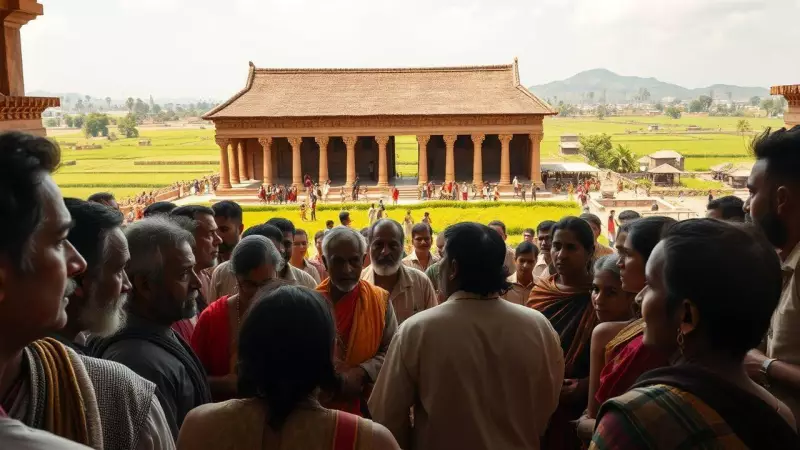
Beyond its political innovations, Vaishali served as a crucial religious and cultural hub. The city was a major center for both Buddhism and Jainism, with Lord Mahavira born in its vicinity and Lord Buddha visiting multiple times and delivering his final sermon there. The physical remnants of this ancient democratic experiment remain visible today at the Raja Vishal Ka Garh, the ruins of the historic assembly hall that continues to stand as a powerful testament to early republican governance.
Mishra emphasizes that this dual legacy - both spiritual and political - solidifies Bihar's position as the foundational cradle of democratic thinking and highlights its extraordinary contributions to the development of republican ideals that continue to shape modern governance.
Global Recognition and Ancient Documentation
The international significance of India's democratic heritage received prominent acknowledgment when Prime Minister Narendra Modi addressed the United Nations General Assembly in New York during 2021, declaring India not merely as the world's largest democracy but as the mother of democracy itself.
Scholars point to extensive, well-documented evidence of republican traditions throughout ancient Indian history. Asha Tripathi, a retired history teacher from Patliputra University, notes that the Shanti Parva of the Mahabharata references republican entities called ganas as integral components of governance. Furthermore, the Vedas describe at least two distinct forms of republican structures:
- The first system involved elected kings with democratic mandates
- The second established a non-monarchical arrangement where authority vested in a council or Sabha
Tripathi elaborates that members of these ancient Sabhas were typically individuals distinguished by their actions and achievements, with some evidence suggesting a bicameral structure where the Sabha shared governance responsibilities with the Samiti, which included representation from common citizens. She asserts that India's ancient republics deserve proper recognition in global historical narratives for their sophisticated contributions to democratic evolution.
This Republic Day celebration provides a timely opportunity to reflect on Bihar's profound historical contributions to democratic governance, reminding citizens of India's deep-rooted traditions of republican thought that continue to inspire modern political systems across the world.