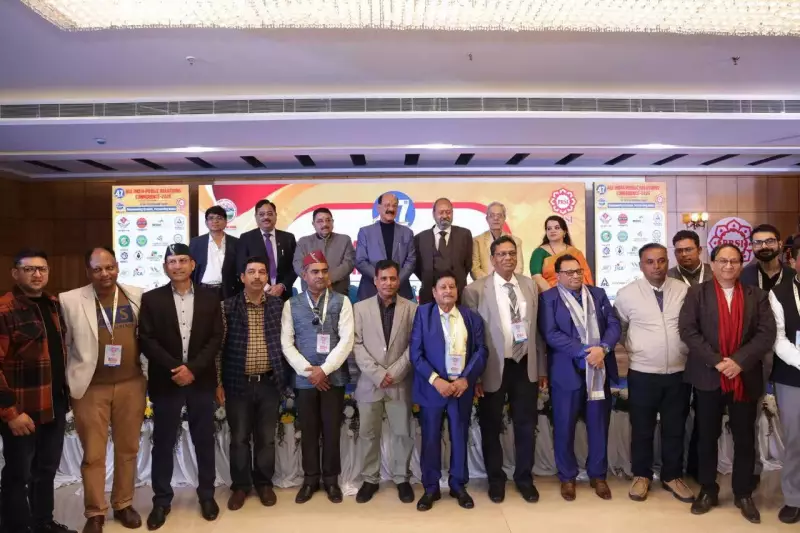
An immersive exhibition held alongside the three-day national convention of the Public Relations Society of India (PRSI) in Dehradun provided a compelling, multi-faceted look into the heart of Uttarakhand. The event, hosted at a hotel on Sahastradhara Road, moved beyond typical promotional pitches to narrate the state's authentic stories, attracting steady interest from over 300 communication professionals from across India and a small international delegation.
Preserving Heritage and Building Futures
The exhibition successfully bridged the gap between Uttarakhand's rich past and its contemporary aspirations. One of the most frequented stalls was managed by the Archaeological Survey of India (ASI). Officials detailed the meticulous conservation work at 44 protected temples across the state, including iconic sites like Kedarnath, Jageshwar, and Hanol. They explained how the original architecture of the Kedarnath temple was preserved during post-2013 flood restoration and highlighted similar careful efforts underway as part of the Badrinath master plan.
On the urban development front, the Mussoorie Dehradun Development Authority (MDDA) showcased models and maps of ongoing and proposed residential projects. These initiatives, focused on areas like Dhaulas, ISBT, and Sahastradhara Road, aim to address the city's housing needs, particularly in the affordable segment. Officials emphasized that the projects are designed to balance growth with environmental sensitivity in the ecologically fragile Doon valley, pointing to green initiatives like the city forest park.

Grassroots Economy and Sustainable Crafts
The exhibition gave a powerful platform to the state's grassroots economic engines. Aanchal Dairy, the cooperative brand of the Uttarakhand Cooperative Dairy Federation, traced the journey of milk from hill villages to urban consumers. Representatives highlighted the role of nearly 50,000 small and marginal farmers in their network, stressing a focus on adding value through dairy products to boost farmer incomes, not just on milk supply.
Another highlight was the display of sustainable handicrafts made from local materials like hemp fibre, nettle (kandali), and wool. A Rishikesh-based organisation showcased jackets, shawls, and winterwear, drawing keen interest from delegates. Artisans present spoke of rising urban demand for these eco-friendly textiles, though they acknowledged that scaling up production remains a significant challenge.
Traditional folk art, especially the ritual aipan art form, was reimagined through women-led initiatives. One stall from Ramnagar demonstrated how aipan has been adapted into contemporary home décor and lifestyle products. This effort underlined how linking traditional skills with market access and training can become a vital tool for the economic independence of rural women.
Preparedness for Modern Challenges
Reflecting Uttarakhand's vulnerability to natural calamities, the State Disaster Response Force (SDRF) had a prominent stall displaying modern rescue equipment. They shared data on their operations from the current year, which included complex mountain rescues and flood response missions. Officials underscored that in a terrain as fragile and unpredictable as Uttarakhand's, seamless coordination between the SDRF, National Disaster Response Force (NDRF), and local police is absolutely critical.
A charming and popular informal feature was a "selfie point" designed as a traditional hill house, complete with authentic stone-and-wood detailing and carved doors. It served as more than just a photo opportunity; it was a visual reminder of the mountain architecture intelligently adapted to climatic and seismic realities, and of a community-centric way of life defined by simplicity.
Through these diverse narratives—of heritage conservation, cooperative farming, sustainable crafts, women's empowerment, urban planning, and institutional preparedness—the exhibition painted a cohesive portrait of a state firmly rooted in its traditions while actively navigating the complexities of the modern world.