Tribes Art Festival 2026 in Delhi Achieves Record Sales of Rs 1.25 Crore
The Tribes Art Fest-2026, held in New Delhi, has made a significant impact on the tribal art scene with total sales reaching an impressive Rs 1.25 crore. This event showcased the rich cultural heritage of India's indigenous communities, drawing over 10,000 visitors who demonstrated a growing interest in preserving and promoting these traditional art forms.
Notable Sales and Artists at the Festival
Rajesh Chaitya Vangad, a visual artist from Maharashtra, stole the spotlight with his Warli painting selling for a remarkable Rs 6.5 lakh. Vangad, a bearer of the Warli style indigenous to the Warli people, learned this art from his mother and masters like Jivya Soma Mashe. His notable works include murals at the Craft Museum in New Delhi, Tata Memorial Hospital in Mumbai, and the T2 Terminal at Mumbai's International Airport.
Another highlight was Mangla Bai Marawi from the Baiga tribe in Madhya Pradesh, who sold her teak wood tribal art sculpture for Rs 5 lakh. Marawi, one of the few women Baiga tattoo artists, expressed that the festival is a crucial platform for artists like her to keep Baiga traditions alive by translating tribal tattoo designs onto paper and canvas.

Bhil artist Bhuri Bai also saw success, with her dotted paintings depicting childhood memories and village life selling for over a lakh each. Her artworks explore the intertwining of art and nature in tribal lives, while also addressing cultural customs that historically kept Bhil women from painting their houses. Bai's works have been exhibited at prestigious institutions like the Indira Gandhi National Centre for the Arts and Lalit Kala Akademi in Kerala.
Diverse Art Forms and Cultural Enrichment
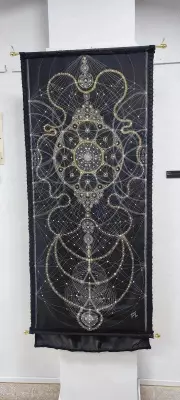
The festival featured an extensive array of tribal art, including over 30 distinct art forms, 70 tribal artists, and more than 1,000 artworks. Other favorites included Ram Singh Urveti's Gond painting and Kingson Swargiary's painting titled 'Harmony' from Bodoland. To enhance visitor engagement, the event offered hands-on workshops, live art demonstrations, and interactive sessions, allowing attendees to immerse themselves in tribal traditions.
Cultural performances by tribal groups from various regions added to the festival's vibrancy, presenting traditional music and dance that further celebrated India's diverse heritage.
Government Support and Economic Impact
Union Tribal Affairs Minister Jual Oram hailed the festival as a moment of great pride, noting that some artists, who typically earn around Rs 25,000 monthly, returned home with earnings up to Rs 7 lakh through this platform. Minister of State for Tribal Affairs Durgadas Uikey emphasized that tribal art reflects the deep connection of these communities with nature, culture, and tradition, stating that such expressions are rooted in everyday lives, beliefs, and collective memories.
This event not only boosted the economic prospects of tribal artists but also fostered greater public appreciation for India's indigenous artistic legacy, marking a significant step in cultural preservation and promotion.