TM Krishna's New Book Decodes India's National Symbols as Metaphors for Nation's Journey
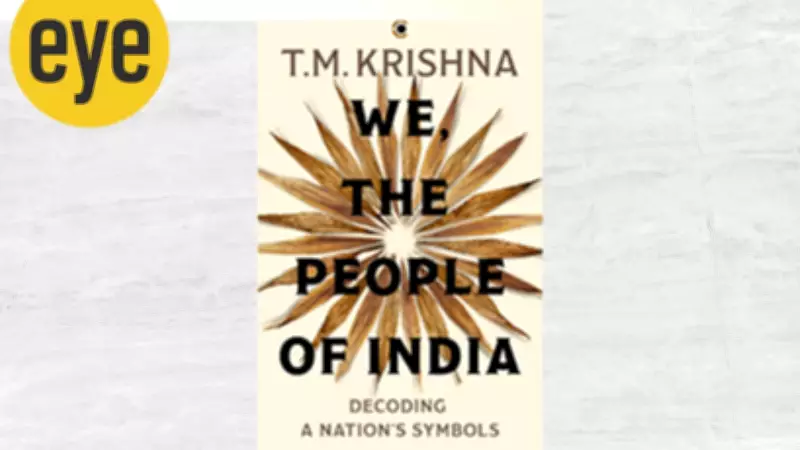
In his recently released work, We, the People of India: Decoding a Nation's Symbols published by Westland, acclaimed Carnatic classical vocalist TM Krishna delves deep into the origins and contemporary meanings of India's national symbols. The book examines the Flag, Anthem, Emblem, Motto, and the Preamble as powerful metaphors that reflect the country's ongoing struggles, aspirations, and evolving identity.
The Journey from Music to National Symbols
Krishna reveals that his exploration began in 2016 when he started singing the complete national anthem, including all its verses. This experience prompted him to question the anthem's deeper significance. His involvement with the Edict Project, which involved musical presentations of King Ashoka's edicts emphasizing empathy-based society, further deepened his interest in symbolism through music.
"Music is symbolic in many ways," Krishna explains. "When you hear a tune, it triggers something. This got me thinking about the ethics of these symbols, what they mean in our everyday lives and if they even matter." He emphasizes that his book is both historical and contemporary, written not by a historian but by a concerned citizen examining how these symbols have evolved from 1950 to 2026.

Why National Symbols Matter Today
Krishna argues that national symbols provide the perfect lens to understand contemporary India because they encompass political underpinnings, sociological imagery, and aesthetics that most people overlook. "Our country is ultimately a feeling," he states. "You can intellectualise many things. But there is something visceral about feeling and these symbols do that. When you see a fluttering flag, it does something to you."
These symbols allow exploration of ethical ideas about self, dharma, environmental relationships, and the kind of country Indians envision. Krishna questions whether today's aggressive nationalism aligns with the original intentions behind selecting these symbols, particularly challenging views that Ashoka's emblem represents meekness rather than strength.
The Preamble: A Symbolic Foundation
Although not an official national symbol, Krishna includes the Preamble because it symbolically represents all subsequent pages of the Constitution. He presents a critical perspective: "We failed our Constitution as people." Despite the Independence struggle, Partition, widespread illiteracy, and poverty, India created a remarkable constitutional document but failed to share its spirit with citizens.
"We have not shared the spirit of the Constitution with the people of India, like in schools," he asserts. "We are a caste-based society, carrying forward feudalistic thoughts for hundreds of years... We did not develop a constitutional culture, a fundamentally democratic culture among Indians." While acknowledging Gopalkrishna Gandhi's more optimistic view, Krishna points to contemporary discussions around UGC guidelines as evidence of persistent casteist and divisive attitudes.
Vande Mataram vs Jana Gana Mana: Two Ideas of India
In perhaps the book's most significant analysis, Krishna examines the national anthem Jana Gana Mana alongside the national song Vande Mataram, particularly relevant during the latter's 150th anniversary year. "Vande Mataram and Jana Gana Mana are two different ideas of India; two different perspectives of why we are together," he explains.
Krishna elaborates: "If you are looking at India as a Hindu-centric land in which others might be accommodated, then Vande Mataram is your song. If you think India is where everybody speaks different languages, wears different clothes, prays to different gods, yet exists equally in this land, then Jana Gana Mana is your song." This distinction highlights the ongoing political debate about India's identity that has persisted for a century.

Course Correction Amidst Political Instrumentalization
As national symbols increasingly function as loyalty tests rather than expressions of solidarity, Krishna sees his book as an act of course correction. "I'm trying to create clarity by saying that there are various ebbs and flows," he notes. "People are playing political games on either side. It's not new or old."
He emphasizes that historical discussions about these symbols involved genuine dialogue about coexistence. "They were trying to say that Muslims and Hindus can live together. We were fundamentally saying, 'Let's listen to each other.' It's not just about removing two verses in Vande Mataram. It's far more complicated."
Krishna concludes with a celebration of India's miraculous unity: "It's an unusual case of a country of such differences somehow finding a footing together, despite violence, despite everything. And isn't that something we should be celebrating, irrespective of our ideology? The fact that this country emerged from such people and culture and stayed together is miraculous. I'm hoping this book celebrates that miracle."