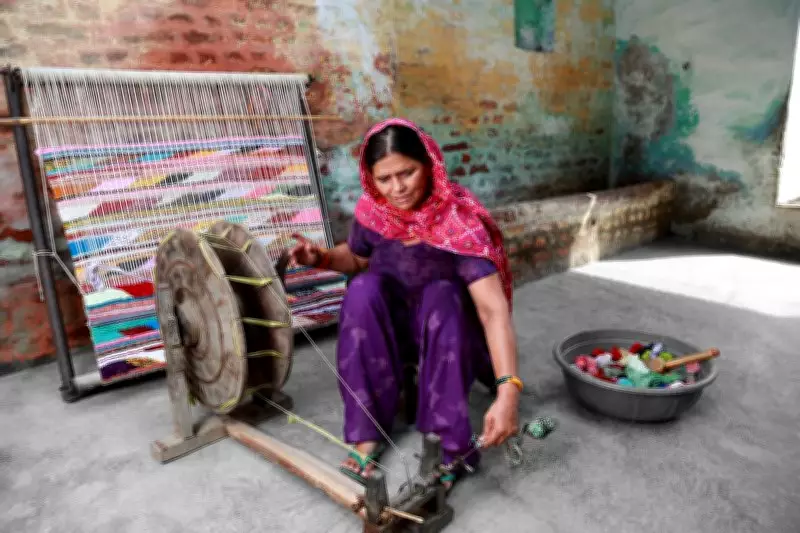
In a corner of our ancestral house lay a charkha, covered with a fading white cloth. As children, we seldom paid attention to it. It neither glittered like modern machines nor demanded admiration like the appliances entering Punjabi homes in the 1990s. It simply existed—silent, patient, and almost withdrawn from the hurried movement of life. Yet every evening, my grandmother would uncover it with the same tenderness with which one opens a scripture.
The Rhythm of the Wheel
The wooden wheel turned with a murmur, somewhere between music and prayer. Cotton stretched gently between fingers weathered by time, and the thread emerged with astonishing calm. Outside, tractors rattled over village roads, televisions blared from neighbouring houses, and the vocabulary of progress made its presence felt with restless confidence. But beside the charkha, time moved differently.
Mahatma Gandhi transformed the charkha into a political metaphor for self-reliance and resistance, but long before it became a nationalist emblem, it had already lived quietly inside Punjabi households as part of everyday existence. In villages across undivided Punjab, its sound accompanied folk songs, winter conversations, and long evenings under mustard-yellow skies.

Echoes in Literature
Punjabi literature carries echoes of the spinning wheel. From the Sufiana tenderness of folk poetry to the aching separation songs sung by women, the charkha often appeared not as a tool but as a companion. It listened to silence. It absorbed longing.
Today, many of those charkhas survive only as decorative relics displayed in drawing rooms, cafes, or heritage resorts. We preserve the object but forget the ethic behind it.
Disappearance of a Way of Life
The disappearance of the charkha reflects the fading of an emotional dimension of Punjabi life. The older generation understood slowness differently. It did not measure productivity through speed alone. Repetition was not boredom but meditation. Repair carried honour. Simplicity was not inadequacy. In contrast, contemporary life often leaves little room for stillness. We consume faster than we create and replace faster than we remember.
My grandmother has passed away. The old house has changed. Cement has replaced mud walls, while lanterns have made way for LED lights. Silence itself has become rarer. But the image of her sitting beside the charkha remains untouched in memory. The wheel turned slowly, almost invisibly, while dusk settled softly upon the courtyard.
A Humble Wheel, Immense Meaning
Perhaps every civilisation possesses such objects—ordinary in appearance yet immense in meaning. For Punjab, the charkha is a humble wheel carrying the weight of memory, labour, femininity, and cultural grace. And somewhere deep within Punjabi consciousness, its sound still continues to turn.
The writer teaches English at MCM DAV College, Kangra.