Historic Vidyapati Manuscript Theft Case Resurfaces Amidst Government Preservation Efforts
Even as the Bihar state government rolls out comprehensive plans to safeguard ancient manuscripts, a priceless palm-leaf copy of the Bhagavat Purana—transcribed by the legendary Mahakavi Vidyapati in Tirhuta script in 1428—remains untraced two decades after being stolen from Darbhanga Sanskrit University in 2003. This rare manuscript represents a significant cultural loss for Bihar's heritage.
Discovery and Historical Significance
This extraordinary manuscript was first discovered by Darbhanga Maharaja Rameshwar Singh during 1916–17, as part of a systematic survey he initiated to locate and preserve Mithila's ancient texts. INTACH Bihar co-convenor Shiv Kumar Mishra revealed that during this historic survey, two particularly significant manuscripts were found at the residence of a villager in Jogiyara village of Darbhanga district.
The first was the Bhagavat Purana transcribed by Mahakavi Vidyapati himself, while the second was the Vishnu Purana transcribed by philosopher Pakshadhar Mishra in 1464 AD. Maharaja Rameshwar Singh kept the Bhagavat Purana in his personal collection, while the Vishnu Purana was entrusted to the Bihar and Orissa Research Society in Patna, where it remains preserved to this day.

Theft and Subsequent Investigation
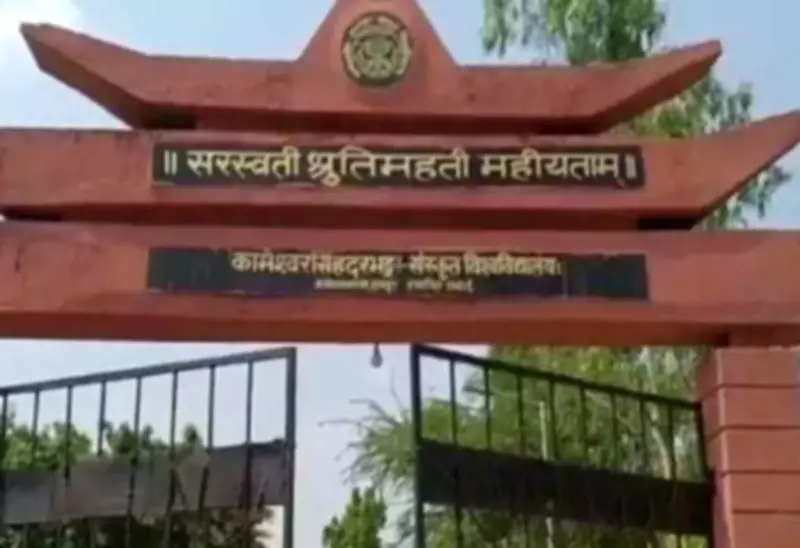
Later, Maharaja Kameshwar Singh deposited the precious Bhagavat Purana manuscript with Kameshwar Singh Darbhanga Sanskrit University for safekeeping. Tragically, in 2003, this invaluable artifact was stolen along with several other manuscripts and documents from the university premises. Mishra emphasized that Vidyapati's handwritten manuscript constitutes a rare heritage treasure of Bihar whose theft demands thorough investigation, recovery, and restoration to the university, with strict legal action against those responsible.
The matter gained renewed attention after Darbhanga resident and activist Pankaj Kumar wrote a detailed letter in December last year to multiple authorities including the Bihar chief minister, Union home minister, state home minister, Director General of Police, Darbhanga District Magistrate, Senior Superintendent of Police, and the Governor. In his comprehensive communication, Pankaj highlighted years of alleged inaction despite clear directives from senior police officers.
Investigation Timeline and Developments
The manuscripts were stolen in 2003, with an FIR lodged on November 29 of the same year. A preliminary chargesheet was filed in 2004. The case took a significant turn when the Hajipur customs department recovered some manuscripts, revealing new facts and identifying additional accused persons.
According to Pankaj Kumar's letter, the then Darbhanga SSP, in letter no. 04 dated September 29, 2010, specifically named then customs superintendent of Hajipur Santosh Kumar Singh, Pappu Thakur alias Ashutosh Jha of Darbhanga, and two unidentified persons as being involved in what was described as organized crime. The SSP had issued explicit instructions for supplementary investigation, arrests, CDR analysis, and filing of a supplementary charge sheet.
However, the letter alleges that even eight years after these 2010 directives—between 2010 and 2018—and in subsequent years, no meaningful action was taken. The case reportedly remains pending at the police station level, while the court continues to await a final report.
Recent Administrative Actions
Following this renewed complaint, the Vigilance department in January this year forwarded the matter to the Home department for appropriate action as per established rules. The communication was formally sent by Vigilance department additional secretary Ramashankar to the additional chief secretary of the Home department, marking the latest administrative step in this long-pending case.
The disappearance of this 15th-century manuscript transcribed by one of India's most celebrated poets represents not just a criminal loss but a cultural tragedy for Bihar's literary heritage. As preservation efforts gain momentum across the state, the recovery of this stolen treasure remains an urgent priority for heritage conservationists and authorities alike.