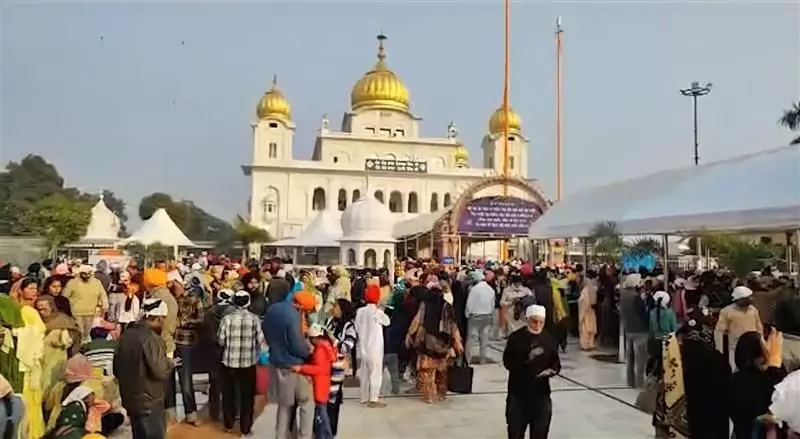
Every year, as winter's chill descends upon Punjab, the historic town of Fatehgarh Sahib transforms into a beacon of faith, sacrifice, and remembrance. The three-day Shaheedi Sabha, one of the most significant annual commemorations in the Sikh religious calendar, draws lakhs of devotees to honor the ultimate sacrifice of the younger sons of Guru Gobind Singh Ji. This gathering is not merely an event; it is a profound reconnection with a foundational chapter of Sikh history that continues to inspire resilience and faith.
The Historical Backdrop: A Tale of Supreme Sacrifice
The Shaheedi Sabha is held in memory of Sahibzadas Zorawar Singh and Fateh Singh, the brave young sons of the tenth Sikh Guru, Guru Gobind Singh Ji. In the year 1705, following the evacuation of Anandpur Sahib, the two younger Sahibzadas, aged just 9 and 7 years old respectively, were captured alongside their grandmother, Mata Gujri Ji. They were brought to Sirhind and presented before the local Mughal governor, Wazir Khan.
Wazir Khan subjected the children to immense pressure, offering them riches and a comfortable life if they renounced their faith. However, displaying courage far beyond their years, the Sahibzadas refused to abandon Sikhism. Their unwavering faith led to a sentence of being bricked alive within a wall. According to historical accounts, as the masonry reached their chests, the wall crumbled. Undeterred, Wazir Khan then ordered their execution. On December 26, 1705, the two young princes were martyred, choosing faith over life. Mata Gujri Ji, upon hearing the news, also breathed her last.

The Three-Day Commemoration: Structure and Spiritual Significance
The Sabha is meticulously organized over three days, culminating on December 29, which marks the day the cremation of the Sahibzadas is believed to have been performed by a nobleman, Todar Mal, who paid a hefty price in gold coins for just enough land to perform the last rites.
The first day sees the commencement of Akhand Path, the continuous reading of the Guru Granth Sahib, at Gurdwara Jyoti Swarup. The second day is marked by religious processions, kirtan (devotional singing), and discourses by scholars who elucidate the teachings and sacrifices of the Sahibzadas. The atmosphere is one of somber reflection mixed with proud remembrance.
The third and final day is the most significant. A massive nagar kirtan (religious procession) winds its way through the town, culminating at Gurdwara Fatehgarh Sahib. The air resonates with hymns and the collective prayers of the devotees. The key events of this day include:
- Final prayers and ardas (supplication) for the martyrs.
- Speeches by eminent religious and community leaders.
- A collective reflection on the values of courage, conviction, and the protection of righteousness.
The management of the event is a collaborative effort, primarily led by the Shiromani Gurdwara Parbandhak Committee (SGPC), which ensures elaborate arrangements for langar (community kitchen), accommodation, security, and medical facilities for the hundreds of thousands of pilgrims.
Why This Sabha Holds Unparalleled Importance
The Shaheedi Sabha at Fatehgarh Sahib stands apart for several compelling reasons. It commemorates perhaps the youngest martyrs in history for their faith, making their story uniquely powerful. Their sacrifice is central to the Sikh identity, symbolizing the principle of standing firm for one's beliefs against all odds, even at the cost of one's life.
Furthermore, the event transcends mere ritual. It serves as an annual pilgrimage that reinforces community bonds and educates the younger generation about their heritage. The gathering is a living testament to the Sikh spirit of Chardi Kala (eternal optimism), where a tragic history is remembered not with despair, but with a resolve to live by the principles the Sahibzadas died for.
The town of Fatehgarh Sahib itself is named after the younger Sahibzada, Fateh Singh, with 'Fateh' meaning victory—a victory of faith over tyranny. Thus, the Sabha is held on ground that is itself a monument to their martyrdom.

In conclusion, the three-day Shaheedi Sabha at Fatehgarh Sahib is much more than an annual religious function. It is a powerful, collective act of memory that keeps alive the flame of sacrifice lit by the Sahibzadas. It reminds millions of the cost of faith and the enduring strength found in spiritual conviction, ensuring that the legacy of Zorawar Singh and Fateh Singh continues to guide and inspire the Sikh community and beyond, generation after generation.