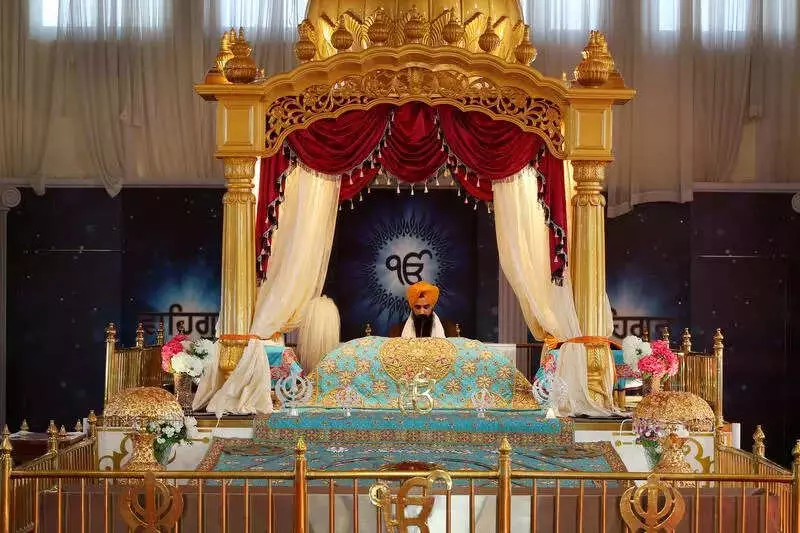
Thousands Gather in Nawanshahr for Shukrana Samagam to Resolve Guru Granth Sahib Saroops Controversy
In a significant religious event, thousands of devotees attended a 'shukrana samagam' at Rasokhana Nabh Kanwal Raja Sahib in Majara Nau Abad, Nawanshahr district, on Sunday. This gathering was organized to express gratitude to the Almighty and to formally mark the conclusion of a contentious issue that had been simmering for some time.
Background of the Controversy
The controversy erupted earlier this year when Punjab Chief Minister Bhagwant Mann, on January 14, announced that a Special Investigation Team (SIT) probing the case of 328 missing saroops of Guru Granth Sahib had discovered 169 of these sacred copies at the shrine. This statement immediately sparked widespread debate and concern among the Sikh community and beyond.
In response, the shrine management swiftly countered the Chief Minister's claims, providing detailed explanations about the 169 saroops. They emphasized that these copies were not linked to the missing ones from the Shiromani Gurdwara Parbandhak Committee (SGPC) in 2020, as initially suggested.

Political Intervention and Resolution
As the controversy gained momentum, key political figures stepped in to assess the situation. Punjab ministers Harpal Singh Cheema and Harjot Singh Bains, along with Anandpur Sahib MP Malvinder Singh Kang, visited the shrine. After a thorough review, they issued a clean chit to the shrine management, stating that no wrongdoing was found regarding the availability of the 169 saroops of Guru Granth Sahib.
This intervention helped to calm tensions and paved the way for the religious function that followed. Special appeals were made to the followers of the shrine to attend the shukrana samagam, which not only served as a gesture of gratitude but also demonstrated the strong following and faith in the shrine.
The Religious Function and Its Significance
The event commenced with the Bhog of Akhand Path, an uninterrupted reading of the Guru Granth Sahib, held on Sunday morning. This was followed by the Gurmat Samagam, where devotees gathered in large numbers to participate in prayers and hymns.
Amrik Singh Ballowal, a representative of the shrine management, addressed the gathering, urging people not to spread misinformation about the shrine. He emphasized the importance of maintaining the sanctity and respect associated with such religious places.
The shukrana samagam effectively marked the end of the controversy, showcasing the community's resilience and commitment to resolving disputes through peaceful and religious means. It highlighted how faith and dialogue can overcome misunderstandings and restore harmony.
Broader Implications and Community Response
This incident underscores the sensitive nature of religious matters in Punjab and the need for careful handling by both political and religious authorities. The swift resolution through political visits and a grand religious gathering reflects the collaborative efforts to uphold religious sentiments while addressing factual inaccuracies.
The large turnout at the samagam not only reinforced the shrine's credibility but also sent a strong message about the power of collective faith in navigating challenges. It serves as a reminder of the deep-rooted cultural and spiritual values that continue to guide the Sikh community in times of controversy.