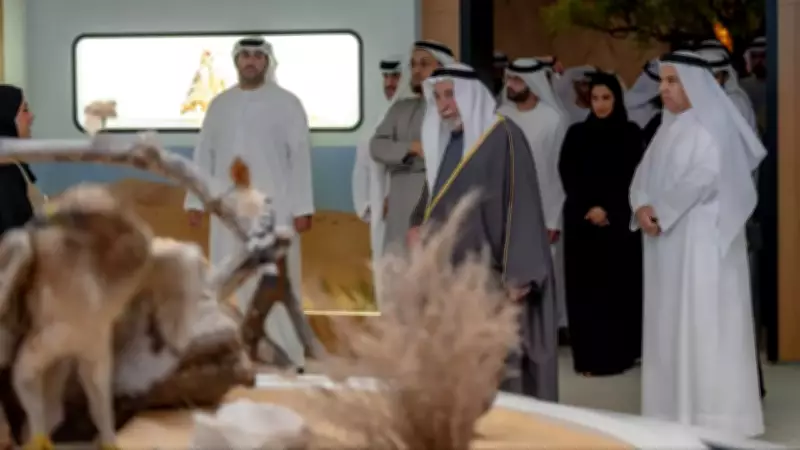
Sharjah's Al Dhaid Wildlife Museum Inaugurated as Premier Desert Education Center
In a landmark cultural and educational achievement for the United Arab Emirates' central region, His Highness Sheikh Dr Sultan bin Mohammed Al Qasimi, Supreme Council Member and Ruler of Sharjah, officially inaugurated the Al Dhaid Wildlife Museum in Al Dhaid City. This significant opening reinforces the emirate's enduring vision for environmental stewardship and public engagement with natural heritage, marking a strategic expansion of Sharjah's conservation-focused destinations.
Strategic Location and Regional Transformation
Positioned adjacent to the historic Souq Sharia't Al Dhaid, the museum represents a qualitative enhancement to Sharjah's growing network of educational institutions dedicated to environmental awareness. This inauguration follows a comprehensive transformation of Al Dhaid into a multifaceted region where heritage preservation, natural exploration, and community life converge seamlessly. The museum's establishment aligns with broader regional development initiatives that integrate cultural tourism with environmental education.
Interactive Learning and Technological Integration
The Wildlife Museum has been meticulously designed as an interactive educational platform that welcomes families, students, researchers, and nature enthusiasts to explore the rich biodiversity and complex ecological dynamics of the Arabian desert landscape. Spanning several specialized exhibition halls, the museum covers diverse natural topics ranging from desert animal adaptations and plant physiology to geological formations and seasonal environmental cycles.

One particularly notable feature includes a sophisticated three-dimensional model of desert fauna anatomy, engineered to deepen visitors' understanding of how various species thrive in harsh desert environments. Through the deployment of advanced digital technologies and interactive learning tools, the museum aims to make environmental science both accessible and engaging for all age groups.
This approach reflects an emerging trend across Gulf Cooperation Council nations of blending cutting-edge technology with natural history education to attract younger audiences and enhance public scientific literacy. During the inauguration ceremony, the Ruler emphasized the critical importance of sustained scientific work to preserve local ecosystems and wildlife, reaffirming Sharjah's ongoing commitment to conservation initiatives that extend far beyond museum walls.
Comprehensive Exhibition Halls and Features
Encompassing 2,755 square meters, the museum features a thoughtfully designed series of specialized halls that systematically explore the Arabian desert's unique environment, adaptation mechanisms, and rich biodiversity:

- Desert Hall: This introductory space presents the defining environmental characteristics of the Arabian Desert and survival strategies employed in its harsh climate. Exhibits include a traditional Bedouin tent symbolizing desert heritage alongside displays explaining ancient seasonal determination through stellar navigation. Visitors can explore various sand dune types, understand sand movement dynamics, and learn about regional minerals and rock formations.
- Plant Hall: Dedicated exclusively to desert flora, this hall presents scientific and interactive content on seasonal and perennial plant species, including several endangered varieties. Exhibits explain plant cell structure, photosynthesis processes, and techniques for estimating tree age in arid environments.
- Insect Hall: Featuring a rare butterfly collection donated by the Ruler of Sharjah alongside carefully preserved insect specimens, this hall offers interactive displays supported by a dedicated application providing scientific insights into insect classification, geographical distribution, and toxicity levels. A virtual reality experience allows visitors to explore the camel spider's life cycle.
- Desert Animals Hall: Highlighting the diversity of desert-dwelling reptiles, mammals, and other species adapted to extreme conditions, this hall's standout feature is a three-dimensional anatomical model of a camel offering in-depth understanding of how the animal's physiological structure supports desert survival.
- Birds Hall: Focusing on both resident and migratory bird species, this space showcases desert birds including falcons and eagles through interactive screens providing information on behavioral differences, hunting techniques, dietary patterns, nest displays, and identification guidance.
- Book Halls: These integrated educational spaces feature content covering nature reserves, publications and e-books by the Environment and Protected Areas Authority, plus an interactive digital book highlighting Al Dhaid's historical role as an agricultural oasis of environmental significance.
- Children's Hall: Specifically designed to inspire younger visitors, this hall features hands-on activities including coloring and drawing exercises aimed at nurturing early appreciation for nature, encouraging scientific curiosity, and building foundational environmental awareness.
Architectural Design and Supporting Facilities
The museum's main entrance reflects traditional Emirati architecture of the central region through an arched gateway reminiscent of historic forts and heritage buildings. This design serves as a symbolic passage into a space dedicated to cultural knowledge and environmental awareness. The earth-toned façade blends harmoniously with the surrounding desert landscape, while the hand-carved wooden gate adorned with Islamic-inspired motifs adds authentic craftsmanship and cultural resonance.
Supporting its scientific and educational mission, the museum is equipped with comprehensive facilities including administrative offices, dedicated spaces for scientific researchers, a fully equipped laboratory, and a technical support department. Additional facilities encompass offices for environmental education, a programs and activities department, a guidance unit, and visitor services including parking and support amenities.
Regional Tourism and Cultural Integration
The Wildlife Museum's opening forms part of a larger strategic effort to reposition Al Dhaid as a destination celebrating both natural environment and historical roots. Alongside the museum, restoration projects and new attractions are enhancing the region's cultural circuit, creating harmonious integration between heritage tourism and environmental exploration. This initiative parallels the restoration of historic structures and marketplaces, collectively offering visitors a layered experience spanning traditional architecture, souq culture, and immersive natural encounters.
Such developments support broader sustainability narratives within the UAE, where environmental conservation, cultural preservation, and community engagement are increasingly integrated into comprehensive urban and regional planning frameworks. The museum exemplifies how cultural institutions are evolving to serve multiple roles as centers for public education, platforms for scientific collaboration, and anchors for sustainable tourism development.
Future Outlook and Environmental Impact
The Al Dhaid Wildlife Museum demonstrates how strategic cultural investments can promote ecological awareness through interactive experiences and scientific engagement. By reflecting Sharjah's environmental heritage while shaping future generations of environmentally conscious citizens, the museum represents a forward-looking approach to conservation education. As it opens to the public, this institution stands as a testament to how investments in environmental education can simultaneously deepen public appreciation of nature while advancing broader cultural and developmental objectives across the United Arab Emirates.
The museum's establishment complements long-term environmental projects such as seed collection and storage initiatives, including multi-million seed banks that reflect comprehensive strategies for protecting plant diversity and supporting scientific research. Through dedicated educational laboratories and research spaces, the institution positions itself not merely as a visitor destination but as a dynamic learning hub for scholars and environmental professionals, supporting initiatives that promote ecological understanding and sustainable development values increasingly central to national agendas throughout the UAE.