Shakuni: Villain or Victim of Fate? A Fresh Look at Mahabharata's Mastermind
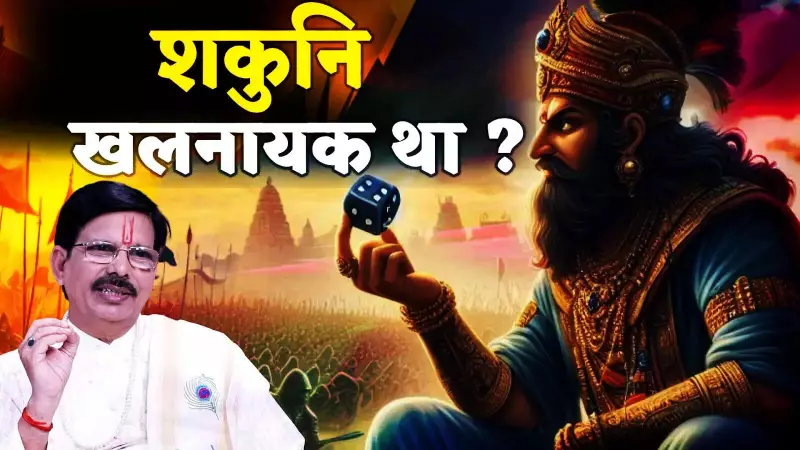
Was Shakuni truly a villain, or has history judged him too harshly? This question lies at the heart of a compelling discussion on Times Mantra, led by K. L. Upadhyay. He delves deep into the lesser-known layers of Shakuni's character from the epic Mahabharata, exploring the pain, strategy, and circumstances that shaped his actions.
Beyond Black and White: The Complexity of Shakuni's Character
Traditional portrayals often paint Shakuni as a pure villain, a manipulator who orchestrated the Kurukshetra war. However, Upadhyay's insightful analysis questions this simplistic view. He encourages viewers to see Shakuni not merely as a one-dimensional antagonist, but as a complex figure molded by fate and difficult choices.
The discussion highlights how Shakuni's actions were deeply rooted in personal tragedy and a desire for justice. His family suffered greatly at the hands of the Kauravas, which fueled his strategic mind. This context adds a layer of understanding to his role in the epic.

Strategy Over Villainy: Reassessing Motivations
Upadhyay presents Shakuni as a master strategist operating within a flawed system. His maneuvers, often seen as deceitful, can also be interpreted as clever tactics in a political landscape rife with injustice. The analysis suggests that labeling him solely as evil overlooks the nuanced motivations behind his decisions.
This perspective challenges the black-and-white morality commonly applied to ancient epics. It invites a more thoughtful examination of characters, recognizing that heroes and villains are often products of their environments and experiences.
The Broader Implications for Understanding Epics
By re-evaluating Shakuni, the discussion opens up larger questions about how we interpret mythological figures. It argues that epics like the Mahabharata offer rich, multifaceted characters whose stories resonate with human complexities. Understanding Shakuni's depth can lead to a richer appreciation of the narrative's moral and philosophical dimensions.
This fresh look at Shakuni serves as a reminder that history and mythology are rarely simple. They are filled with individuals whose actions, while controversial, stem from a mix of personal pain, strategic calculation, and circumstantial pressures.