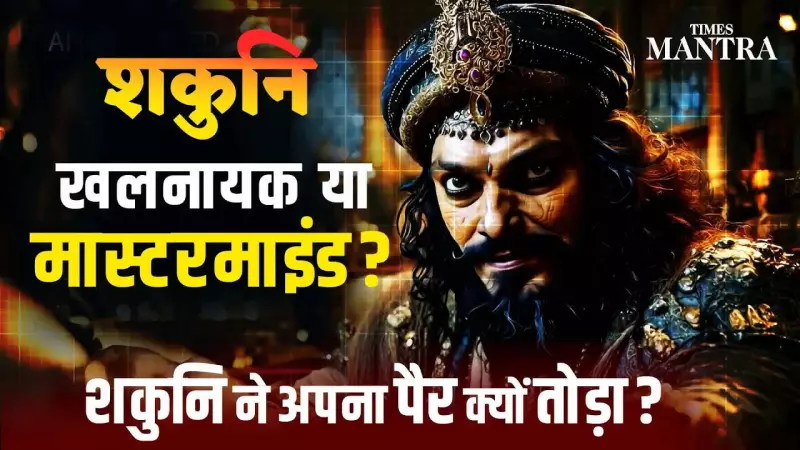
In the vast tapestry of the Mahabharata, few figures are as enigmatic and cunning as Shakuni, the prince of Gandhara. Often labelled the ultimate strategist, his actions were driven by a deep-seated quest for vengeance against the Kuru dynasty. A recent exploration by author K. L. Upadhyay delves into the mind of this legendary mastermind, bringing to light a dramatic and often overlooked act: the moment Shakuni broke his own leg to set his grand plan in motion.
The Calculated Gambit of a Vengeful Prince
Shakuni's story is not merely one of villainy, but of profound personal tragedy and calculated retribution. According to the narratives examined by Upadhyay, Shakuni's family, including his father and siblings, were imprisoned and mistreated by the Kuru king, Bhishma. This injustice forged in him an unyielding resolve for revenge. The act of breaking his own leg was a pivotal, symbolic gesture. It was a physical manifestation of his sacrifice and the lengths he was willing to go to appear weak and non-threatening, thereby lulling the Kauravas into a false sense of security. This daring move, as highlighted in the analysis dated December 15, 2025, was the cornerstone of his long game.
A Web of Strategy and Deceit
Every subsequent action by Shakuni was a carefully placed piece on the chessboard of the Mahabharata. His primary tool was his nephew, Duryodhana. By becoming Duryodhana's closest advisor and uncle, Shakuni expertly manipulated the Kaurava prince's inherent envy and ambition. He masterminded key events that escalated tensions to the point of no return:

- The Game of Dice: His most infamous plot, where he used loaded dice to orchestrate the public humiliation of the Pandavas and Draupadi, directly leading to their exile.
- Psychological Warfare: He constantly fed Duryodhana's insecurities, ensuring the rift between the Pandavas and Kauravas remained irreparable.
- Strategic Misdirection: His apparent loyalty and clever counsel masked his true objective—the complete annihilation of the Kuru lineage from within.
Upadhyay's work posits that Shakuni was not a mere trickster but a brilliant tactician whose intellect and determination actively shaped the course of the epic's history. His revenge was cold, patient, and executed with unparalleled foresight.
The Legacy of a Mastermind
The story of Shakuni, as uncovered in these insights, transcends a simple tale of good versus evil. It highlights the extreme depths of ambition, strategy, and the human desire for justice—or vengeance. His character forces us to question the morality of ends justifying means. While his methods were deceitful and led to catastrophic war, his origin story rooted in familial injustice adds a layer of tragic complexity. The downfall of the Kuru dynasty, culminating in the Kurukshetra war, was, in many ways, the fruition of Shakuni's lifelong, meticulously crafted plan that began with a single, self-inflicted fracture.
This analysis serves as a reminder of how epic narratives like the Mahabharata are filled with characters whose motives are multifaceted. Shakuni remains a timeless symbol of how potent a combination of sharp intellect and unwavering determination can be, for better or for worse, in altering the destiny of empires.