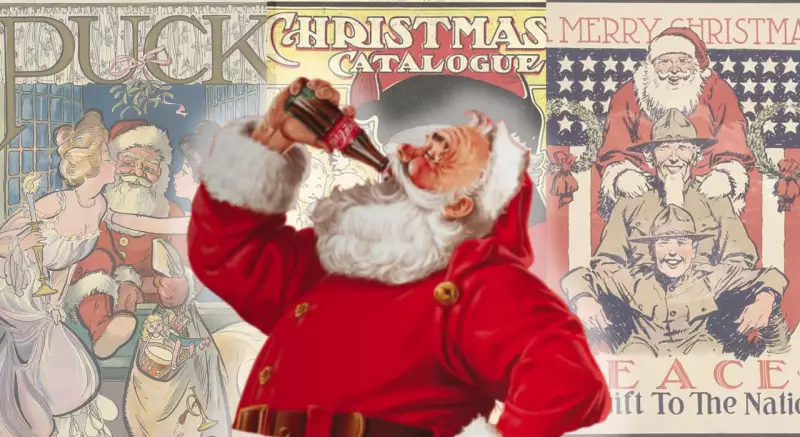
Every December, a popular story makes the rounds: the idea that Santa Claus wears his iconic red and white suit because of Coca-Cola's advertising. This neat, corporate-sounding tale is widely believed, suggesting a global brand painted Christmas in its own colours. However, the true origin of Santa's look is far older, more complex, and much more interesting than a 20th-century marketing campaign.
The Ancient Roots: From Saint Nicholas to Father Christmas
The journey begins not with advertisers, but with a monk. Santa Claus traces back to Saint Nicholas, believed to have lived around 280 AD in modern-day Turkey. He was famed for his generosity and secret gift-giving. While historians debate the exact details of his life, early writings confirm that veneration for him existed long before today's Christmas traditions.
As his legend spread across Europe, it blended with local winter customs. In Britain, he merged with Father Christmas, a figure symbolising festive cheer. In the Netherlands, the Sinterklaas tradition added new layers. During these centuries, Santa had no fixed appearance. He was depicted as tall or short, stern or jolly, and wore a variety of colours, including green, brown, and red.

Artists and Poets: Crafting the Modern Santa in Red
By the early 1800s in America, writers and artists began to solidify the image we know today. A major step was Clement Clarke Moore's 1823 poem "A Visit from St. Nicholas" (often called 'The Night Before Christmas'). It described a plump, cheerful elf with a sleigh and reindeer, establishing core traits.
Visual artists then took over. The most influential was cartoonist Thomas Nast. Through his illustrations for Harper's Weekly starting in the 1860s, Nast gradually defined Santa's features. He portrayed him as round, bearded, and increasingly dressed in red with white fur trim. His famous 1881 illustration "Merry Old Santa" is strikingly close to the modern image. This was all decades before Coca-Cola's famous ads.
By the late 19th century, a red-suited Santa was already common in popular culture. He appeared in advertisements for products like the US Confection Company's Sugar Plums, on the cover of Puck magazine, and in countless postcards. Red was a familiar, established choice, not a corporate invention.
Coca-Cola's Role: Cementing, Not Creating, the Image
So, where did Coca-Cola come in? In the 1930s, the company hired illustrator Haddon Sundblom to create heart-warming Christmas advertisements. The business goal was simple: to boost soda sales during the cold winter months when consumption typically fell.
Sundblom did not invent a new Santa. He drew inspiration directly from Moore's poem and existing art, especially Thomas Nast's work. His version was a warm, grandfatherly figure with rosy cheeks, dressed in—you guessed it—red with white trim. The colour perfectly matched Coca-Cola's branding, but it was not new; it was a familiar palette that resonated with the public.
These advertisements ran through the 1930s and 1940s and achieved massive global reach. Their consistency and popularity helped standardise and cement this specific version of Santa Claus in the world's collective memory. However, they did not originate it.
Fact-checkers and historians have consistently debunked the claim that Coca-Cola created Santa's red outfit. The verdict is clear: the company's campaign helped popularise and fix a particular rendition, but it inherited an image that was already centuries in the making. Santa had already worn red, grown rotund, and become the jolly gift-giver long before any advertiser saw his commercial potential.