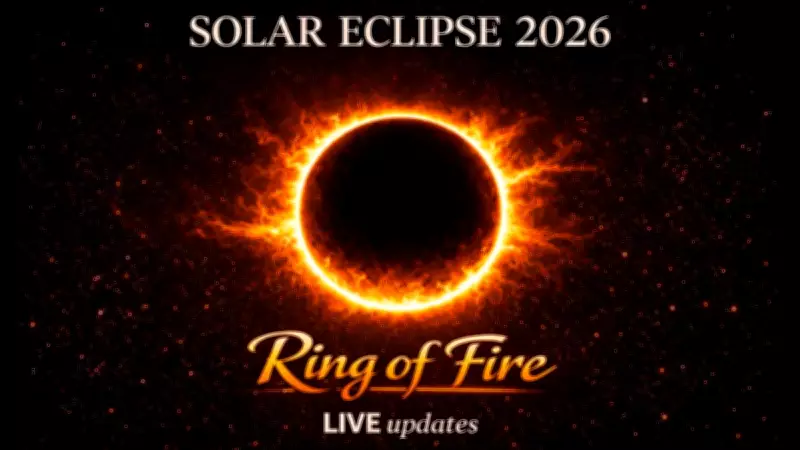
Ring of Fire Solar Eclipse 2026: A Celestial Spectacle
The year 2026 will witness a breathtaking astronomical event with the annular solar eclipse, famously known as the Ring of Fire. This Surya Grahan is scheduled for February 17, 2026, and will be visible across specific regions of the globe, offering a rare visual treat for skywatchers and spiritual enthusiasts alike.
Understanding the Annular Solar Eclipse
An annular solar eclipse occurs when the Moon passes between the Earth and the Sun, but does not completely cover the Sun's disk. Instead, it leaves a bright ring, or annulus, of sunlight visible around the Moon's silhouette, creating the iconic Ring of Fire effect. This phenomenon is distinct from a total solar eclipse, where the Sun is entirely obscured.
The 2026 eclipse will be particularly notable due to its timing and visibility. It will be observable in parts of South America, Africa, and the Atlantic Ocean, with partial phases visible in neighboring areas. Astronomers and eclipse chasers are already marking their calendars for this event, which promises to be a highlight in the celestial calendar.

Sutak Kaal: The Inauspicious Period
In Hindu tradition, a solar eclipse is associated with Sutak Kaal, a period considered inauspicious for certain activities. According to beliefs, Sutak Kaal begins approximately 12 hours before the eclipse and extends until its conclusion. During this time, it is advised to avoid:
- Cooking and eating: Refrain from preparing or consuming food to prevent negative energies.
- Religious rituals: Postpone pujas, yagnas, and other spiritual ceremonies.
- Starting new ventures: Avoid initiating important tasks or journeys.
The exact timings for Sutak Kaal in 2026 will depend on the eclipse's duration and local visibility. Devotees are encouraged to consult regional Panchang calendars for precise details to adhere to these practices respectfully.
Amavasya and Its Spiritual Connection
The solar eclipse of February 17, 2026, coincides with Amavasya, the new moon day in the Hindu lunar calendar. Amavasya is traditionally a time for introspection, ancestor worship, and spiritual cleansing. When combined with a Surya Grahan, its significance is amplified, making it a potent period for meditation and charitable acts.
Many believe that performing good deeds, such as donating to the needy or chanting mantras, during this eclipse can help mitigate negative influences and bring positive karma. It is also a time to honor departed souls, with rituals like Tarpan often conducted to seek blessings and peace.
Safety Precautions and Viewing Tips
Observing a solar eclipse requires caution to protect your eyes from harmful solar radiation. Never look directly at the Sun without proper equipment, such as solar viewing glasses or telescopes with solar filters. Indirect methods, like pinhole projectors, can also provide a safe viewing experience.
For those in regions where the Ring of Fire will be visible, planning ahead is essential. Check local weather forecasts and eclipse maps to find optimal viewing spots. Remember, even during an annular eclipse, the Sun's rays are intense, so prioritize safety to enjoy this natural wonder without risk.
Cultural and Scientific Impact
The 2026 solar eclipse bridges science and spirituality, offering insights into both astronomical phenomena and cultural traditions. Scientists will study the event to learn more about solar dynamics and atmospheric effects, while spiritual communities will engage in practices rooted in ancient wisdom.
This convergence highlights how celestial events continue to inspire awe and reflection across different spheres of life. Whether you're an astronomer, a devotee, or simply a curious observer, the Ring of Fire eclipse of 2026 is an opportunity to connect with the cosmos in a meaningful way.