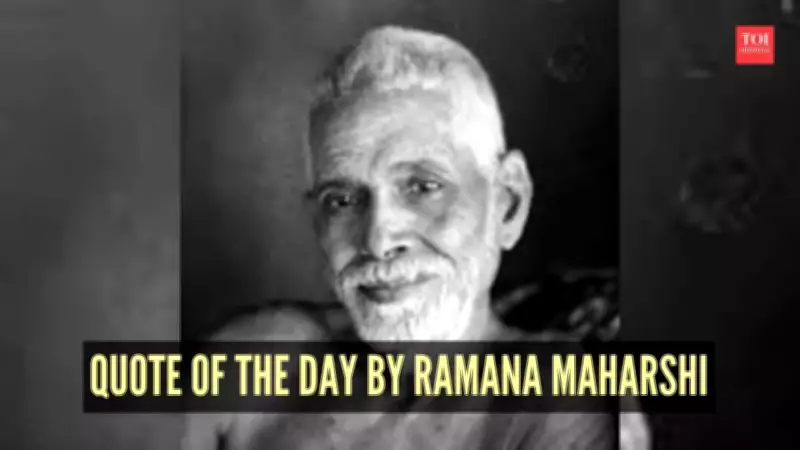
The Life and Spiritual Journey of Ramana Maharshi
Ramana Maharshi stands as one of India's most revered spiritual masters and philosophers, celebrated for his profound insights into spirituality and self-realization. Born in 1879 in Tamil Nadu as Venkataraman Iyer, his life underwent a dramatic transformation at the tender age of sixteen due to an extraordinary spiritual experience. This pivotal event compelled him to leave his home and seek solace at the sacred hill of Arunachala in Tiruvannamalai, which would later become his spiritual sanctuary. Over time, individuals from across India and around the globe began to flock to him, seeking guidance on spirituality and the essence of their own being.
The Core Teachings of Ramana Maharshi
Ramana Maharshi's teachings were characterized by their simplicity yet profound depth. Rather than advocating for complex rituals or philosophical systems, he emphasized the fundamental question of "Who am I?" He believed that true spiritual knowledge is not acquired through external pursuits but through direct experience of the self's nature. His serene demeanor, sharp intellect, and compassionate guidance attracted a diverse following, ranging from scholars to everyday people, cementing his status as a pivotal spiritual figure of the twentieth century.
Analyzing a Key Quote on Human Nature
The quote "The greatest error of a man is to think that he is weak by nature, evil by nature. Every man is divine and strong in his real nature. What are weak and evil are his habits, his desires and thoughts, but not himself" is attributed to Ramana Maharshi and encapsulates a central tenet of his philosophy. In his teachings, he consistently explained that the true self is inherently pure, peaceful, and divine. According to him, qualities such as weakness, negativity, or evil are not intrinsic to this true self but arise from transient mental patterns like desires, fears, and habitual thoughts. Through the practice of self-inquiry, individuals can observe and understand these patterns, gradually realizing their deeper, unchanging nature.

The Profound Truth Behind the Quote
This quote reveals a profound spiritual truth about human self-perception. Many people view themselves as weak or flawed, especially when grappling with negative thoughts, emotions, or habits. Ramana Maharshi encourages a shift in perspective, urging individuals to recognize that they are not inherently weak or faulty. Instead, the weaknesses and negativities experienced are temporary states of the mind, not defining aspects of one's identity. The quote highlights that every individual possesses an inner divinity and strength, with the essence of a person being pure awareness, untainted by mental patterns.
Most individuals perceive themselves as weak due to developed mental habits and thoughts. However, by viewing themselves as whole and complete, they can achieve a sense of peace and clarity about their true nature. Ramana Maharshi's teachings offer a positive and uplifting philosophy for understanding humanity, emphasizing that the true nature of each person is strong and divine. Challenges such as negative tendencies, desires, or thoughts are not permanent fixtures of an individual's character but temporary behavioral patterns.
The Impact and Legacy of His Teachings
By assisting people in transcending these behavioral patterns and connecting with their inner nature, Ramana Maharshi's teachings provide invaluable insights to the world. They underscore that the most significant transformation in a person's life occurs when they shift their perception from focusing on weaknesses to recognizing their inherent inner strength. This shift is not about acquiring something new but realizing what has always been a part of their true self. His legacy continues to inspire seekers on the path to self-discovery and spiritual enlightenment.