The Enduring Legacy of Krishna's Love in Indian Culture
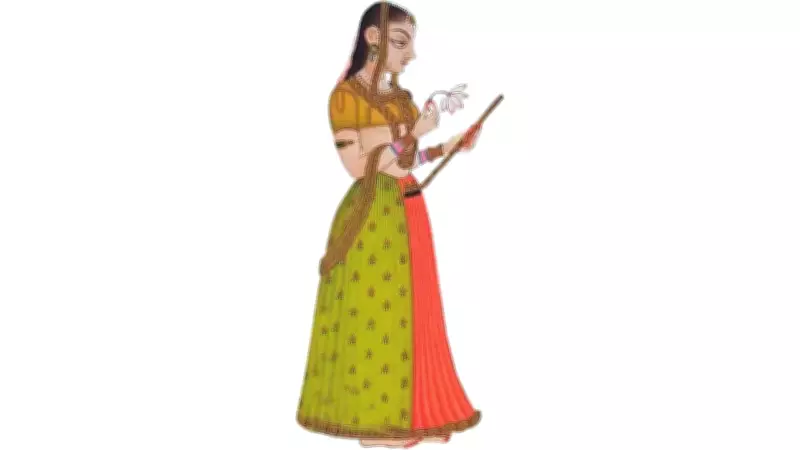
Since Jayadeva immortalized Radha as Krishna's beloved in his seminal work, the Gita Govinda, Radha has remained a central figure in the celebration of Krishna shringar. Over centuries, across various Rajput ateliers and through the works of poets from Vidyapati to Bhanudatta, as well as theologians like Chaitanya and Rupa Goswami, Radha has consistently held a pivotal role. This artistic and devotional tradition has firmly established Radha and Krishna as the quintessential romantic couple in the popular imagination.
From Ritikavya to Bollywood: The Evolution of a Courtly Romance
In the 300-year tradition of Ritikavya, initiated by Keshavdas of Orchha and advanced by poets such as Bihari and Matiram, Krishna shringar transformed into a courtly art form. Here, Krishna and Radha were depicted as the ideal nayak and nayika, embodying refined love and sophistication. This portrayal seamlessly transitioned into Bollywood, where Radha emerged as the artful beloved of Krishna, symbolizing the archetype of a woman in love, resonating with audiences through cinematic narratives.
The Spiritual Foundation: Gopis in the Bhagavata Purana
Amidst the prolific artistic representations, one must turn to the Bhagavata Purana to understand the spiritual roots of Krishna shringar. In the Dasham Skandha, set in the idyllic Vrindavan, gopis—married milkmaids—engage in amorous lilas and kridas with Krishna, culminating in the nightly raas. Their relationship is described as parakiya, not adulterous but existing beyond conventional dharmic boundaries, serving as a metaphor for the union between jivatman (individual soul) and Paramatman (supreme soul).

This parakiya love fosters intense passion, blending longing and belonging, and leads to devotion that is sensually charged yet spiritually profound. It guides the gopis toward atmajnan, or self-knowledge, highlighting how sensual pleasures can become a gateway to spiritual enlightenment.
Dual Aspects of Krishna Shringar: Radha and the Gopis
Krishna shringar is not merely a love story but a metaphor for humanity's longing for the divine. The gopis and Radha represent two distinct facets of this tradition:
- Gopis: They seek Brahmajnana (knowledge of Brahman), celebrate Advaita (non-duality), and reside in the metaphorical Vrindavan. For them, Krishna is an archetype, and sensual experiences are pathways to spiritual knowledge. They are jnanis (wise ones) and virahinis (those in separation), often depicted waiting under Kadamb trees and enchanted by the flute's melody.
- Radha: She embodies rati krida (play of love), prefers Dvaita (duality), and thrives in courtly settings like pranay mandapas. For Radha, Krishna is a courtly nayak, and romance is driven by sensual pleasures, reflecting social realities and artistic ideals.
The Transformative Moment: From Form to Formlessness
A pivotal moment in Krishna shringar occurs after the Ras lila, when Krishna departs Vrindavan, leaving the gopis heartbroken in a state of viraha (longing). Initially mourning the loss of the tangible, sensual Krishna, they eventually rediscover him in the formless—through nature's whispers, rain songs, and river waves. This transition marks a shift from Dvaita to Advaita, from the material to the metaphysical, as the gopis attain self-realization and become Krishnamaya (immersed in Krishna).
Cultural Resonance and Devotional Practices
Over 500 years, Rajput paintings have celebrated the gopis as metaphors for the soul's quest, allowing viewers to identify with their spiritual journey. Meanwhile, Radha, elevated by figures like Chaitanya to Krishna's consort, dominates devotional practices. In Mathura and Vrindavan, temples echo with chants of Radhe Radhe, and devotees often see themselves as sakhis (companions) of Radha, viewing her as a mediator to Krishna.

Yet, the simple, heartfelt gopis from the Bhagavata Purana continue to touch souls, inspiring whispers of Jai Shri Krishna. Together, Radha and the gopis encapsulate the rich duality of Krishna shringar—blending courtly romance with profound spirituality in India's cultural tapestry.