Pune's Saraswati Puja: Housing Societies Embrace Hyper-Local Celebrations
As traditional Bengali associations in Pune continue to host grand public pandals honoring Saraswati, the goddess of knowledge, a significant trend is emerging across the city. Residential complexes are increasingly organizing their own participatory celebrations, creating bridges between Bengali and non-Bengali residents while fostering community spirit.
Majestique City Society Leads the Way in Wagholi
In the Wagholi area, the Majestique City housing society has transformed into a vibrant hub for Saraswati Puja festivities. According to resident Pompa Sarkar, approximately 15 to 16 families have collaborated to organize this year's celebrations with remarkable enthusiasm.
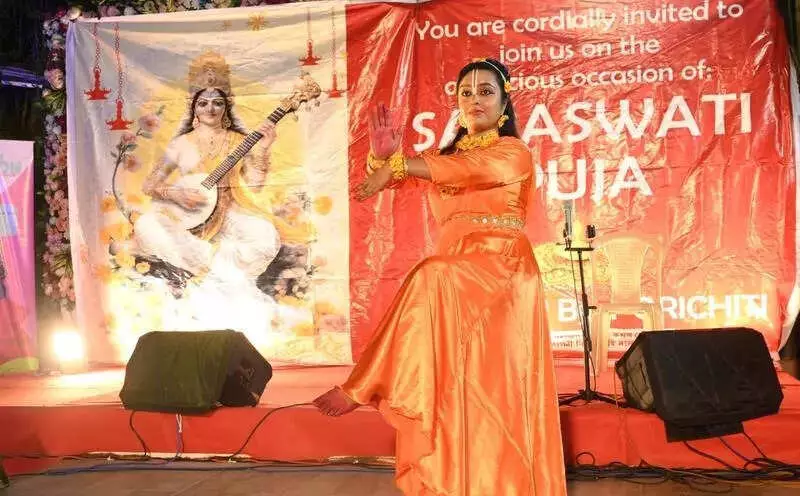
The puja ceremonies will commence at 10 AM on Friday, followed by an evening filled with cultural performances featuring children and women from the community. Sarkar revealed that they are expecting over 400 participants from the society, including numerous non-Bengali families who are eagerly joining the festivities.

The society's celebration program includes a creative drawing competition, live cultural performances, and a unique photography exhibition titled 'Frame a Friend'. Additionally, the community organized a blogging contest focused on local news, with winners scheduled to be felicitated during the Friday celebrations.
Economic Impact and Growing Trend Across Pune
This shift toward hyper-local celebrations is creating noticeable ripples in Pune's local economy. Arun Chakraborty, who manages the popular Bengalis in Pune Facebook page, observed that housing societies in areas like Undri—including prominent complexes such as Godrej Prana and Godrej Greens—have been hosting their own rituals for several years.
"These society-level celebrations have generated increased demand for compact idols," Chakraborty explained. "Idol makers in Khadki are reporting significant growth in orders for smaller statues as more residents choose to celebrate within their residential premises rather than traveling to distant public pandals."
Traditional Associations Maintain Their Prominence
Despite the rise in society-level events, Pune's established Bengali associations remain the foundational pillars of the city's public Saraswati Puja celebrations. The Porchiti Association is marking its fifth consecutive year of celebrations on January 23rd at the Jai Tulja Bhavani Mangalkaryalay in Handewadi.
Association member Nivedita Nandi shared that the day will feature hatey khori—a traditional ceremony where young children are initiated into the world of writing. "We anticipate over 2,500 attendees this year," Nandi stated. "Alongside the sacred rituals, we will serve a traditional community bhog consisting of khichri, labra, and chutney."
The event will also host food stalls, shopping corners, and cultural tributes including specially themed songs dedicated to Subhas Chandra Bose.
Agomoni Prabasi Sangha's Grand Celebration on Baner Road
On Baner Road, the Agomoni Prabasi Sangha will host a large-scale event at Kundan Garden on January 23rd. Their comprehensive itinerary features poetry recitations, a conch-shell blowing competition, a traditional dress fashion show, and open-mic music sessions showcasing instruments like the guitar and flute.
Rajesh Burman, chief secretary of Agomoni Prabasi Sangha, emphasized the spiritual significance behind these artistic pursuits. "Music, dance, and poetry are integral to the puja because they reflect our belief that learning and creativity go hand-in-hand," Burman elaborated.
"A key tradition involves placing books and learning tools at the goddess's feet while refraining from study for the day—a symbolic gesture of surrendering our knowledge to the divine."
This dual approach—combining traditional large-scale celebrations with intimate society-level events—demonstrates how Pune's cultural landscape is evolving while maintaining its rich heritage. The growing participation of non-Bengali residents in these hyper-local celebrations highlights the city's remarkable cultural integration and community bonding during festive occasions.