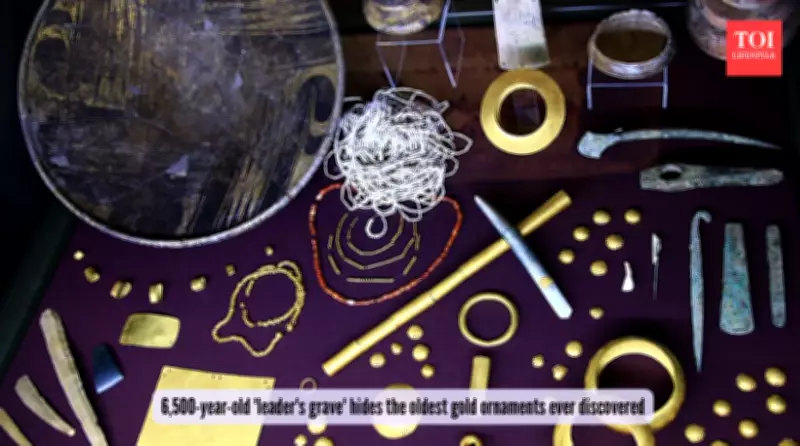
Contrary to popular imagination where gold is often associated with pirate chests hidden in ocean depths or family heirlooms buried in secret rooms, the world's oldest gold treasure was actually discovered in a grave. This remarkable find shatters the fantasy of gold solely belonging to swashbuckling tales and instead roots it in ancient burial practices that reveal early human civilization.
The Accidental Discovery That Rewrote History
In the autumn of 1972, construction workers near Bulgaria's Black Sea coast stumbled upon an extraordinary archaeological site while digging. They uncovered what is now known as the Varna Necropolis, a Copper Age burial ground that has provided unprecedented insights into early wealth, craftsmanship, and social organization. This site, dating back to approximately 4600-4300 BC, contains the oldest processed gold artifacts ever found by humanity.
An Age-Old Graveyard Overflowing with Gold
Over two decades of meticulous excavation revealed nearly 300 graves at the Varna Necropolis, with 62 of them containing gold artifacts. The total gold recovered weighs an astonishing 13.2 pounds or 6 kilograms, representing a treasure trove that predates most early civilizations. While a tiny bead from the nearby Tell Yuna Site might potentially be older, its dating remains unconfirmed, leaving the Varna gold as the verified oldest processed gold in the world.

The Special Burial That Held a Third of All Gold
Among the numerous graves, one particular burial stood out dramatically. Designated as Grave 43, this site contained approximately one-third of all the gold discovered at Varna. The skeleton belonged to a man over 60 years of age, possibly a skilled metalsmith based on the artifacts found with him.
His burial included an elaborate collection of gold ornaments:
- Intricate beaded necklaces
- Delicate bangles and earrings
- Ornamental pendants
- Clothing discs
- A gold-wrapped axe handle
- A gold penis sheath
This mid-fifth millennium BC discovery showcases exquisite craftsmanship from the Copper Age, which spanned between 4500-3000 BC, demonstrating advanced metalworking skills that were previously thought to have developed much later in human history.
Why Did Gold Emerge in the Balkans?
Scientists have long been intrigued by why gold processing began in the Balkan region. The answer appears to lie in the Copper Age breakthroughs in mining techniques, metal melting processes, and extensive trade networks. The Varna people, a Late Chalcolithic society in northeastern Bulgaria, engaged in far-reaching trade, exchanging copper from the Sredna Gora mountains and Mediterranean shells. They are now recognized among the earliest people to create processed gold, representing a significant technological leap along the Black Sea coast.
Sacred Status Beyond Material Wealth
According to representatives from the Varna Museum who spoke with Live Science, the cemetery illustrates the early emergence of a class-segregated society, serving as a prototype for social and political structures. They emphasize that gold objects functioned as sacred and symbolic attributes designating social status rather than mere indicators of wealth. Elite graves like Grave 43 suggest the presence of leaders or individuals with special status, positioning Varna as one of Earth's earliest complex societies with established hierarchies.
A Window into Ancient Social Structure
The site has yielded over 22,000 artifacts that reveal trade connections reaching as far as the Volga region and Cyclades, significantly boosting Varna's status as a cultural and economic center. Gold scepters found in important graves symbolized authority and power, further emphasizing the structured nature of this ancient society. This Copper Age hotspot challenges conventional historical timelines, demonstrating that organized societies with sacred metal traditions existed millennia earlier than previously believed.

Today, the treasures from Varna Necropolis are preserved and displayed at the Varna Museum, where they continue to educate visitors about humanity's glittering origins and the sophisticated societies that flourished during the Copper Age. The discovery fundamentally changes our understanding of when and how human civilizations began valuing and working with precious metals, moving the narrative away from pirate legends and toward archaeological reality.