Odisha's Gyan Bharatam Mission Gains Momentum with 65,000 Palm-Leaf Manuscripts Registered
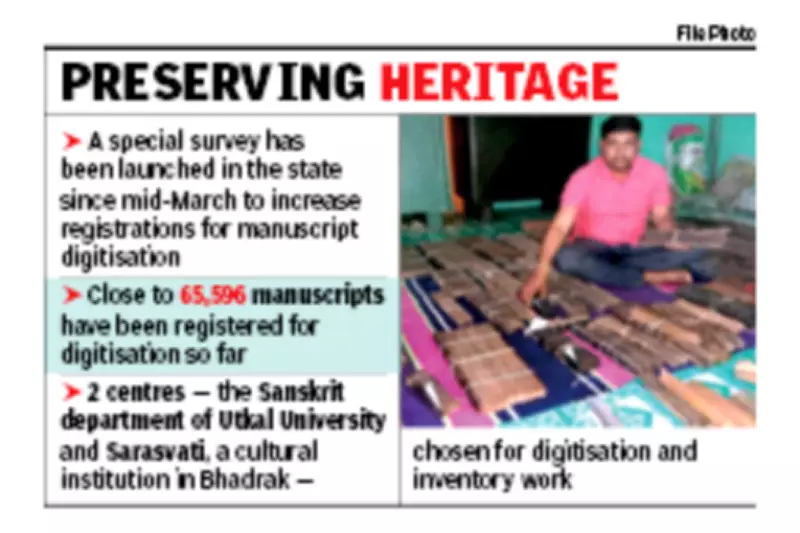
The state of Odisha has been experiencing an exceptionally encouraging response to the Gyan Bharatam Mission (GBM), with a substantial number of individuals and institutions stepping forward to digitize rare manuscripts in their possession. Although the mission was launched nationally by Prime Minister Narendra Modi in February of last year, active work in Odisha commenced just three months ago. Since that time, official reports indicate that close to 65,000 manuscripts have been registered under the initiative for digitization.
Unique Focus on Palm-Leaf Manuscripts
Unlike many other states where registrations include both palm-leaf manuscripts and paper copies, Odisha's entries consist exclusively of palm-leaf manuscripts. This distinctive focus highlights the state's rich repository of ancient knowledge preserved on organic materials vulnerable to decay over time. The mission, fundamentally aimed at preserving India's vast and diverse knowledge heritage, prioritizes digitizing these fragile documents.
In Odisha, such manuscripts are traditionally preserved in monasteries, temples, mutts, and private collections, often passed down meticulously through generations. The growing participation reflects an increasing awareness about the urgent need to safeguard these invaluable cultural and intellectual assets.

Official Insights and Process Accessibility
Deba Prasad Dash, the nodal officer for the mission in Odisha and joint secretary in the culture department, emphasized that several institutions, including religious bodies and research organizations, have actively joined the effort. Many individuals have also demonstrated a remarkable willingness to share their collections for digitization.
The mission operates through a dedicated survey application, allowing manuscript owners to register and express their interest in submitting their collections either permanently or temporarily for digitization. Contributors are not required to part with their collections permanently. Those unwilling to donate can provide the manuscripts temporarily to the State Museum for digitization and conservation, after which they will be safely returned to the owners.
To make the process more accessible and user-friendly, the government has implemented provisions for on-site digitization. Following the Odia Pakhya celebrations, authorities plan to initiate a comprehensive door-to-door survey. Specialized teams will visit interested individuals to assist them in registering on the application. After registration, expert digitization teams will visit the premises, digitally archive the manuscripts, and return them without necessitating any physical transfer, thereby minimizing inconvenience to owners.
Strategic Locations and Institutional Collaboration
Officials have identified 22 strategic locations across the state, including Nayagarh, Sambalpur, and Bhubaneswar, as areas possessing significant manuscript wealth at both individual and institutional levels. This targeted approach ensures efficient resource allocation and maximizes outreach.
Two prominent institutions have been selected to carry out digitization activities under the mission: the Sanskrit department of Utkal University and Sarasvati, a respected cultural institution in Bhadrak. Their involvement underscores the academic and cultural commitment to this preservation drive.
Broader Implications for Heritage Preservation
Experts believe this concerted drive will not only help preserve fragile manuscripts from environmental degradation and the passage of time but also make their contents accessible to scholars, researchers, and the general public. By digitizing these ancient texts, the mission bridges the gap between historical preservation and modern accessibility, ensuring that India's intellectual legacy remains available for future generations.
The proactive steps taken in Odisha serve as a model for other regions, demonstrating how technology can be leveraged to protect and propagate cultural heritage. The mission's success hinges on continued community engagement and institutional support, both of which are evidently flourishing in the state.