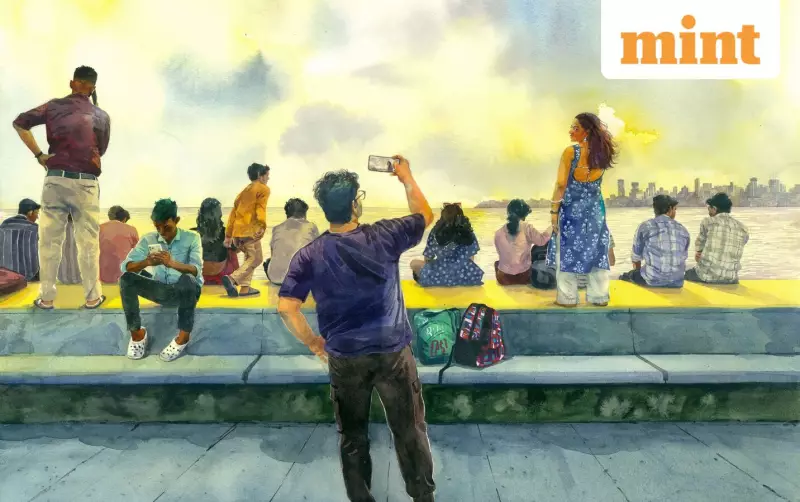
When Mumbai-based artist Zainab Tambawalla learned that a historic hospital gate she admired might face demolition, she took action, emailing the owners to plead for its preservation. This instinct to safeguard the city's visual heritage defines her work, a blend of meticulous artistry and quiet activism. Her dismay at the removal of the classic wooden signboard from her father's paint shop further fuels her mission: to document a changing city before its character fades. "Some moments will be gone before you take out your notebook," says Tambawalla, who practices 'urban sketching'. Her first solo exhibition, 'Seen Unseen', now open at 47-A Khotachi Wadi until 4 January, is a vibrant testament to this philosophy.
Chronicling the City's Vanishing Crafts and Corners
Tambawalla emerges as a miniaturist of the metropolis, capturing intricate details often overlooked. Her watercolours serve as poignant records of disappearing skills and infrastructure. One painting depicts a telephone repairman, hunched over a tangled mesh of wires, one foot elevated—a single image conveying the complex, fading world of landline telephony. Another work is an ode to the neighbourhood knife sharpener, a craftsman potentially endangered by a throwaway culture. Her focus extends to inanimate objects, like electricity junction boxes, which she renders in vivid reds that grant them the iconic glamour of a London phone booth, albeit adorned with the faded advertisements typical of Indian cities.
A Social Canvas: Sleep, Struggle, and Resilience
The exhibition transforms into powerful social commentary in its portrayal of the city's workforce. One of the most moving sections is Tambawalla's tribute to exhausted workers catching naps in public spaces. She subverts the cliché of 'The City that Never Sleeps' to highlight a harsher reality: immigrants worn down by labour or the relentless search for it. One arresting frame shows a young man asleep against a bus stop pillar plastered with 'help wanted' ads, a silent critique of the elusive 'demographic dividend'. Another features a Bengali woman sleeping on a handcart, with the artist noting the rarity of such a scene, as few Indian women feel safe sleeping in public. These works, as the notes explain, "stay with that thin line between exhaustion and resilience, between dreaming and simply making it through the night."

Colourful Commentary and a Call to Observe
Despite its serious themes, Tambawalla's vision is far from gloomy. She employs a vibrant, Matisse-like palette that engages the viewer. In a spectacular series on water tankers, she tackles water inequality and future scarcity while celebrating these 'giant beasts of burden', painting them like caparisoned elephants at a festival. Her background in animation shines through in snappy captions. Coming from a family of artisans—her father owns a paint shop, her mother is a seamstress—Tambawalla states, "I am privileged to have been born at a time when we were not privileged." This empathy for the labour that makes the city hum is central to her worldview. In the spirit of Salman Rushdie's wordplay on 'Art Deco', Tambawalla's debut is a rallying cry to truly dekho (look). 'Seen Unseen' acts as a portable projector, urging us to observe the poignant, vibrant world we are often too busy to see.