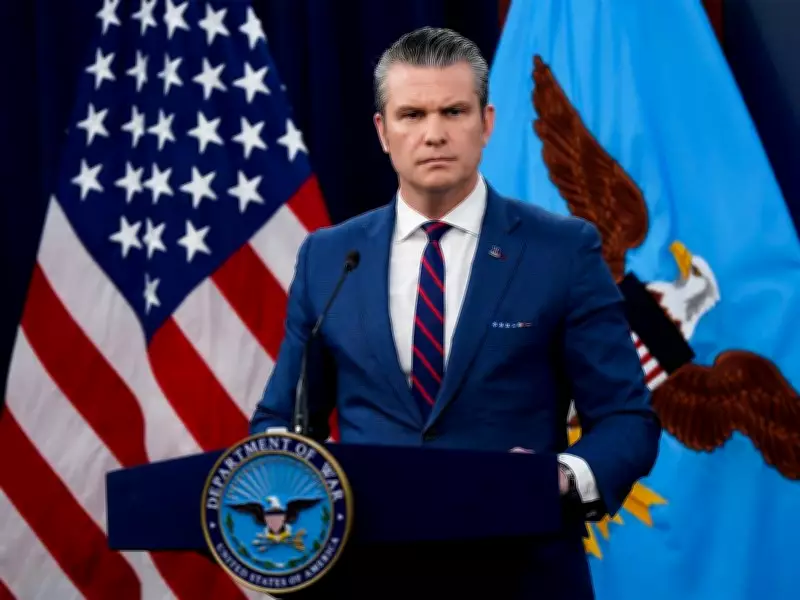
US Defense Chief Declares Intent to Dominate Iranian Airspace
In a bold statement that has heightened geopolitical tensions, the United States Secretary of War has asserted that the US will establish complete control over Iranian airspace. This declaration comes amid ongoing conflicts and strategic maneuvers in the Middle East, signaling a potential escalation in military posture toward Iran.
Escalating Rhetoric in Regional Standoff
The announcement underscores the deepening rift between the US and Iran, with the Secretary emphasizing the US military's capability and resolve to dominate the skies. This move is seen as part of broader efforts to counter Iranian influence and activities in the region, which have been a source of concern for US allies and policymakers.
Key Implications for International Relations

The statement could have far-reaching consequences, potentially affecting:
- Diplomatic efforts to de-escalate tensions in the Middle East.
- Regional security dynamics, including responses from neighboring countries.
- Global oil markets and trade routes, given Iran's strategic location.
Background and Context of the Announcement
This development follows a series of incidents and confrontations between US and Iranian forces, including drone strikes and naval encounters. The US has long accused Iran of destabilizing actions, such as supporting proxy groups and advancing its nuclear program, leading to increased military readiness and rhetoric from Washington.
Potential Outcomes and Reactions
Experts warn that such declarations could provoke retaliatory measures from Iran, further complicating peace initiatives. The international community, including organizations like the United Nations, may call for restraint to prevent a full-scale conflict. Additionally, this stance might influence upcoming diplomatic talks and sanctions policies related to Iran.
In summary, the US Secretary of War's vow to control Iranian airspace marks a significant escalation in verbal hostilities, with real-world implications for regional stability and global politics. As tensions simmer, the world watches closely for any military or diplomatic shifts that could arise from this assertive posture.