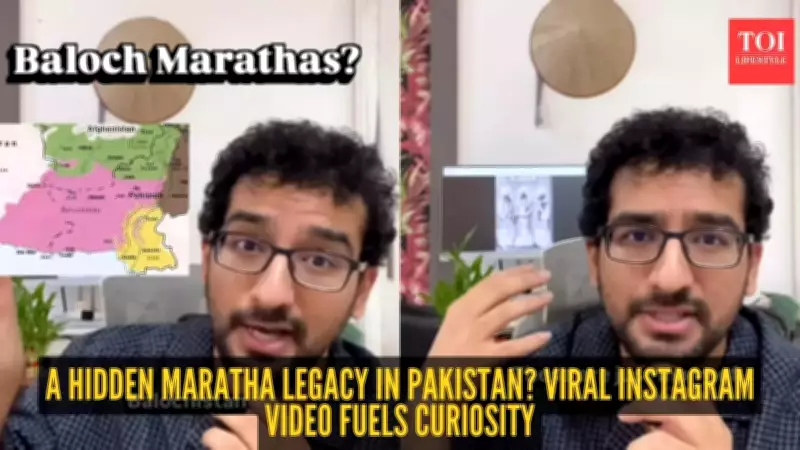
Maratha Descendants in Balochistan? Viral Video Sparks Historical Debate
A surprising claim is currently captivating social media platforms: a community in Pakistan's Balochistan province might have ancestral roots tracing back to the Marathas of India. This fascinating historical narrative emerged after a content creator shared an intriguing video on Instagram, sparking widespread discussion and curiosity among viewers worldwide.
The Unexpected Discovery
According to the viral video, the creator stumbled upon an organization called Maratha Kaumi Etihad while conducting research about communities in Balochistan. The name immediately caught his attention, prompting deeper investigation into what initially seemed like an improbable connection between Maratha heritage and the Balochistan region.
The historical trail leads back to the Third Battle of Panipat in 1761, where the Maratha forces faced defeat against Afghan ruler Ahmad Shah Abdali. Historical accounts suggest that following this significant battle, numerous Maratha soldiers were captured as prisoners. Over subsequent years, some of these captives were reportedly relocated to areas that now constitute parts of Balochistan, where they eventually settled and integrated into local societies.

Cultural Evidence and Traditions
Despite centuries passing and numerous transformations in political boundaries and religious affiliations, the video creator points to specific cultural practices that have remarkably endured. These traditions bear striking resemblance to Maharashtrian customs, suggesting possible Maratha ancestry among certain Balochistan families.
Key cultural markers identified include:
- Haldi ceremonies during wedding celebrations
- Rice rituals performed when entering new homes
- The use of "Aai" for mother, a distinctly Marathi term
These seemingly small cultural details have resonated strongly with viewers, particularly those familiar with Maharashtrian traditions, lending credibility to the historical claims presented in the video.
Viral Response and Community Reactions
The video rapidly gained viral status, with the comments section transforming into a vibrant forum blending historical discussion, personal anecdotes, and internet humor. Several users shared related experiences and knowledge that supported the video's claims.
One commenter noted that Maharashtrian families have historically existed in Karachi, sharing a family story about relatives who eventually migrated to Thane during the Partition era. Another user contributed to the cultural discussion by clarifying the proper pronunciation of "Aai," correcting common misconceptions.
Perhaps most remarkably, a user recalled that the 1944 Marathi film Ramshastri once attracted packed audiences in Kalat, a princely state within Balochistan. This historical detail suggests that cultural connections between the regions were once more fluid and interconnected than contemporary perceptions might indicate.
Modern Connections and Internet Humor
The discussion extended to contemporary connections, with one commenter mentioning that during Maratha reservation protests in India, individuals identifying as Bugti Marathas in Pakistan expressed solidarity online. These individuals reportedly added "Maratha" to their names on social media platforms, demonstrating a continued desire to maintain connections with their perceived ancestral roots.
True to internet culture, the viral moment generated humorous commentary as well. One particularly popular comment quipped, "We got Baloch Marathis before GTA 6," perfectly encapsulating the blend of astonishment and amusement that characterized the online response to this historical revelation.
Historical Context and Academic Considerations
While the video has sparked considerable interest and discussion, historians might approach certain aspects of the narrative with caution. Documentation from the 18th century remains incomplete in many cases, and migration histories rarely follow straightforward, well-documented paths. The complex nature of historical records from this period means that definitive verification presents challenges.

Nevertheless, the conversation has successfully ignited broader curiosity about how communities preserve identity across generations and geographical boundaries. The discussion highlights how cultural elements can survive political upheavals, religious transformations, and centuries of separation.
History often persists in subtle ways—through rituals maintained without full understanding of their origins, through words passed down through generations, and through daily habits that carry echoes of distant pasts. Sometimes, all that's needed to rediscover these connections is one compelling video that captures public imagination and prompts people to look more closely at the cultural threads that bind seemingly disparate communities.