The Mahabharata's Enduring Legacy: A Guide to Ethical Living
Even after centuries, the Mahabharata stands as one of the most profound texts in human history, continuously inspiring individuals to lead virtuous and meaningful lives. Revered as the 'Great Indian Epic,' this monumental work serves as an essential study of ethics that every person should engage with. Its narratives delve deep into moral dilemmas, human nature, and the complexities of duty, offering timeless insights that resonate across cultures and eras.
Beyond Victory: The Deeper Lessons of the Epic
Through the character of Yudhishthira, the Mahabharata imparts a crucial lesson: true victory is not merely about triumph in battle but about maintaining equanimity in the face of both success and failure. This perspective challenges conventional notions of achievement, emphasizing inner peace over external conquests. The epic's wisdom extends to personal conduct, urging readers to cultivate resilience and moral integrity regardless of circumstances.
Today's Quote: A Beacon of Wisdom from the Vana Parva
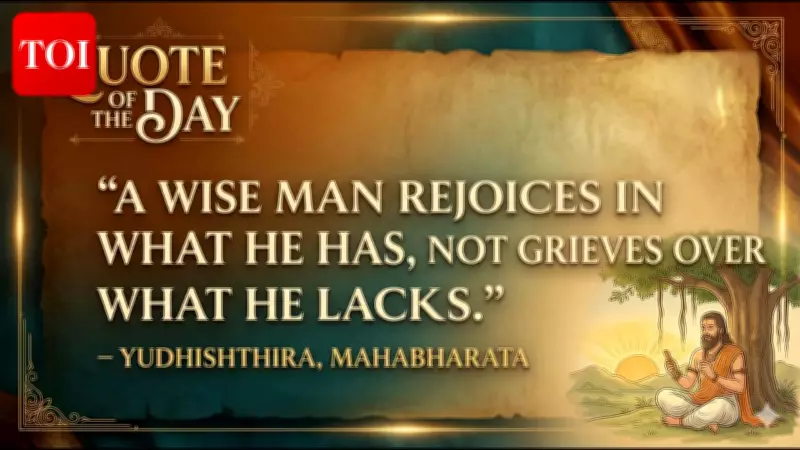
The quote of the day, drawn from the Mahabharata, reflects on the art of finding happiness in one's present reality. 'A wise man rejoices in what he has, not grieves over what he lacks.' These profound words are found in the Vana Parva, specifically during the Yaksha Prashna—one of the most intellectually stimulating and thought-provoking segments of the epic. This section is renowned for its philosophical depth, posing questions that probe the essence of human existence.

The Yaksha Prashna: A Test of Wisdom and Contentment
During their exile, Yudhishthira encounters a mysterious Yaksha who presents him with 124 philosophical riddles. The stakes are high: answering correctly is the only way to save his brothers' lives. When queried about the secret to true happiness and the defining traits of a wise individual, Yudhishthira's response centers on contentment. He elucidates that grief stems from an undisciplined mind fixated on absences, while wisdom involves recognizing and appreciating the abundance already present in one's life.
This teaching transcends a mere exhortation to 'be happy'; it offers a pathway to mental liberation. To 'grieve over what one lacks' is to inhabit a state of perpetual scarcity, irrespective of material wealth. It ensnares the mind in a cycle where future desires overshadow the value of current realities, fostering dissatisfaction and unrest.
The Conscious Choice of Rejoicing
The quote underscores that 'rejoicing' is a deliberate, conscious choice. A wise person actively observes their existing resources—be it health, relationships, or simple daily comforts—and utilizes them as a foundation for inner peace. This mindset shift from lack to gratitude not only enhances personal well-being but also fosters resilience in adversity. By focusing on present blessings, individuals can cultivate a sense of fulfillment that is independent of external circumstances.
In today's fast-paced world, where consumerism and comparison often dominate, the Mahabharata's message remains strikingly relevant. It invites us to pause, reflect, and embrace contentment as a cornerstone of a wise and joyful life. As we navigate modern challenges, these ancient insights continue to light the way toward ethical living and profound happiness.