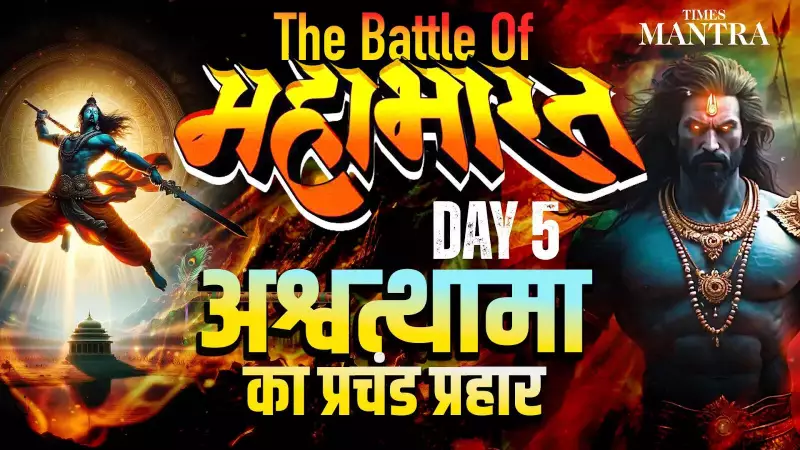
In a gripping episode that delves into the heart of the great Indian epic, analyst K L Upadhyay unpacked the monumental events of the fifth day of the Kurukshetra war. The spotlight shone on two colossal warriors: the enraged Brahmin warrior Ashwatthama and the Pandava powerhouse Bheem. Their confrontation stands out as a pivotal and thrilling moment that held the potential to alter the trajectory of the entire conflict.
The Fury of Ashwatthama Unleashed
On January 9, 2026, K L Upadhyay detailed how Ashwatthama, son of Dronacharya, launched a devastating and fierce attack on the Pandava forces. His aggression was not merely physical but carried the weight of a deep-seated vendetta and a warrior's oath. Upadhyay's analysis highlighted that Ashwatthama's assault was characterized by strategic precision and relentless ferocity, aiming to break the enemy's formation and morale. This wasn't just an attack; it was a statement of intent from a warrior pushed to his limits.
Bheem's Extraordinary Valor and Power
Facing this storm was Bheem, the second Pandava, renowned for his raw, unmatched physical strength. Upadhyay explained that Bheem's response was a spectacle of pure might and courage. His display of prowess on the battlefield was more than just combat; it was a heroic feat that rallied the Pandava side. The discussion emphasized how Bheem's unique abilities—his capacity to withstand immense pressure and deliver crushing counter-blows—served as a crucial bulwark against Ashwatthama's offensive. This clash was a classic duel between strategic aggression and brute force.

Turning the Tide of the Epic War
The core of Upadhyay's examination revolved around how this specific clash could have been a turning point. Bheem's valor was not just about holding the line; it was about shifting momentum. By directly countering Ashwatthama's fury, Bheem demonstrated that the Pandavas had the resilience and power to face even the most formidable opponents. The analysis provided viewers with deep insights into the battlefield strategies and the psychological warfare at play, showing how individual heroism shaped larger outcomes in the Mahabharat. This segment offered enthusiasts a rich blend of dramatic narrative, historical context, and strategic understanding of ancient warfare.
For lovers of Indian mythology and history, this breakdown serves as a compelling look into the dynamics of one of the world's greatest epics. It underscores the timeless themes of duty, rage, strength, and the high stakes of war that continue to resonate through the ages.