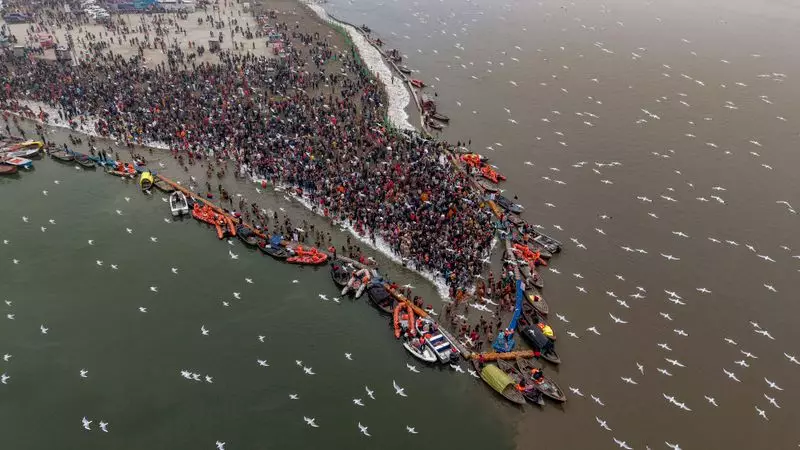
In a powerful display of faith, lakhs of pilgrims converged at the sacred Sangam in Prayagraj on Saturday to take a holy dip in the icy waters of the Ganga on the occasion of Magh Purnima. This marked a significant day during the ongoing annual Magh Mela, one of Hinduism's most important religious gatherings.
A Congregation of Faith Amidst the Chill
Despite the biting cold, devotees from across India began arriving at the Triveni Sangam—the confluence of the Ganga, Yamuna, and the mythical Saraswati—since the early hours. The air was thick with chants and religious fervor as men, women, and children waded into the cold river waters, seeking spiritual purification and blessings. The ritual bath, known as 'Magh Snan', is considered highly auspicious during the month of Magh according to the Hindu calendar.
The Magh Mela administration, along with police and disaster response teams, was on high alert to manage the massive influx. Elaborate security arrangements, including barricades and watchtowers, were put in place. Multiple rescue boats from the National Disaster Response Force (NDRF) and the Provincial Armed Constabulary (PAC) were deployed to ensure the safety of the pilgrims during the holy dip.

Administrative Measures and Safety Protocols
Authorities had divided the vast Mela area into several sectors and zones to streamline crowd management and security. A robust traffic plan was implemented to regulate vehicle movement in and around Prayagraj, preventing congestion. The administration also set up numerous temporary shelters, medical camps, and drinking water facilities to cater to the needs of the visiting devotees.
Senior officials, including Police Commissioner Ramit Sharma, were present on the ground to oversee the arrangements. The focus was squarely on preventing any untoward incidents and ensuring a smooth and spiritually fulfilling experience for everyone. The use of public address systems helped in directing the crowd and maintaining order at the ghats.
The Spiritual Significance of Magh Purnima
Magh Purnima, the full moon day in the month of Magh, holds immense religious importance. It is believed that bathing in the Ganga, especially at the Sangam, on this day washes away sins and paves the way for salvation (moksha). Many pilgrims also perform 'Daan' (charity) and offer prayers to their ancestors on this day.
The Magh Mela itself is often described as a 'mini Kumbh' and serves as an annual precursor to the grand Maha Kumbh Mela. For the entire month of Magh, thousands of kalpavasis—devotees who observe a month-long ritual camp—stay in tents on the mela grounds, following a strict routine of prayers, holy baths, and meditation.
The successful management of the Magh Purnima snan is a critical test for the Uttar Pradesh government's preparedness for larger gatherings. The lessons learned here in crowd control, sanitation, and security directly inform the planning for the Maha Kumbh Mela, which attracts tens of millions.
As the sun set on Prayagraj, the pilgrims, though physically exhausted from the cold dip, carried with them a sense of spiritual accomplishment. The Magh Mela continues to be a profound testament to the enduring faith and cultural traditions that draw millions to the banks of the Ganga year after year.