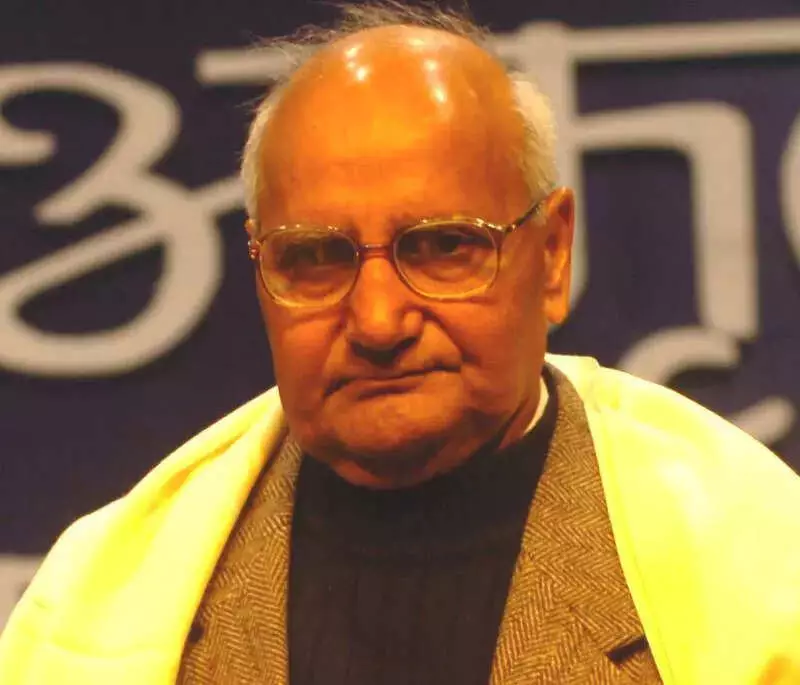
The Department of Hindi and Modern Indian Languages at Lucknow University organized a special event this Wednesday to honor the centenary of celebrated novelist and satirist Srilal Shukla. The gathering served as a tribute to the literary icon, whose profound works continue to offer critical insights into rural Indian life and its complex socio-political fabric.
A Legacy Rooted in Social Commentary
Presiding over the ceremony, Vice Chancellor Professor Manuka Khanna highlighted the timeless relevance of Shukla's writings. She emphasized that his work is deeply anchored in socio-political consciousness, employing sharp satire as an effective instrument to lay bare enduring societal truths. Professor Khanna stressed the need for contemporary scholars to delve deeper into the social and political layers present in his extensive body of work, noting that his literary vision resonates powerfully even with new generations of readers.
The Man Behind the Masterpiece: Raag Darbari
Born on December 31, 1925, in Atarouli village near Lucknow, Srilal Shukla led a distinguished life both in literature and public service. He was a member of the Indian Administrative Service (IAS) and also represented India on international platforms. However, it is his literary output that has cemented his place in history. Scholars and attendees at the event particularly acclaimed his seminal novel, Raag Darbari. The work is widely regarded as a definitive mirror reflecting the realities of post-independence rural North India, capturing its nuances, contradictions, and essence with unparalleled clarity.

An Enduring Impact on Indian Literature
The commemoration at Lucknow University reaffirmed Srilal Shukla's lasting legacy in the canon of Indian literature. His unique ability to weave satire with stark realism has ensured that his novels remain essential reading for anyone seeking to understand the grassroots dynamics of Indian society. The event successfully underscored how his narratives, crafted decades ago, continue to hold up a revealing lens to contemporary issues, proving that great literature transcends the era of its creation.