Kendrapada's Century-Old Grass Mat Weaving Tradition 'Masina' Faces Steep Decline
In the coastal region of Kendrapada, Odisha, a century-old craft tradition is rapidly fading away. The art of weaving grass mats, locally known as 'masina', has experienced a dramatic decline of nearly 50% over just three decades, according to local artisans who have dedicated their lives to preserving this cultural heritage.
From 600 to 300: The Shrinking Community of Artisans
Once flourishing across multiple blocks including Mahakalapada, Rajnagar, Rajkanika, Aul, and Garadapur, approximately 600 artisans previously engaged in this traditional craft. They would collect 'benua' grass from riverside farmland after the paddy harvest season, transforming the natural material into functional and beautiful mats. Today, that number has dwindled to barely 300 practitioners, many of whom struggle to sustain their livelihoods through this increasingly marginalized occupation.
The primary reasons for this decline are twofold: extremely low financial returns and the overwhelming competition from inexpensive plastic alternatives that have flooded local markets. Without meaningful institutional support or government patronage, artisans fear this age-old tradition may disappear completely within a generation.

The Economic Reality: Low Returns Driving Youth Away
Raghunath Jena, a 54-year-old artisan from Taradipal, voices the community's concern: "Without government aid or patronage, this age-old craft will fade into oblivion." His words echo the sentiment of many practitioners who see their traditional skills becoming economically unsustainable.
The financial reality is stark. A single 'masina' sells for between Rs 400 and Rs 600, yet requires two to three full days of laborious weaving. This translates to monthly earnings of only Rs 5,000 to Rs 8,000 for dedicated mat-makers—a sum insufficient to attract younger generations to the craft.
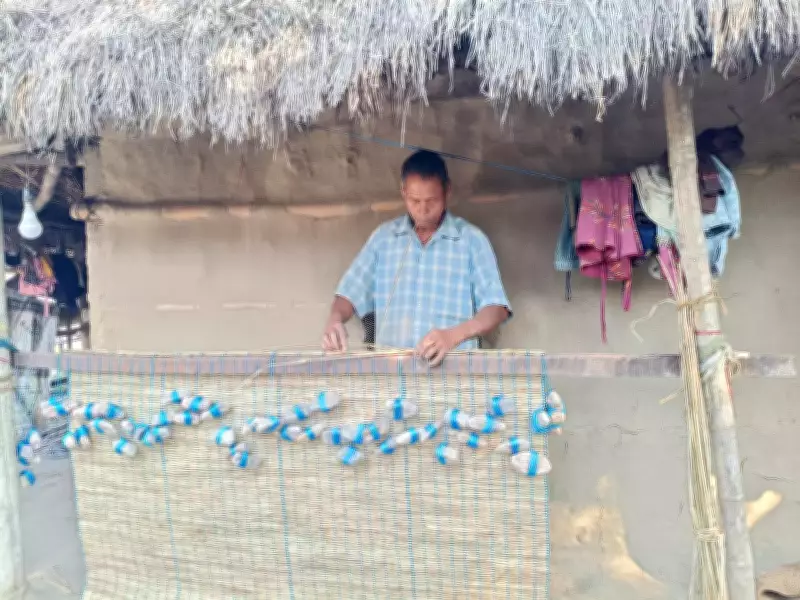
Basudev Rout, 62, from Ghadiamala village, illustrates this generational shift. While busy giving finishing touches to a 'masina', he recalls a time when twelve people in his panchayat practiced the craft. "Now only five of us continue weaving," he admits. More tellingly, Rout has actively discouraged his two sons from following in his footsteps; both have instead taken up plumbing as a more financially viable profession.
The Traditional Process and Its Modern Challenges
Prafulla Behera, 56, from Garadapur, explains the painstaking traditional process that begins with collecting 'benua' grass from shallow waters along rivers and marshes. The grass undergoes sun-drying for approximately one week before artisans weave it on simple frames using cotton warp threads. A flat wooden piece is employed to pack the strands tightly, creating the durable finished product.
According to Kendrapada CDAO Suresh Chandra Mallick, 'benua' sedges are long-stemmed, flexible wetland plants ideally suited for creating durable, moisture-absorbing mats. Historically, these mats served multiple purposes—villagers used them as winter blankets, while farmers employed them for drying paddy.
However, as Narendra Mallick, 64, from Iswarapur notes: "Cheap plastic mats have taken over the market, forcing many traditional artisans to abandon their craft entirely." This shift represents not just an economic challenge but a cultural loss, as plastic alternatives lack the natural properties and craftsmanship of traditional 'masina' mats.
An Uncertain Future for a Cultural Heritage
Haripada Behera, 60, from Srirampur, summarizes the demographic crisis facing the craft: "Young people avoid this work because it demands hard physical labor with very low financial returns. Only elders are keeping the tradition alive currently, and even that may not last much longer. The most desperate youngsters might take it up temporarily, but they quickly seek more sustainable employment."
The situation presents a classic preservation dilemma: how to maintain cultural traditions that have lost their economic viability in modern markets. Without intervention, Kendrapada's 'masina' weaving—once among the region's most widely practiced crafts—faces the very real possibility of disappearing entirely, taking with it centuries of specialized knowledge, community identity, and sustainable material practices.

As artisans continue their work against increasing odds, their struggle highlights broader questions about preserving intangible cultural heritage in an era of mass-produced alternatives. The fate of 'masina' weaving serves as a microcosm of similar challenges facing traditional crafts worldwide, where globalization and changing consumer preferences threaten centuries-old practices with extinction.