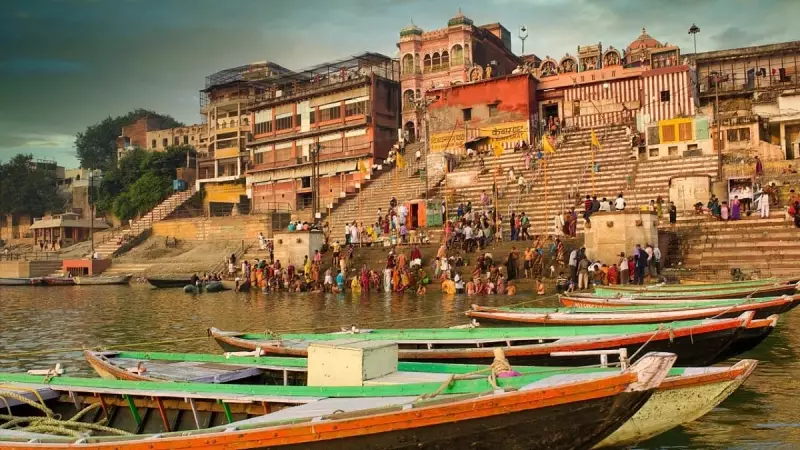
Renowned author and Sahitya Akademi awardee Kashinath Singh has voiced profound anguish over the changing face of Varanasi, the historic city he has long called home. In a heartfelt critique, Singh lamented that the spiritual capital is being turned into a mere spectacle, steadily shedding its unique cultural and spiritual character.
A Lifelong Resident's Painful Observation
Having lived in Varanasi for decades, Kashinath Singh's connection to the city is deep and personal. His recent statements, reported on 25 December 2025, are not those of a distant observer but of a devoted resident filled with pain. He watches as the city he loves undergoes a dramatic transformation, one that he feels prioritizes visual appeal and tourism over its intrinsic soul. For Singh, the essence of Banaras—its timeless lanes, its philosophical underpinnings, and its lived traditions—is being compromised.
From Sacred City to Staged Spectacle
The core of Singh's concern lies in the shift from authenticity to orchestrated display. He argues that Varanasi's profound spiritual character, which attracted seekers for centuries, is being diluted. The city risks becoming a backdrop for performances rather than a living, breathing center of culture and faith. This transformation, he implies, strips Varanasi of the very qualities that defined its identity, reducing its complex history to a simplified tourist experience.

The Cultural Cost of Change
The warnings from a literary figure of Singh's stature carry significant weight. As a Sahitya Akademi awardee, his life's work is intertwined with understanding and portraying the nuances of Indian society and its cultural landscapes. His pain points to a larger national conversation about preserving heritage in the face of modernization and development. The challenge, as highlighted by his critique, is to find a balance where progress does not erase the soul of a place as ancient and significant as Varanasi.
The future of Varanasi, according to Kashinath Singh, hangs in this balance. His words serve as a poignant reminder that the value of a city lies not just in its infrastructure and visitor numbers, but in the intangible spirit that has sustained it through the ages. Protecting that spirit, he suggests, is the real task ahead for the stewards of this eternal city.