K-Pop's Parasocial Bonds: Indian Youth's Emotional Ties to Idols Explained
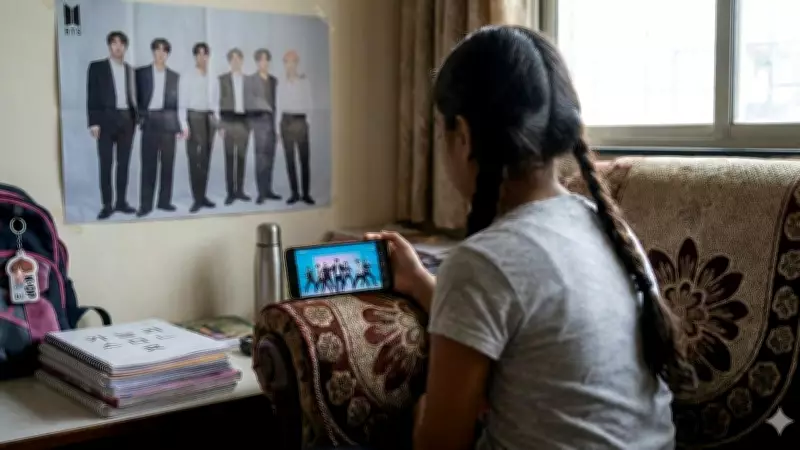
"The joy and clarity that K-pop songs bring cannot be provided by anyone else. They positively fill our entire persona and help children discover their inner music." This heartfelt statement from 14-year-old Gurugram student Natalia Robert captures the essence of a growing phenomenon among Indian youth. Millions of children are embracing Korean culture not just as entertainment but as a profound emotional ecosystem, forming powerful one-sided bonds with celebrities they have never met.
The Korean Wave's Growing Influence in India
Once confined to niche fan circles, Korean dramas and K-pop have evolved into a formidable cultural force across India. The Korean Wave, or Hallyu, refers to the rapid global rise of Korean films, television dramas, music, and digital content since the 1990s. In India, this influence has accelerated dramatically through streaming platforms and social media, creating a dedicated fan base for groups like BTS, Blackpink, Girls' Generation, EXO, TWICE, and SHINee.
According to a June 2024 study titled The Impact of Hallyu (Korean Wave) on Indian Youth's Intention to Visit South Korea, the phenomenon has gained significant popularity among younger demographics worldwide. The study, involving 153 young participants, examined six components of Hallyu: Korean drama, music, movies, fashion products and cosmetics, food, and games. It revealed that Korean music albums are consumed at the highest rate, followed closely by Korean dramas.

Myong Kil Yun, regional director for India & SAARC Countries at the Korea Tourism Organization in New Delhi, notes, "The influence of Hallyu has increased awareness of everyday Korean culture, while travel between India and Korea continues to expand." This cultural penetration extends beyond media, sparking interest in Korean beauty brands, fashion, food, and games among Indian youth.
Why Children Form Parasocial Bonds with K-Pop Idols
What sets K-pop apart from earlier celebrity cultures, such as Bollywood fandom, is the unprecedented level of access. Counselling psychologist Srishti Mishra explains, "Earlier, Bollywood fandom was largely one-directional. Children watched films or admired stars from a distance. K-pop changes this. Idols appear regularly through livestreams and social media, creating ongoing interaction." For fans like Natalia, this accessibility is key: "Korean idols do live streams for their fandom so they can connect with them more. They are humans who reach out to their fans, so we feel united."
Research indicates that adolescents are particularly prone to forming parasocial relationships. A 2017 study published in Frontiers in Psychology found that 61.1% of early adolescents considered favourite media figures as relationship partners, reporting greater parasocial involvement and emotional intensity. A May 2025 clinical study, The Impact of Childhood Trauma on the Intensity of Parasocial Relationships Among Adolescents, notes that these relationships are enduring and involve deep emotional investment over time.
Gender differences also play a role, with female adolescents typically forming more intense parasocial relationships than their male counterparts. These bonds develop gradually through repetition, as Mishra describes: "A child might start by watching a K-pop music video, then move to interviews, livestreams, and behind-the-scenes clips. Over time, the idol becomes part of their daily routine."
For many young fans, these idols offer crucial emotional support. Twenty-year-old Dimpy Bhatt shares, "Listening to their music and watching their live sessions feels like something inside me is healing without even realising it." Natalia adds, "They teach us life lessons. During our happy or sad days, we listen to K-pop because the songs remind us to live for ourselves."

Parental Concerns and Family Conflicts
Parents are increasingly worried about the effects of these parasocial bonds. Early signs include children playing livestream replays during homework, excessive screen time, mood swings, and distress over online criticism of their idols. Mishra explains, "Because idols speak directly to fans and appear emotionally accessible, children experience this as companionship. In early adolescence, when friendships feel unstable, this presence offers comfort."
Clinical psychologist Sunita Samant, founder of Mind Matters, adds, "In the teen years, kids usually turn to friends or their group to talk things out and feel understood. But when that space doesn't feel safe or available, maybe there's not much emotional conversation at home, they feel ignored, or they're dealing with bullying or exclusion, they start looking for that sense of validation somewhere else."
Devika Puri, a parent, highlights the practical challenges: "With school assignments moving on teams, all school communication moving to WhatsApp, there is little that parents can do to keep kids away from the phone." She acknowledges that resistance can be counterproductive, noting, "I don't think we as parents can keep our children away from the screen. This is a generation that was born with the internet in its womb."
Conflicts often stem from misunderstandings. Mishra observes, "Conflicts usually emerge not from fandom itself, but from misunderstanding its emotional role. Parents may focus on screen time or academic distraction, while children experience fandom as meaningful and emotionally grounding." Content curator Pooja Galgali expresses similar concerns, noting that after long screen exposure, her daughter becomes angry or irritable, and Generation Alpha may know much about the world but lack local awareness.
When Admiration Becomes Overwhelming
Healthy admiration is not inherently problematic when it coexists with everyday functioning. Mishra states, "A child may enjoy following an idol while still engaging in school, family time, and offline relationships. It becomes concerning when the fandom starts regulating mood." Warning signs include irritability when missing content, difficulty sleeping due to livestream schedules, or personal distress from online criticism of the idol.
Samant agrees, "Admiration remains healthy as long as you appreciate them in a normal way. The moment you start emulating and obsessing so much that it becomes overwhelming and feels like a must, that's where it crosses a line." For parents of younger children, like Paroma Bhattacharya, 38, the concern is more about screen time than emotional dependence, emphasizing moderation and adult supervision to ensure screens don't replace real-world play.
The Positive Side: Community and Creativity
Despite concerns, fandom spaces offer significant benefits. Mishra notes, "For many young people, fandoms offer their first experience of community beyond school or family. A child who feels socially awkward offline may find confidence online by sharing edits, writing fan fiction, learning choreography, or translating lyrics." Samant adds that these spaces help young people feel a sense of belonging and encourage self-expression through discussions and creative content.
Galgali has observed positive changes in her daughter: "She has become very confident. She wants to try Japanese and Korean food. She wants to take a trip to Korea, Japan, and Singapore." This highlights how fandom can inspire curiosity and global awareness.
Finding a Balance: Expert Recommendations
The consensus among experts is that prohibition is not the answer. Instead, they advocate for balance, dialogue, and informed engagement. Mishra suggests, "The most effective strategy is conversation without judgment. Parents can ask what children enjoy about fandom or what it gives them emotionally. Some families set agreements around screen time while attending concerts or encouraging related hobbies."
Samant emphasizes, "It doesn't have to be a power struggle. Kids still need sports and offline activities. Instead of shutting it down, ask 'What do you like about this?' The key is the vibe at home." Puri argues for education: "It's important to educate children on what constitutes knowledge. Education on how to consume content and not confuse it with real identity is critical."
Bhattacharya recommends curiosity and gentle boundaries: "Parents can start by listening without dismissing. Setting gentle boundaries, encouraging offline play, and reminding children that celebrities are people doing a job helps create a healthy perspective." Ultimately, the goal is to navigate the digital emotional ecosystem where today's children increasingly live, fostering understanding and connection rather than fear and conflict.